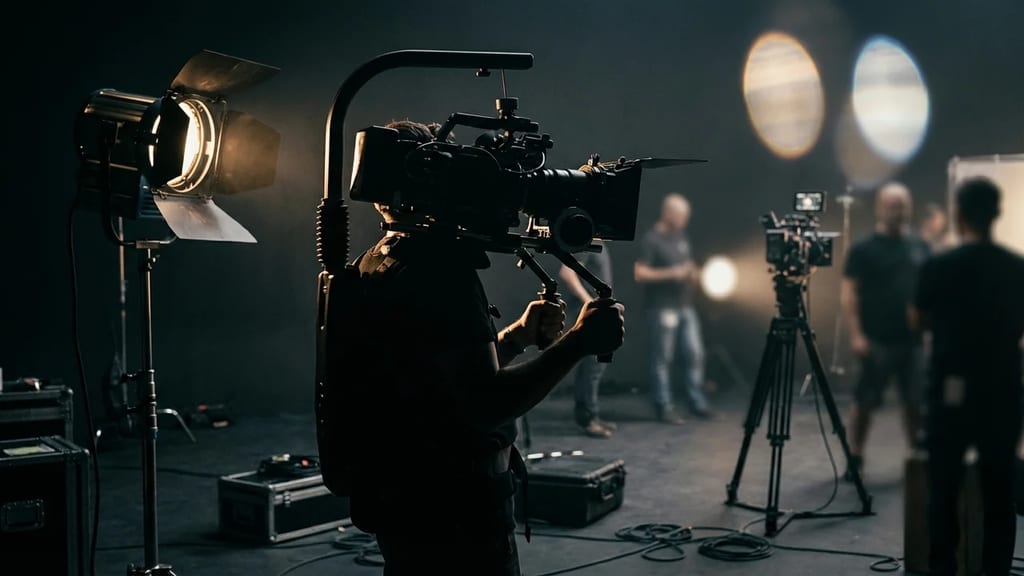
Technical Details
Standard shoulder rigs weigh between 1.8-4.2 kg and feature 15mm or 19mm rod systems for attaching further components. The shoulder pad typically measures 25-35 cm in width, with the distance between the handgrips being 40-50 cm. Modern systems like the Arri SR-3 Shoulder Kit or RED DSMC2 Shoulder Mount support cameras up to 8.5 kg with maximum stabilization. Weight distribution follows a 60/25/15 ratio between the shoulder, arms, and chest area.
Variants include documentary lightweight rigs (under 2 kg), standard narrative rigs (2-4 kg), and heavy-duty systems for large-sensor cameras with follow focus and wireless systems.
History & Development
The first commercial shoulder rig was developed in 1972 by Cinema Products Corporation for the Arriflex 16SR. The breakthrough came in 1976 with Garrett Brown's Steadicam alternative for budget-conscious productions. Panavision introduced the PSR system in 1983, which utilized quick-release mechanisms for the first time.
In the 1990s, modular systems from Chrosziel and Vocas revolutionized the market through tool-less conversion. The introduction of digital cameras from 2005 onwards necessitated new, lighter constructions – RED developed the first carbon fiber rig in 2007 with a mere 1.6 kg empty weight.
Practical Use in Film
Paul Greengrass extensively utilized shoulder rigs in the "Bourne" trilogy (2004-2007) for an authentic handheld aesthetic without Steadicam smoothing. "Cloverfield" (2008) combined shoulder rigs with wide-angle lenses for controlled unease. In "Mad Max: Fury Road" (2015), special vehicle-adapted rigs enabled shots during high-speed chases.
Documentary filmmakers prefer rigs for longer shooting periods as they cause less fatigue than pure handheld technique. The compromise lies between Steadicam perfection and handheld spontaneity – movements remain natural yet controllable.
Comparison & Alternatives
While Steadicams offer complete freedom of movement, they cost €15,000-€80,000 compared to €800-€3,500 for shoulder rigs. Gimbals like the DJI Ronin (from €1,400) offer electronic stabilization but limit operating time to 2-4 hours.
Modern alternatives include in-body stabilization (IBIS) and post-production electronic stabilization, but they do not achieve the organic motion quality of mechanical systems. For run-and-gun documentaries, shoulder rigs remain indispensable, while narrative productions increasingly opt for gimbal systems.