Technical Details
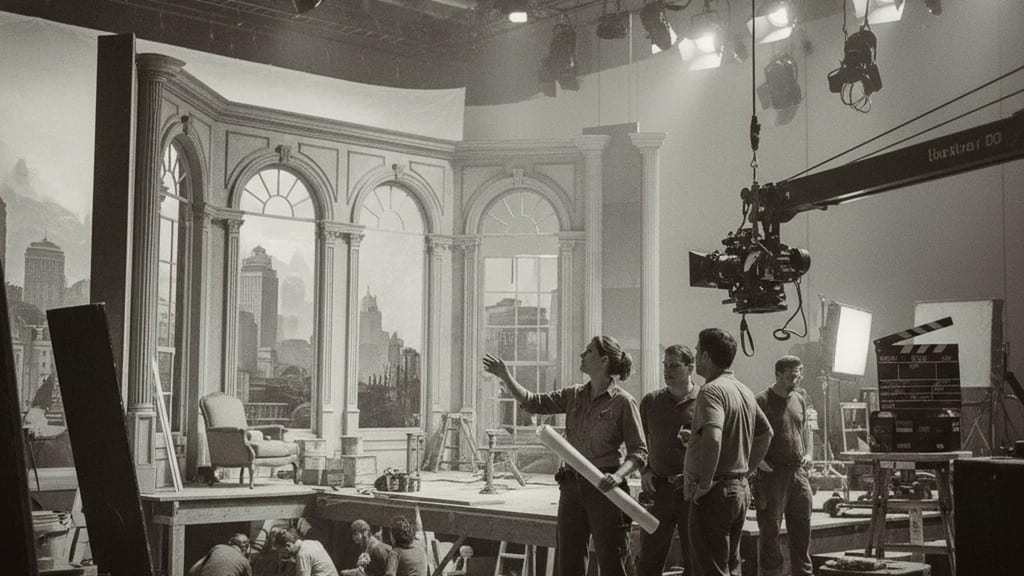
Modern Set Designers work with CAD software like AutoCAD or SketchUp Pro for precise technical drawings, as well as 3D rendering programs like Cinema 4D or Blender for photorealistic visualizations. Standard studio ceiling heights of 4.5-6 meters determine the maximum set height, while studio widths between 15-40 meters limit horizontal dimensions. Set Designers differentiate between Standing Sets (permanent constructions), Swing Sets (adaptable constructions), and Location Adaptations. Material specifications include flame-retardant fabrics of class B1, wood-based materials with E1 certification, and water-based paints for interiors.
History & Development
The role of the Set Designer was established around 1915 with the transition from theater stage design to specific film architecture. William Cameron Menzies was the first to receive the title "Production Designer" in 1929 for "The Thief of Bagdad." In the 1930s, Hollywood studios like MGM and Paramount standardized their own Art Departments with up to 200 employees. The introduction of widescreen formats in the 1950s necessitated horizontal set expansions, while digital planning tools revolutionized the visualization phase from the 1990s onwards.
Practical Application in Film
Ken Adam constructed the famous Fort Knox set for "Goldfinger" (1964) as a 30x18 meter replica in Pinewood Studios. Dante Ferretti designed scale reproductions of 1930s aircraft and hangars for "The Aviator" (2004). The typical workflow begins 8-12 weeks before principal photography with sketches and mood boards, followed by technical drawings and material lists. Sets are usually completed 2-3 weeks before the first take to allow for camera tests and lighting rehearsals.
Comparison & Alternatives
The Set Designer differs from the Set Decorator in that the former handles the fundamental architectural concept versus the latter's decorative furnishing. Production Designers oversee and coordinate the overall visual concept, while Set Designers are responsible for the structural implementation. Virtual Production with LED walls is increasingly replacing physical backgrounds, but still requires physical foreground sets for actor interaction. Location Managers scout existing spaces as a cost-effective alternative to studio builds, which offer less flexibility in camera positioning and lighting.