Technical Details
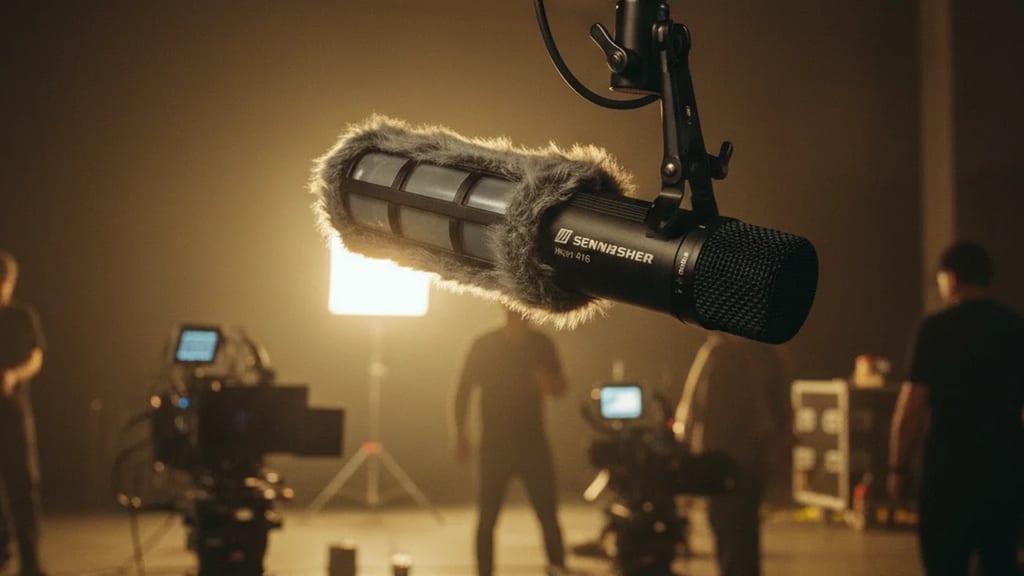
The MKH 416, the classic of the series, has a frequency response of 40 Hz to 20 kHz, requires 48V phantom power, and achieves a maximum sound pressure level of 130 dB SPL. Its characteristic supercardioid polar pattern with a 28 cm tube length ensures a directionality that is 10 dB stronger at 1 kHz than that of small-diaphragm microphones. Other models like the MKH 8060 (19 cm) or MKH 70 (42 cm) vary in length and directionality. The RF technology prevents the dreaded "crackling" in humidity, which renders other condenser microphones unusable during outdoor shoots.
History & Development
Sennheiser introduced the first MKH model in 1967, after Fritz Sennheiser adapted RF condenser technology from broadcasting. The legendary MKH 815, with a length of 55 cm, established the "Sennheiser sound" in Hollywood during the 1970s. The more compact MKH 416/418 models followed in 1981 and became the de facto standard for film sound. In 2009, the 8000 series updated the technology with improved electronics and a lower self-noise of only 10 dB(A).
Practical Use in Film
Sound recordists routinely use the MKH 416 for dialogue recording on "Das Boot" (1981) or currently on Marvel productions. Its extreme directionality allows for clean dialogue even in challenging location conditions. On "Blade Runner 2049," MKH 8070s were used for exterior atmospheres. The typical workflow involves positioning the MKH on a boom pole, 30-60 cm from the actors. Disadvantage: The strong directionality requires precise handling and can lead to off-axis problems for inexperienced sound assistants.
Comparison & Alternatives
While Schoeps CMIT microphones sound more analytical, MKH models offer a "warmer" midrange that reproduces voices more naturally. Audio-Technica 4073a or Deity S-Mic 2 achieve similar directionality at lower costs, but without the RF technology. Rode NTG series are suitable for low-budget productions but do not reach the reliability of the MKH series in extreme weather conditions. For studio productions, some sound recordists prefer Neumann KMR due to lower self-resonance.
Current News
The Sennheiser MKH50 is used as a reference microphone in current production demos, for example, in combination with the Sound Devices MixPre-3 II 32-bit Float Recorder. A demonstration of the DEITY DIFB IFB system shows the practical application of the MKH50 in modern wireless audio workflows with only 11ms latency.