Filmlexikon.
Support
Scrim
Lighting · Equipment

Scrim

Murnau AI illustration
216 diffusion 250 diffusion 251 diffusion artificial silk china silk diffusion filter diffusion gel diffusion

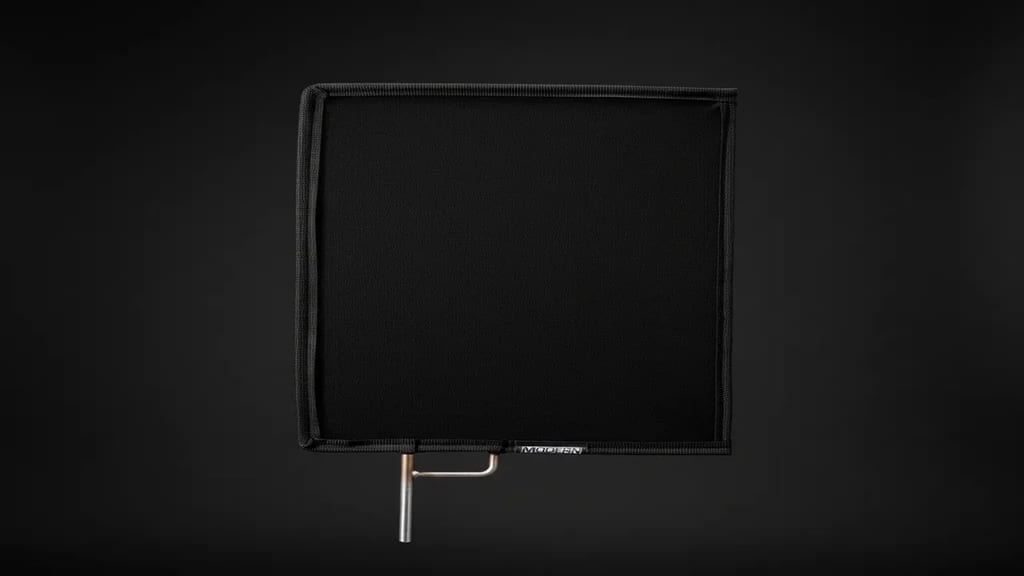
Heat-resistant fabric in aluminum frame for stepless light reduction without color temperature shift. Ranges from Quarter Scrim (0.3 stops) to Double Scrim (2.1 stops).

Technical Details

Professional scrims are made of heat-resistant scrim fabric or modern materials like Griffolyn with a temperature resistance up to 150°C. The most common sizes range from 30x30 cm (single scrim) to 3.6x3.6 m (large overhead). Scrims are produced in various densities: Quarter Scrim (0.3 stops), Half Scrim (0.6 stops), Single Scrim (1.2 stops), and Double Scrim (2.1 stops). Frames are typically made of anodized aluminum or stainless steel for weight reduction and corrosion resistance.

History & Development

The first documented use of scrims in film occurred in 1915 in D.W. Griffith's "The Birth of a Nation" to create atmospheric effects. Mole-Richardson developed standardized scrim frames for Hollywood productions in 1938. The breakthrough came in 1947 with the introduction of synthetic fabrics by Matthews Studio Equipment, which guaranteed consistent transmission values. Modern LED-compatible scrims with optimized spectral characteristics were launched in 2009.

Practical Use in Film

Roger Deakins used large-format double scrims in "Blade Runner 2049" (2017) to replicate smog-filtered daylight. Typically, scrims are mounted 60-120 cm in front of the light source to avoid hard shadow formation. For exterior shots, overhead scrims serve as artificial clouds for even facial illumination. The advantage lies in precise controllability without color temperature changes, while the disadvantage is the necessary amplification of the base light output.

Comparison & Alternatives

Unlike diffusers, scrims do not scatter light but only reduce its intensity while maintaining its directional characteristics. ND filters on the lens affect the entire exposure, whereas scrims allow for selective light modulation. Modern LED panels with stepless dimming are increasingly replacing scrims for interior shots, but their use with HMI and tungsten lights remains indispensable. Silk diffusers are preferred for harsh sunlight, while scrims are used for fine-tuning already soft light sources.
From the crafts

Perspectives

Cinematographer

Ich setze Scrims gezielt ein, um harte Schatten zu mildern, ohne die Lichtrichtung zu verlieren – besonders bei Portraitaufnahmen reduziere ich mit einem Half Scrim die Intensität meiner Key-Light-HMI um 0,6 Stops, statt das Gerät weiter wegzustellen. Bei Außendreh verwende ich 12x12-Overhead-Scrims, um gleichmäßige Belichtung ohne die Unberechenbarkeit wechselnder Wolken zu erreichen.

Director

Scrims helfen mir dabei, die emotionale Wirkung einer Szene über subtile Lichtveränderungen zu steuern – in Dialogszenen kann ich durch selektive Abdunklung eines Gesichts um eine Blende die Machtverhältnisse visuell verschieben. Für Traumsequenzen lasse ich bewusst doppelte Scrims verwenden, um diese entrückte, gedämpfte Atmosphäre zu erzeugen, die das Publikum unterbewusst als irreal wahrnimmt.

Producer

Scrims amortisieren sich durch Stromkosteneinsparungen – statt eine 18kW HMI durch Distanz zu dimmen, reduziere ich mit einem 200-Euro-Scrim die benötigte Leistung auf 12kW und spare täglich 150 Euro Generatorkosten. Die Anschaffung eines kompletten Scrim-Sets kostet 8.000 Euro, rechnet sich aber bereits nach drei größeren Außendrehs durch reduzierten Equipmentbedarf und schnellere Setup-Zeiten.

More in the lexikon

Related terms

Test your knowledge

Quiz

1. Was beschreibt „Scrim" am besten?

2. Zu welchem Department gehört „Scrim"?

3. Wie viele verschiedene Fachperspektiven bietet dieser Eintrag?

Report an error
From the Filmfarm ecosystem

Understand visual language, budget productions, connect crew.

The Lexikon is part of the Filmfarm ecosystem — alongside budgeting (FilmBalance), an industry magazine (FilmCircus) and crew networking (FilmCall, CrewMesh). One shared vocabulary for the whole production.

FilmFarm FilmRadarComing soonFilmPulseComing soonFilmNumbersComing soonFilmCapitalComing soonFilmLabComing soonFilmBalanceComing soonFilmCircusComing soon