Filmlexikon.
Support
China Silk
Lighting · Equipment

China Silk

Murnau AI illustration
18x24 flag 24x36 flag flag french flag top flag 4x4 floppy floppy cut

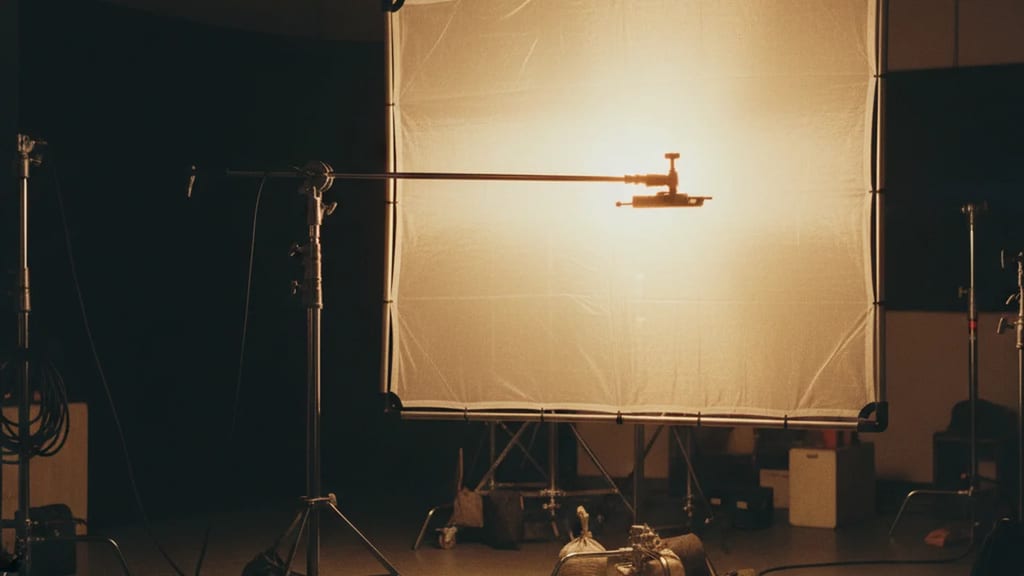
Heat-resistant diffusion fabric in 1/4 to 3/4 densities, reduces light by 0.3–0.6 stops with soft shadow definition for portraits.

Technical Details

China Silk is offered in standard strengths of 1/4, 1/2, and 3/4, with the numbers indicating the degree of light reduction. The material is heat-resistant up to 150°C and available in roll widths from 1.20m to 6.10m. The fabric can be stretched in frames and hung directly over light fixtures. Special variants like "Quarter Silk" (0.3 stop reduction) or "Half Silk" (0.6 stop reduction) allow for precise light control. Transmission ranges from 30-70% depending on density, with the color temperature remaining almost unchanged.

History & Development

The term established itself in Hollywood in the 1960s when real silk fabrics were replaced by synthetic materials. Originally, lighting technicians actually used Chinese silk for light diffusion, but it quickly burned with hot tungsten lights. In 1968, Mole-Richardson developed the first heat-resistant synthetic fiber variants specifically for the film industry. With the introduction of LED panels from 2010 onwards, China Silk gained new significance, as the lower heat development also enabled more sensitive diffusion materials.

Practical Use in Film

China Silk is primarily used for portrait shots and close-ups to eliminate hard shadows and soften skin textures. Cinematographers often stretch the fabric in 4x4-foot or 6x6-foot frames between the light source and the subject. In "Blade Runner 2049" (2017), Roger Deakins systematically used China Silk for interior scenes to diffuse the harsh LED panels. The fabric is particularly suitable for available light situations where window light needs to be softened. Disadvantages include susceptibility to wind in exterior shots and limited durability under intense UV radiation.

Comparison & Alternatives

Unlike Grid Cloth (1-2 stop reduction) or Opal Frost (strong diffusion), China Silk offers the least light reduction with maximum softening. Modern LED softboxes with built-in diffusers are increasingly replacing external China Silk setups. Bounce lighting off white walls or ceilings produces similar results but requires more light output. For direct sunlight, professionals tend to use Grifflyne or Ultrabounce, as China Silk is too transparent.
From the crafts

Perspectives

Cinematographer

Ich nutze China Silk hauptsächlich bei Nahaufnahmen von Schauspielern, weil es die Haut perfekt weich zeichnet ohne die Schärfe zu zerstören. Ein 4x4-Rahmen mit Quarter Silk zwischen einem 2K und dem Gesicht gibt mir diese natürliche, schattenfreie Ausleuchtung, die ich mit keinem anderen Diffusor so kontrolliert hinbekomme. Bei LED-Panels ist es noch einfacher, weil ich mir keine Sorgen um Hitzeschäden machen muss.

Director

China Silk hilft mir dabei, die emotionale Nähe zu meinen Charakteren zu verstärken, besonders in intimen Dialogszenen. Das weiche Licht lässt die Gesichter der Schauspieler förmlich leuchten und unterstützt Momente der Verletzlichkeit oder Romantik. Ich arbeite eng mit meinem DoP zusammen, um diese "Seide-Momente" gezielt für Schlüsselszenen zu planen.

Producer

China Silk ist kostengünstig in der Anschaffung, aber die Rahmen und das Handling kosten Zeit am Set. Pro Drehtag rechne ich mit 20-30 Minuten zusätzlicher Einrichtungszeit für Silk-Setups, was bei engen Zeitplänen problematisch wird. Die modernen LED-Softboxen sind in der Anschaffung teurer, sparen aber langfristig Crew-Zeit und reduzieren das Equipment-Volumen beim Transport.

More in the lexikon

Related terms

Test your knowledge

Quiz

1. Was beschreibt „China Silk" am besten?

2. Zu welchem Department gehört „China Silk"?

3. Wie viele verschiedene Fachperspektiven bietet dieser Eintrag?

Report an error
From the Filmfarm ecosystem

Understand visual language, budget productions, connect crew.

The Lexikon is part of the Filmfarm ecosystem — alongside budgeting (FilmBalance), an industry magazine (FilmCircus) and crew networking (FilmCall, CrewMesh). One shared vocabulary for the whole production.

FilmFarm FilmRadarComing soonFilmPulseComing soonFilmNumbersComing soonFilmCapitalComing soonFilmLabComing soonFilmBalanceComing soonFilmCircusComing soon