Filmlexikon.
Support
Power Distribution
Lighting · Terms

Power Distribution

Murnau AI illustration
color temperature distribution flow roll take

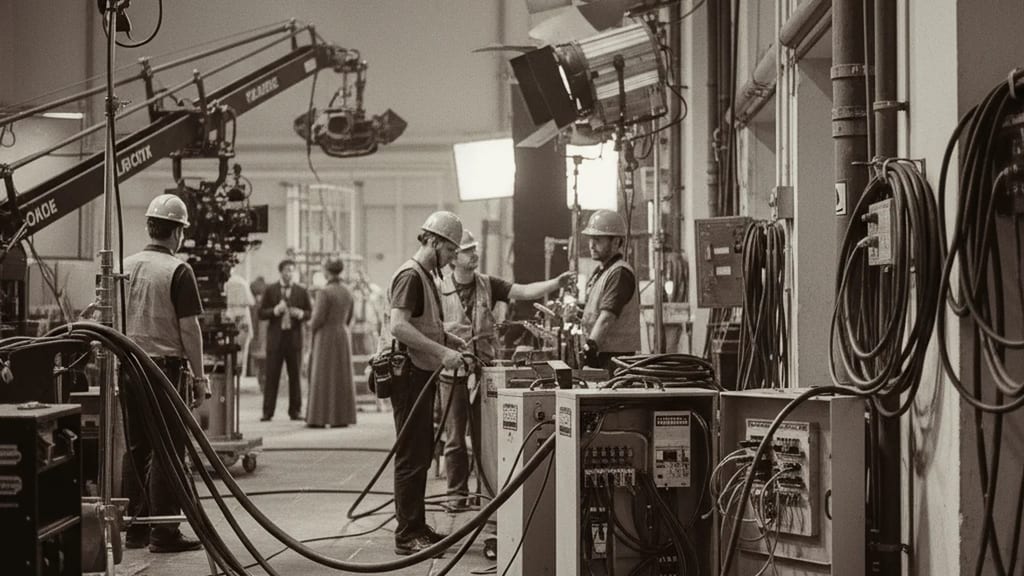
On-set power distribution system with main distribution units (400V/230V), spider boxes, and multi-gauge cables. Supplies lighting via CEE and Schuko connectors with 16A–125A circuit protection.

Technical Details

Main distribution boxes operate with three-phase 400V/230V and feature RCDs with a 30mA tripping current as well as circuit breakers from 16A to 125A. Sub-distributors (spider boxes) typically split 63A CEE inputs into 6x 16A Schuko outputs. Modern systems integrate digital load measurement and can be monitored via app. Cable cross-sections range from 2.5mm² (16A) to 35mm² (125A), with voltage drop kept below 3%.

History & Development

Professional power distribution developed from the 1920s with the first film studios. In 1960, the IEC introduced international standards for CEE connectors. In the 1980s, modular distribution systems with interchangeable components became established. Since 2000, digital load management systems have enabled precise load distribution and remote monitoring. LED technology has reduced overall power demand by up to 70% since 2010.

Practical Application in Film

For "Blade Runner 2049" (2017), DoP Roger Deakins used modular 200A distribution boxes for the LED wall installations. Exterior shoots require mobile generators with 100-500 kVA capacity, while studio productions utilize mains connections up to 1000A. Typical setup: a 125A main distributor feeds 4x 32A sub-distributors for 8-12 tungsten Fresnel lights each. Emergency stops are mandated every 30 meters.

Comparison & Alternatives

Permanent studio installations use hardwired patch panels with DMX integration; mobile sets rely on flexible cable and distribution systems. Battery-powered LED panels eliminate cabling for small setups. Hybrid solutions combine mains power with buffer batteries for uninterrupted supply. Wireless power systems are under development but only achieve a few kilowatts of power.

From the crafts

Perspectives

Cinematographer

Ich plane Stromverteilung bereits beim Location-Scouting mit - 32A-Anschlüsse alle 20 Meter ergeben mir maximale Flexibilität für spontane Lichtveränderungen. Digitale Load-Monitoring hilft mir, die verfügbare Leistung optimal zwischen Key Light, Fill und Background zu verteilen, ohne dass Sicherungen fliegen.

Director

Durchdachte Stromverteilung gibt mir die Freiheit, auch bei spontanen Stimmungsänderungen sofort das passende Licht zu bekommen - wenn die Technik stimmt, kann ich mich voll auf die schauspielerische Leistung konzentrieren. Ausfälle durch Überlastung oder defekte Verteilung kosten mich wertvolle Drehzeit und reißen die Schauspieler aus ihrer Konzentration.

Producer

Professionelle Stromverteilung kostet 2000-5000€ pro Drehtag, spart aber durch Effizienz und Ausfallsicherheit ein Vielfaches an Produktionskosten. Ich kalkuliere 15% der Lichtmiete für Verteilertechnik und plane bei Außendrehs zusätzlich 800-1500€ täglich für Stromaggregate - dafür habe ich keine bösen Überraschungen bei der Stromrechnung.

More in the lexikon

Related terms

Test your knowledge

Quiz

1. Was beschreibt „Stromverteilung" am besten?

2. Zu welchem Department gehört „Stromverteilung"?

3. Wie viele verschiedene Fachperspektiven bietet dieser Eintrag?

Report an error
From the Filmfarm ecosystem

Understand visual language, budget productions, connect crew.

The Lexikon is part of the Filmfarm ecosystem — alongside budgeting (FilmBalance), an industry magazine (FilmCircus) and crew networking (FilmCall, CrewMesh). One shared vocabulary for the whole production.

FilmFarm FilmRadarComing soonFilmPulseComing soonFilmNumbersComing soonFilmCapitalComing soonFilmLabComing soonFilmBalanceComing soonFilmCircusComing soon