Filmlexikon.
Support
Plant Mic
Sound · Terms

Plant Mic

Murnau AI illustration
boom lav lavalier shot condenser mic dynamic mic plant

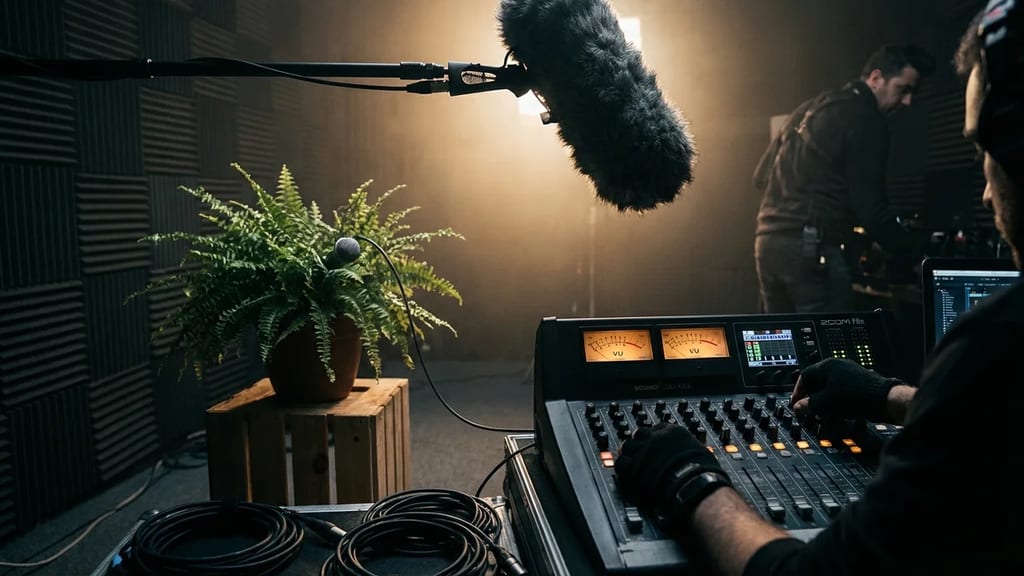
Hidden microphone concealed within props or set elements for discreet on-set audio capture at fixed shooting locations.

Technical Details

Plant mics typically use small-diaphragm condenser microphones with a cardioid polar pattern and a frequency response of 20 Hz to 20 kHz. Capsule diameters range from 3-6 mm with a sensitivity of -44 dBV/Pa. Modern systems utilize digital wireless transmission in the 2.4 GHz band with a latency under 2.9 ms. Battery life averages 8-12 hours with lithium-based power cells. Omnidirectional characteristics are often employed to compensate for changes in actor positions.

History & Development

The first plant mics originated in 1952 at Warner Bros. for the television production "Studio One," where technicians hid microphones in table lamps and flower vases. In 1967, Sennheiser developed the first professional plant mic system, the MKE 2, for theater productions. The breakthrough came in 1975 with wireless systems from Sony, which made plant mics practical for film productions. From 1990 onwards, digital transmitters enabled the simultaneous use of up to 32 plant mics without frequency interference.

Practical Application in Film

In "The Social Network" (2010), Ren Klyce used plant mics in computer monitors and desk lamps to naturally capture hectic office conversations. "Birdman" (2014) employed over 20 plant mics in mirrors and lighting fixtures in the theater dressing room. Plant mics are particularly suitable for ensemble scenes with unpredictable movement patterns and improvisations. However, they require precise pre-planning, as repositioning afterward is impossible. Noise from props or electromagnetic interference from set lighting can become problematic.

Comparison & Alternatives

Plant mics differ from lavalier microphones by being object-bound rather than person-bound, and from boom microphones by their static placement. Modern alternatives include array microphones like the Rycote Super-Softie, which digitally combine multiple polar patterns. For mobile camera work, wireless clip-on microphones are suitable, while overhead booms remain more precise for controlled dialogue scenes. Plant mics are optimal for multi-day shoots on the same set with changing camera positions.
From the crafts

Perspectives

Cinematographer

Ich plane Plant Mic-Positionen bereits im Storyboard mit, da sie meine Kamerawinkel begrenzen können – ein Mikrofon in der Tischlampe bedeutet, dass ich diesen Bereich nicht aus bestimmten Winkeln filmen kann. Bei Steadicam-Fahrten oder 360-Grad-Schwenks sind Plant Mics oft die einzige Möglichkeit für sauberen Ton, da Boom-Operatoren im Bild stehen würden.

Director

Plant Mics geben mir die Freiheit für spontane Schauspielführung, weil die Darsteller nicht an Lavs oder Boom-Reichweiten gebunden sind. In Improvisationsszenen kann ich die Darsteller natürlich im Raum bewegen lassen, ohne dass der Tonmeister panisch winkt. Allerdings muss ich die Mikrofonpositionen bei der Szenenentwicklung mitdenken – ein Dialog am Fenster funktioniert nicht, wenn das Plant Mic am Esstisch steht.

Producer

Plant Mics bedeuten höhere Vorbereitungskosten, sparen aber Drehtage durch weniger Tonwiederholungen und schnellere Kamerapositionswechsel. Pro Plant Mic rechne ich 400-800 Euro Mietkosten, dafür reduziert sich die Boom-Operator-Zeit um etwa 30%. Bei mehrwöchigen Dreharbeiten am gleichen Set amortisiert sich die Investition durch eingesparte Überstunden und weniger ADR-Sessions in der Postproduktion.

More in the lexikon

Related terms

Test your knowledge

Quiz

1. Was beschreibt „Plant Mic" am besten?

2. Zu welchem Department gehört „Plant Mic"?

3. Wie viele verschiedene Fachperspektiven bietet dieser Eintrag?

Report an error
From the Filmfarm ecosystem

Understand visual language, budget productions, connect crew.

The Lexikon is part of the Filmfarm ecosystem — alongside budgeting (FilmBalance), an industry magazine (FilmCircus) and crew networking (FilmCall, CrewMesh). One shared vocabulary for the whole production.

FilmFarm FilmRadarComing soonFilmPulseComing soonFilmNumbersComing soonFilmCapitalComing soonFilmLabComing soonFilmBalanceComing soonFilmCircusComing soon