Filmlexikon.
Support
Pancolar 50
Camera · Terms

Pancolar 50

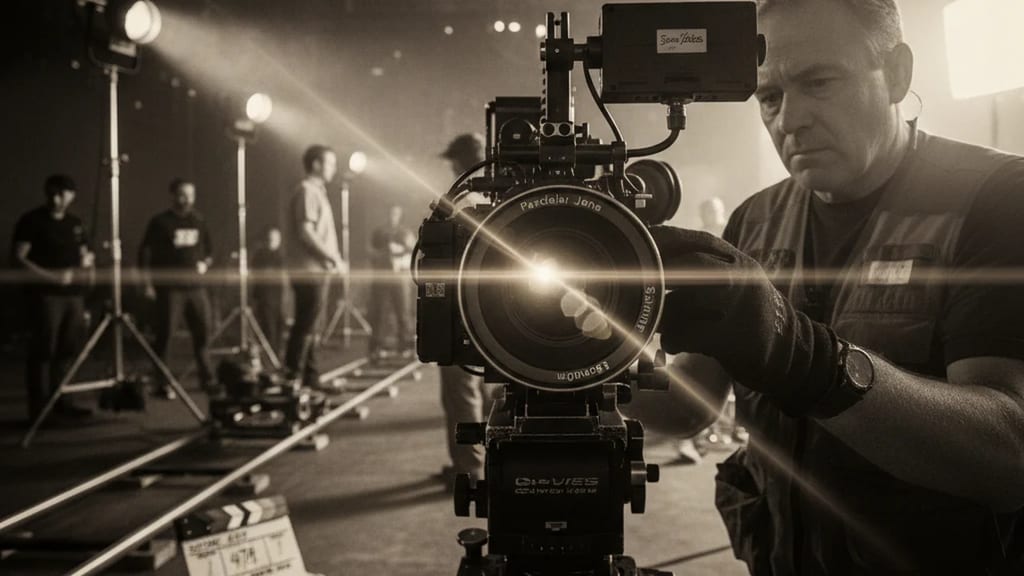
Murnau AI illustration
arri skypanel astera hydrapanel company move cooke panchro cooke speed panchro led panel litepanels astra litepanels gemini

50mm standard lens by Carl Zeiss Jena featuring a 6-element design, prized for sharp resolution and natural perspective rendition.

Technical Details

The lens consists of six elements in four groups with a multi-layer anti-reflective coating. The minimum focusing distance is 35cm, and the filter diameter is 49mm. The anodized aluminum housing weighs 285g and has a length of 44mm. The aperture blades are not circular but hexagonal, which creates characteristic starburst highlights when the aperture is stopped down. The aperture closes down to f/22, and the optimal sharpness level is achieved between f/4 and f/8. A Zebra version with black and white ribbing on the focus ring was produced from 1970 onwards.

History & Development

Carl Zeiss Jena introduced the Pancolar 50 in 1965 as a standard lens for Praktica cameras to compete with Western Zeiss lenses. Production took place at VEB Pentacon Dresden under strict quality control according to Zeiss standards. After reunification in 1991, production ceased as the M42 mounts disappeared in favor of more modern connections. Today, well-preserved examples are considered sought-after vintage lenses for digital cameras with appropriate adapters.

Practical Use in Film

At wide open aperture, the Pancolar 50 produces a distinctive "GDR look" with soft outlining and a warm color tone, which was characteristic of East German productions in the 1970s and 80s. DEFA cinematographers appreciated the even edge sharpness for wide shots and the creamy bokeh for portraits. The robust construction easily withstood harsh shooting conditions in studios and on location. The manual focus with a precise helical mechanism allows for exact focus shifts, while the linear aperture control enables smooth exposure changes during shooting.

Comparison & Alternatives

Compared to the West German Zeiss Planar 50mm f/1.4, the Pancolar offers less light gathering capability but a more characteristic bokeh rendering. Modern alternatives like the Zeiss Milvus 50mm f/1.4 deliver technically superior imaging performance but do not achieve the specific vintage character. The Soviet Helios 44-2 with a similar focal length produces more extreme swirly bokeh, while the Pancolar appears more balanced. For authentic retro looks, filmmakers today are again using adapted Pancolar lenses on modern digital cameras.
From the crafts

Perspectives

Cinematographer

Als DoP setze ich das Pancolar für Szenen ein, wo ich bewusst den warmen, leicht nostalgischen Look der 70er Jahre erzeugen will – die weiche Konturzeichnung bei f/1.8 schmeichelt Hautpartien und das charakteristische Bokeh isoliert Protagonisten perfekt vom Hintergrund. Der lineare Fokuszug ermöglicht mir präzise manual Focus-Pulls ohne moderne elektronische Hilfsmittel, was bei Vintage-Setups authentischer wirkt.

Director

Ich nutze das Pancolar gezielt für Flashback-Sequenzen oder nostalgische Momente, da sein organischer Rendering-Stil eine emotionale Wärme vermittelt, die digitale Objektive oft vermissen lassen. Die leichte Unperfektion bei Offenblende – keine klinische Schärfe – erzeugt eine menschlichere, intimere Bildsprache, die perfekt zu character-driven Storys passt.

Producer

Das Pancolar ist eine kostengünstige Alternative zu teuren Vintage-Zeiss-Objektiven für Low-Budget-Produktionen mit Retro-Look – gebrauchte Exemplare kosten 150-300 Euro statt 2000+ für westliche Pendants. Allerdings brauche ich zusätzliche Adapter für moderne Kameras und muss mit rein manueller Bedienung rechnen, was die Drehzeit verlängern kann.

More in the lexikon

Related terms

Test your knowledge

Quiz

1. Was beschreibt „Pancolar 50" am besten?

2. Zu welchem Department gehört „Pancolar 50"?

3. Wie viele verschiedene Fachperspektiven bietet dieser Eintrag?

Report an error
From the Filmfarm ecosystem

Understand visual language, budget productions, connect crew.

The Lexikon is part of the Filmfarm ecosystem — alongside budgeting (FilmBalance), an industry magazine (FilmCircus) and crew networking (FilmCall, CrewMesh). One shared vocabulary for the whole production.

FilmFarm FilmRadarComing soonFilmPulseComing soonFilmNumbersComing soonFilmCapitalComing soonFilmLabComing soonFilmBalanceComing soonFilmCircusComing soon