Technical Details
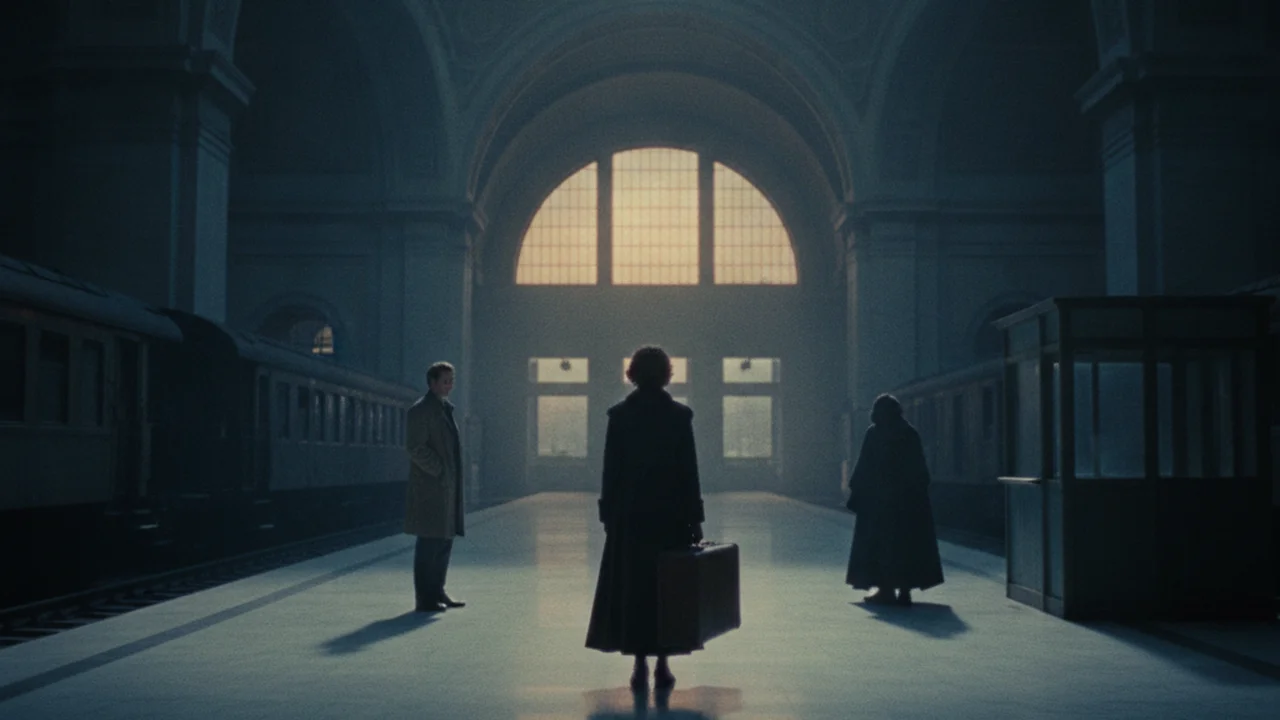
Objective narration manifests through static or slow-moving camera work, mostly in normal view (50mm focal length corresponds to the natural field of vision). Editing pace typically ranges from 4-8 seconds per shot. Point-of-view shots are avoided; instead, master shots and wide shots dominate. The sound level is limited to diegetic elements – film music as an emotional commentary is largely absent. Color temperature remains neutral at 5600K daylight or 3200K artificial light without dramaturgical color shifts.
History & Development
The objective narrative style established itself in the 1940s through Italian Neorealism, particularly Roberto Rossellini's "Rome, Open City" (1945). André Bazin's theory of realism (1958) defined depth of field and long takes as means of authentic representation. The Nouvelle Vague adopted these principles, while the Dogme 95 movement (1995) radicalized objective representation with its "Vow of Chastity." Contemporary representatives like the Dardenne brothers or Cristian Mungiu continue this tradition.
Practical Application in Film
Michael Haneke's "Caché" (2005) demonstrates objective narration through static surveillance camera aesthetics without cuts within scenes. Ken Loach's social dramas use handheld camera in a documentary style but refrain from emotionalizing music. "4 Months, 3 Weeks and 2 Days" (2007) by Cristian Mungiu employs long, unbroken takes and frontal camera positions. The workflow requires precise mise-en-scène, as subsequent emotional manipulation through editing and music is absent.
Comparison & Alternatives
Objective narration is distinguished from the subjective camera, which adopts character perspectives, and from the authorial narrative with an omniscient narrator. While Hollywood conventions favor emotional guidance of the audience, objective representation aims for intellectual engagement. Semi-objective approaches combine neutral observation with selective subjective moments. Free indirect discourse in film approaches characters without fully adopting their perspective.