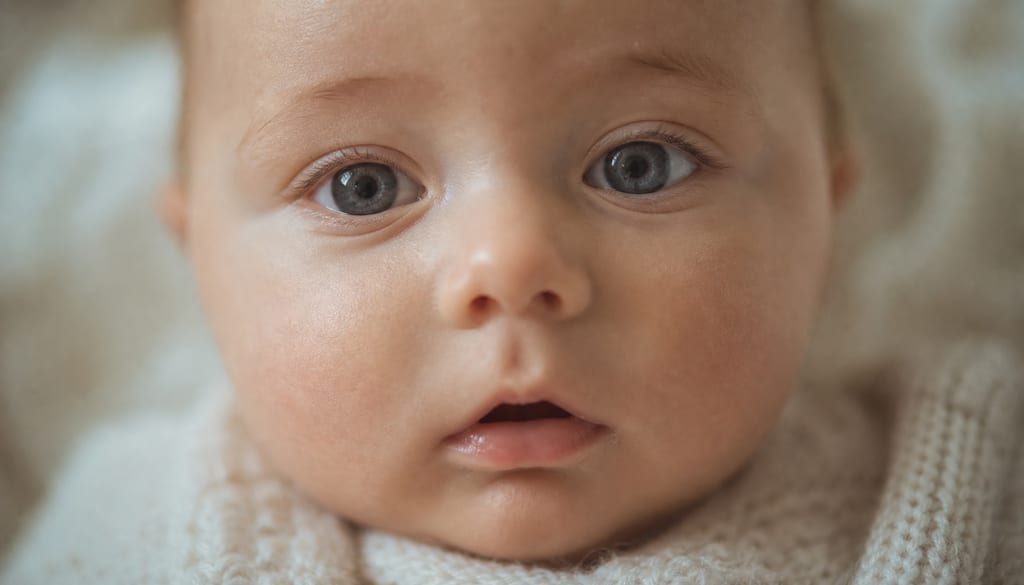
Framing from the neck up — shows facial expression and emotional reaction. The default size for dialogue and intimate moments; also a refuge when wider coverage isn't working.
The close shot — in English close-up or close shot — is a camera setup that shows the face from the neck up or a single object in great detail. It is the most intimate of all shot sizes: facial expressions, microexpressions, a twitching corner of the mouth — everything that gets lost in a medium shot becomes inevitably visible here. The close shot is the standard tool for dialogue, emotional reaction, and identification with a character. DPs speak of a tight close-up when only the eyes and mouth are in frame, and a medium close-up (MCU) when the shoulders and upper chest are still visible.
Technical Implementation
For a classic close shot, a lens between 50 mm and 135 mm is used — shorter focal lengths (under 35 mm) distort faces unpleasantly ("potato nose"). Depth of field is critical in close shots: at T2.8 on an 85mm lens, the depth of field at a distance of one meter is only about 2 centimeters — the 1st AC must precisely focus on the eyes and adjust as the actor moves minimally. The aperture simultaneously determines the separation from the background: a wide aperture (T1.4 or T2) completely detaches the face from the background, while a closed aperture (T8) shows the surroundings sharply — the DP decides whether the viewer should see where the character is, or if only the face matters.
Dramaturgical Use
The close shot is the primary means of emotional escalation. When a scene begins in a wide shot and condenses through medium shots to close shots, the viewer physically feels the increasing intimacy or threat. Carl Theodor Dreyer's The Passion of Joan of Arc (1928) consists almost entirely of close shots — an extreme example that proves the close-up alone can carry a film. Sergio Leone worked with extreme dynamics: wide shot to close-up without an intermediate cut — the jump in scale causes a visual shock. In modern editing, the close shot is often used more sparingly: a film that goes to a close-up too early has no further escalation for the decisive moment.
The Close Shot as a Retreat
A pragmatic set secret: the close shot is the salvation when the wide shot doesn't work. Unattractive background? Wide shot impossible due to missing props? No time for an elaborate master shot? Then the director resorts to a close shot — it isolates the character and masks the problematic context. Experienced directors consciously plan this retreat: in the coverage plan, there is always a close shot as a safety net. The disadvantage: a film that relies too heavily on close shots loses spatial orientation — the viewer no longer knows where the characters stand in relation to each other, and the emotional weight of the close shot wears off.
Related terms
Quiz
1. Zu welchem Department gehört „Nahaufnahme"?