Filmlexikon.
Support
Motion Control
Camera · Terms

Motion Control

Murnau AI illustration
flow para roll take

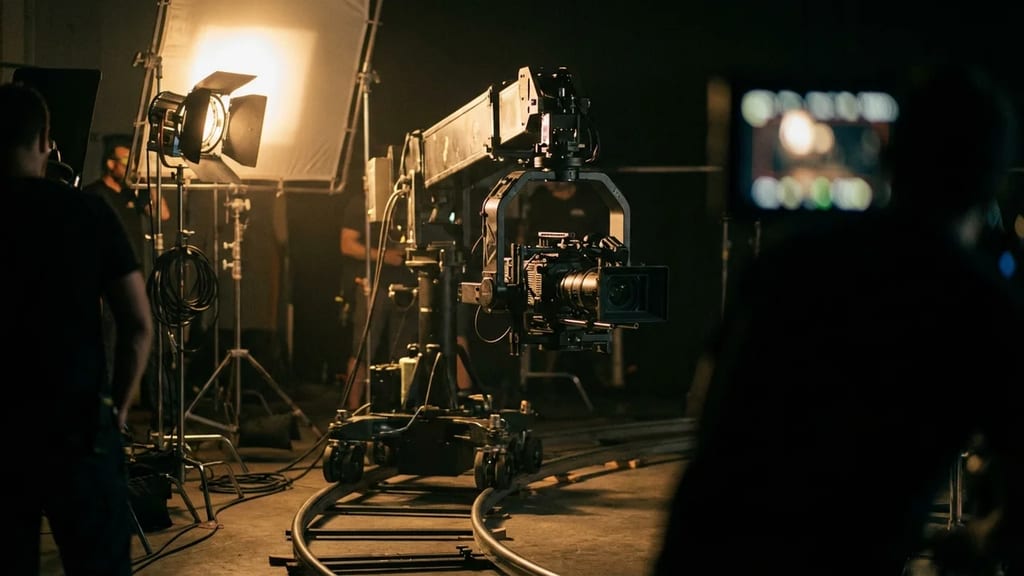
Computer-controlled camera system with servo motors executing repeatably precise camera moves in 0.01° increments. Enables VFX compositing and product morphing through exact motion programming.

Technical Details

Modern motion control systems use servo motors and encoders that execute movements in 0.01° increments. Typical speeds range from 0.001°/s for time-lapses to 120°/s for dynamic moves. Path programming is done via keyframe interpolation with Bézier curves or through manual teach-in procedures. Leading systems like Technodolly or Bolt achieve payloads up to 45kg at a maximum speed of 4m/s. Control is managed by real-time operating systems with cycle times under 1ms.

History & Development

In 1977, John Dykstra developed the first motion control system, named "Dykstraflex," at Industrial Light & Magic for "Star Wars." The computer-controlled camera enabled photorealistic spaceship movements for the first time through multiple exposures of identical moves with different model elements. In 1982, Douglas Trumbull introduced high-speed shots of up to 120fps with the "65mm Hi-Speed Motion Control System." In the 1990s, companies like Kuper Controls miniaturized the systems for tabletop setups, while today, motion capture integration and previs connectivity are standard.

Practical Use in Film

"Blade Runner" (1982) utilized motion control for its photo-zoom sequence with 30-second moves in 16 individual passes. For product shots, identical camera paths allow for seamless morphing between different product variations. In VFX, motion control synchronizes the real camera with virtual environments – the live-action plate for "Gravity" (2013) was created almost entirely on motion control rigs. Typical set-up times are 2-4 hours, with complex moves requiring up to 20 takes for perfection.

Comparison & Alternatives

Motion control differs from conventional dollies through its repeatability rather than spontaneous creativity. Modern alternatives include programmable camera drones for exterior shots and Technocranes with motion control heads for more flexible positioning. Virtual cameras in LED volumes (Stagecraft) are increasingly replacing motion control for background plates with real-time rendering. Remote heads with motion control functionality offer 80% of the precision at significantly reduced costs and setup times.

From the crafts

Perspectives

Cinematographer

Motion Control zwingt mich zur präzisen Vorab-Planung jeder Bewegung, da spontane Anpassungen am Set kaum möglich sind. Die perfekte Wiederholbarkeit ermöglicht mir aber Mehrfachbelichtungen für komplexe VFX-Shots, die mit herkömmlicher Handkamera unmöglich wären. Bei Produktfilmen kann ich identische Fahrten für verschiedene Farbvarianten fahren und diese später nahtlos zusammenschneiden.

Director

Motion Control verwende ich gezielt für unmenschlich perfekte Bewegungen, die eine künstliche oder traumhafte Atmosphäre erzeugen – die Präzision selbst wird zum narrativen Element. Besonders wertvoll ist die Möglichkeit, komplexe Einstellungen in mehreren Durchgängen zu drehen und dabei Schauspieler, Beleuchtung und VFX-Elemente separat zu optimieren. Die lange Setup-Zeit erfordert aber sehr durchdachte Shot-Listen.

Producer

Motion Control bedeutet Tagessätze von 3.500-8.000€ plus Techniker, rechtfertigt sich aber durch die Präzision bei VFX-Heavy-Shots und reduzierte Postproduction-Kosten. Die langen Setup-Zeiten erfordern straffe Scheduling-Disziplin – maximal 6-8 Shots pro Tag statt üblicher 15-20. Für internationale Produktionen spare ich durch identische Motion-Control-Programme für verschiedene Märkte erhebliche Reisekosten.

More in the lexikon

Related terms

Test your knowledge

Quiz

1. Zu welchem Department gehört „Motion Control"?

2. Wie viele verschiedene Fachperspektiven bietet dieser Eintrag?

Report an error
From the Filmfarm ecosystem

Understand visual language, budget productions, connect crew.

The Lexikon is part of the Filmfarm ecosystem — alongside budgeting (FilmBalance), an industry magazine (FilmCircus) and crew networking (FilmCall, CrewMesh). One shared vocabulary for the whole production.

FilmFarm FilmRadarComing soonFilmPulseComing soonFilmNumbersComing soonFilmCapitalComing soonFilmLabComing soonFilmBalanceComing soonFilmCircusComing soon