Filmlexikon.
Support
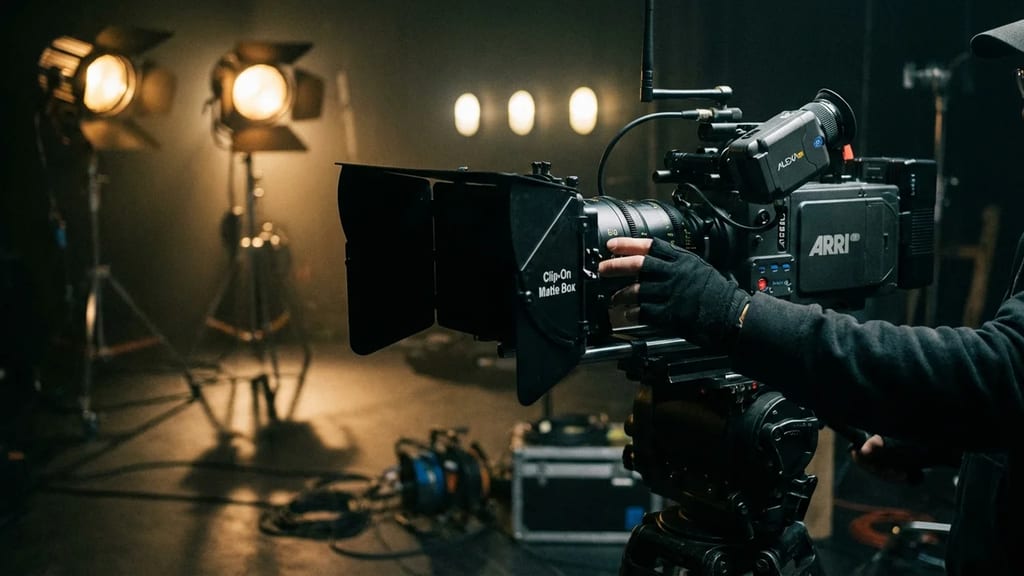
Clip-On Matte Box
Camera · Terms

Clip-On Matte Box

Murnau AI illustration
compositing keying green screen blue screen chroma key roto rotoscoping digital matte painting

Compact filter holder that clamps directly to the lens. Accommodates 1–3 filter slots for 4×4″ filters and reduces lens flare by up to 95%.

Technical Details

Standard clip-on matte boxes offer 1-3 filter slots for 4x4" or 4x5.65" filters, with the front slot designed to rotate for polarizing and graduated filters. The lens hood system uses interchangeable masks covering focal lengths from 16mm to 200mm (35mm equivalent). High-quality models like the Arri MMB-2 achieve stray light reduction of up to 95% with side lighting. The construction is made of anodized aluminum with a matte black interior coating to prevent reflections.

History & Development

Panavision developed the first clip-on matte boxes in 1968 for their anamorphic lenses, as conventional screw-in filters damaged the extreme front element. Arri standardized the 4x4" filter mount for 35mm cameras in 1984 with the K2.47368 matte box. Tiffen introduced the first carbon fiber model in 1991, offering three filter slots at a weight of 340g. Modern developments integrate motorized polarizer rotation and electronic ND filters with a 1-10 stop adjustment range.

Practical Use in Film

Roger Deakins used clip-on matte boxes with special amber warming filters for interior shots in Wallace Corporation during "Blade Runner 2049" (2017). The system allowed for quick filter changes during 18-minute Steadicam sequences. For handheld shots, the clip-on reduces the camera rig weight by an average of 2.3kg compared to rod support systems. Disadvantage: Focal lengths below 14mm can cause vignetting, which needs to be corrected in post-production.

Comparison & Alternatives

Studio matte boxes with 15mm rod support offer more stable filter holding and precise light baffling, but add 2-4kg to the weight. Screw-in filters on the lens cost 60-80% less but are limited to a maximum of two filters and make quick changes difficult. Modern variable ND filters are increasingly replacing mechanical matte boxes in documentary and run-and-gun productions. Drop-in filter systems on large telephoto lenses (400mm+) operate on a similar clip-on principle but are mounted internally to the lens.

From the crafts

Perspectives

Cinematographer

Ich schätze Clip-On-Kompendien für schnelle Handheld-Sequenzen, da sie das Rig-Gewicht minimal halten und trotzdem saubere Verlaufsfilter-Übergänge ermöglichen. Bei kritischen Gegenlicht-Situationen teste ich vorher die Streulicht-Performance, weil günstige Modelle oft unerwünschte Lens-Flares durchlassen. Der schnelle Filterwechsel zwischen Innen- und Außenaufnahmen spart mir täglich 20-30 Minuten Setup-Zeit.

Director

Für mich bedeutet das Clip-On-System mehr spontane Bildlooks ohne schweres Equipment - ich kann während der Probe entscheiden, ob die Abendsonne durch einen Warming-Filter emotionaler wirkt. Die kompakte Bauweise erlaubt mir, auch in engen Räumen oder Fahrzeugen mit Filtern zu arbeiten, wo eine große Matte Box unmöglich wäre. Allerdings muss ich bei extremen Weitwinkel-Einstellungen Vignettierung als Gestaltungselement einkalkulieren oder darauf verzichten.

Producer

Ein Clip-On-Kompendium kostet 800-2.500 Euro versus 4.000-8.000 Euro für Studio-Matte-Boxes - bei 90% der Funktionalität eine klare Kalkulation für Budget-bewusste Produktionen. Das reduzierte Gewicht spart mir Steadicam-Operator-Overtime und ermöglicht längere Handheld-Takes ohne zusätzliche Pausen. Einziger Kostenfaktor: Bei intensiver Nutzung müssen Filtersteckplätze alle 200-300 Drehtage wegen Verschleiß getauscht werden.

More in the lexikon

Related terms

Test your knowledge

Quiz

1. Was beschreibt „Clip-On Kompendium" am besten?

2. Zu welchem Department gehört „Clip-On Kompendium"?

3. Wie viele verschiedene Fachperspektiven bietet dieser Eintrag?

Report an error
From the Filmfarm ecosystem

Understand visual language, budget productions, connect crew.

The Lexikon is part of the Filmfarm ecosystem — alongside budgeting (FilmBalance), an industry magazine (FilmCircus) and crew networking (FilmCall, CrewMesh). One shared vocabulary for the whole production.

FilmFarm FilmRadarComing soonFilmPulseComing soonFilmNumbersComing soonFilmCapitalComing soonFilmLabComing soonFilmBalanceComing soonFilmCircusComing soon