Filmlexikon.
Support
Man vs. Technology
Theory · Terms

Man vs. Technology

Murnau AI illustration
color grading din color correction primary correction secondary correction power window qualifier 1d lut

Narrative structure exploring human conflict with technology: AI rebellion, machine survival battles, ethical dilemmas in artificial intelligence, and identity crises from technological integration.

Technical Details

The narrative structure is based on four fundamental patterns: rebellion against overpowering AI (The Matrix, 1999), survival against autonomous machines (The Terminator, 1984), ethical dilemmas in human-AI interaction (Ex Machina, 2014), and identity crises through technology integration (Ghost in the Shell, 1995). Character arcs follow an inverse hero's journey: protagonists begin technology-affine and develop skepticism or resistance. The dramatic tension builds using exponentially increasing technological threat while human resources dwindle.

History & Development

Fritz Lang's Metropolis (1927) first established the cinematic depiction of the human-machine conflict. Stanley Kubrick's 2001: A Space Odyssey (1968) redefined the archetype of flawed AI with HAL 9000. James Cameron's Terminator franchise (from 1984) systematized the time travel component as a solution approach. The Wachowskis revolutionized the visual representation of virtual realities in 1999 with The Matrix. Since Her (2013) and Ex Machina (2014), the focus has shifted from physical to psychological threats posed by AI systems.

Practical Application in Film

Visual design contrasts organic with geometric forms: warm skin tones against cold metallic colors, chaotic human movements against precise machine movements. Sound design differentiates between natural and synthetic sounds. Blade Runner 2049 (2017) uses 2.35:1 Cinemascope for monumental technology shots, switching to 1.85:1 for intimate human moments. Action sequences follow asymmetrical choreographies: unpredictable human tactics versus algorithm-based machine precision. CGI integration requires photorealistic rendering standards (minimum 4K, 48fps for machine POV shots).

Comparison & Alternatives

Distinction from "Man vs. Nature": technology as a consciously designed, not naturally occurring, threat. Difference from "Man vs. Society": conflict with non-human antagonists. Hybrid forms emerge with cyborg characters (Ghost in the Shell) or AI-controlled societies (The Matrix). Modern variants integrate biotechnology (Annihilation, 2018) or nanotechnology (The Day the Earth Stood Still, 2008). Post-apocalyptic settings (Mad Max: Fury Road, 2015) combine technology critique with survival horror elements.
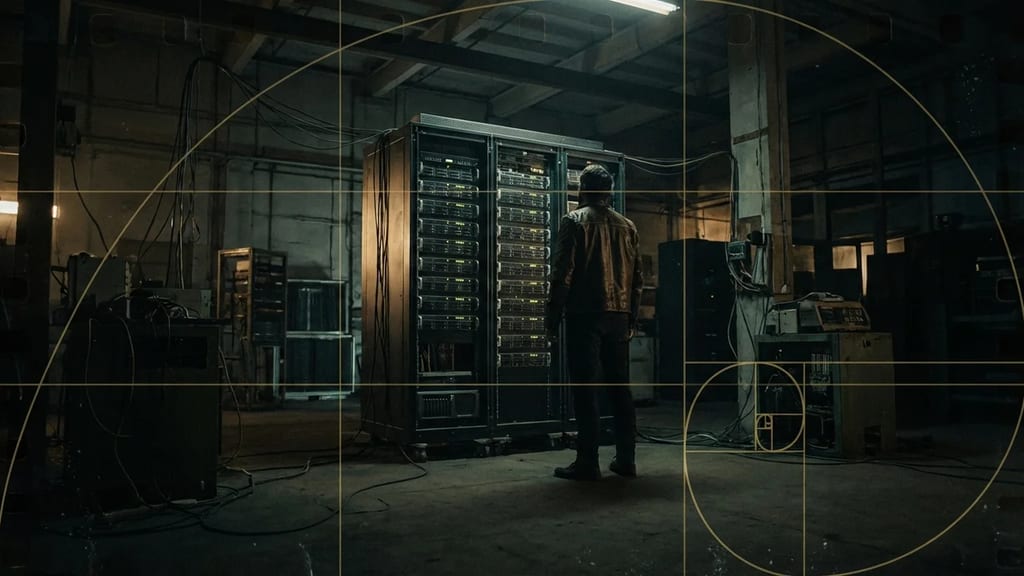
From the crafts

Perspectives

Cinematographer

Ich arbeite mit extremen Brennweiten-Kontrasten: Weitwinkel für bedrohliche Technologie-Environments, Tele für isolierte menschliche Reaktionen. LED-Panels mit programmierbaren Farbtemperatur-Shifts visualisieren AI-Bewusstsein, während ich für menschliche Charaktere ausschließlich praktische Lichtquellen verwende. Handkamera für organische Bewegungen, Technocrane für maschinelle Präzision.

Director

Ich inszeniere Technologie als eigenständigen Charakter mit konsistenter visueller Sprache und Verhaltensmustern. Die emotionale Kurve folgt dem umgekehrten Uncanny Valley: anfängliche Faszination kippt zu existenzieller Bedrohung. Dialoge reduziere ich auf Minimum – die Spannung entsteht durch visuelle Kommunikation zwischen Mensch und Maschine, nicht durch Exposition.

Producer

VFX-Budget kalkuliere ich mit 40-60% der Gesamtkosten bei A-Produktionen, da photorealistische AI-Darstellung aufwendige Motion-Capture und Rendering-Farmen erfordert. Casting bevorzugt physisch ausdrucksstarke Schauspieler für Kontrastierung zu CGI-Antagonisten. Drehplan strukturiere ich VFX-optimiert: alle Greenscreen-Aufnahmen geblockt, da Nachproduktion 18-24 Monate benötigt.

More in the lexikon

Related terms

Test your knowledge

Quiz

1. Was beschreibt „Mensch gegen Technologie" am besten?

2. Zu welchem Department gehört „Mensch gegen Technologie"?

3. Wie viele verschiedene Fachperspektiven bietet dieser Eintrag?

Report an error
From the Filmfarm ecosystem

Understand visual language, budget productions, connect crew.

The Lexikon is part of the Filmfarm ecosystem — alongside budgeting (FilmBalance), an industry magazine (FilmCircus) and crew networking (FilmCall, CrewMesh). One shared vocabulary for the whole production.

FilmFarm FilmRadarComing soonFilmPulseComing soonFilmNumbersComing soonFilmCapitalComing soonFilmLabComing soonFilmBalanceComing soonFilmCircusComing soon