Filmlexikon.
Support
Man vs. Nature
Theory · Terms

Man vs. Nature

Murnau AI illustration
man vs society man vs technology man vs supernatural

Narrative structure where characters struggle against natural forces—from survival thrillers to disaster films. Typically follows three-act structure: Exposition (15–20%), Confrontation (50–60%), Resolution (20–25%).

Technical Details

The narrative structure follows a three-act progression: exposition of natural forces (average 15-20% of runtime), confrontation with escalating obstacles (50-60% of runtime), and resolution through overcoming or capitulation (20-25% of runtime). Subcategories include survival thrillers against wilderness, disaster movies against natural catastrophes, adventure films against geographical obstacles, and maritime thrillers against oceanic forces. The tension curve typically reaches three to five peaks of increasing intensity, with the final climax usually positioned between minutes 80-100 for feature-length films.

History & Development

Cinematic adaptations emerged as early as 1903 with Edwin S. Porter's "The Great Train Robbery," which featured bandits battling blizzards. Frank Capra's "The Hurricane" (1937) first defined technical standards for natural disaster staging with 40-minute storm sequences. The era of disaster movies began in 1970 with "Airport" and peaked between 1972-1978 with producer Irwin Allen ("The Towering Inferno," "Earthquake"). Digital effects revolutionized the genre starting in 1996 with "Twister," which realized 56 tornado sequences entirely through computer generation.

Practical Application in Film

"Cast Away" (2000) isolates Tom Hanks for 143 minutes on a Pacific island against hunger, thirst, and loneliness. "The Revenant" (2015) confronts Leonardo DiCaprio with Siberian temperatures of -40°C during 80% of the shooting time. "Gravity" (2013) reduces the conflict to Sandra Bullock's struggle against the weightlessness of space in a 90-minute real-time dramaturgy. Maritime variants like "Life of Pi" (2012) use 227 days of ocean isolation as a timeframe for philosophical self-reflection.

Comparison & Alternatives

Distinction from "Man vs. Man" by the absence of personified antagonists with conscious motives. Unlike "Man vs. Self," the conflict remains externally and physically measurable. Modern hybrid forms combine natural forces with technical failure ("The Martian," 2015) or social conflicts ("The Impossible," 2012). Action thrillers integrate natural obstacles as subplots within personified main conflicts, while pure nature conflicts establish the environment as the primary resistance.
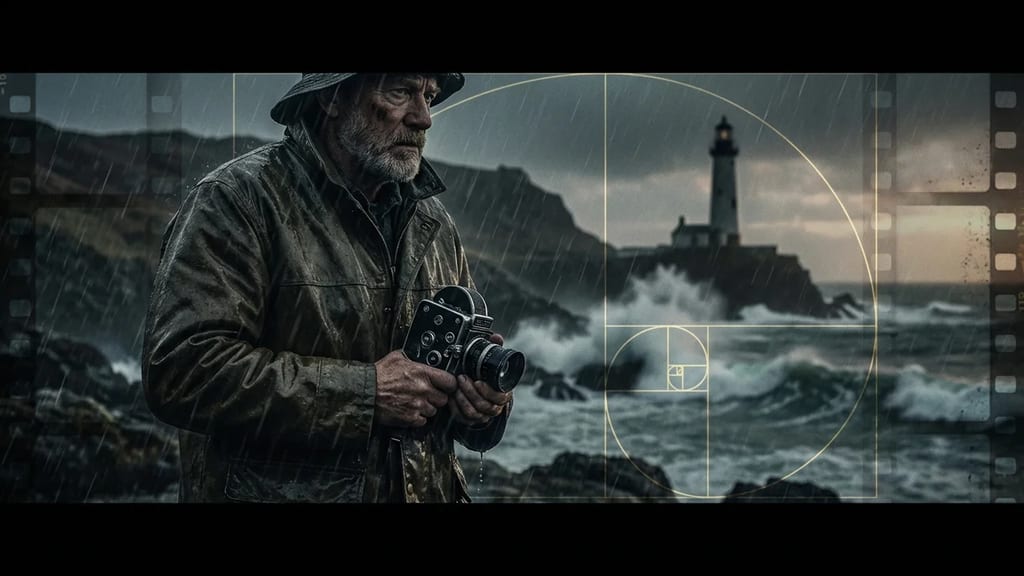
From the crafts

Perspectives

Cinematographer

Ich brauche bei Naturgewalten-Sequenzen wetterresistente Kameragehäuse und mindestens drei Backup-Systeme, da Salzwasser oder Sandstürme regelmäßig Equipment zerstören. Die extremen Lichtverhältnisse von Schneelandschaften oder Wüsten erfordern Overexposure-Kompensation um zwei bis drei Blendenstufen, während Unterwasseraufnahmen spezielle Dome-Ports für Weitwinkel-Verzerrungen benötigen.

Director

Ich nutze die Natur als stummen Antagonisten, der keine Dialoge braucht, aber durch Sounddesign und visuellen Rhythmus charakterisiert werden muss - ein Sturm entwickelt dramaturgische Beats wie ein menschlicher Gegenspieler. Die fehlende psychologische Komponente kompensiere ich durch intensivierte Körpersprache und physische Reaktionen der Protagonisten, da verbale Exposition gegen Naturgeräusche oft untergeht.

Producer

Ich kalkuliere bei Outdoor-Drehs grundsätzlich 30-40% Mehrkosten für wetterbedingte Verzögerungen und Equipment-Ersatz, plus zusätzliche Versicherungsprämien für Extremwetter-Risiken. Naturkatastrophen-Sequenzen erfordern oft VFX-Budgets von 15-25 Millionen Dollar, während Location-Scouting für authentische Wildnis-Settings die Vorproduktion um durchschnittlich acht Wochen verlängert.

More in the lexikon

Related terms

Test your knowledge

Quiz

1. Zu welchem Department gehört „Mensch gegen Natur"?

2. Wie viele verschiedene Fachperspektiven bietet dieser Eintrag?

Report an error
From the Filmfarm ecosystem

Understand visual language, budget productions, connect crew.

The Lexikon is part of the Filmfarm ecosystem — alongside budgeting (FilmBalance), an industry magazine (FilmCircus) and crew networking (FilmCall, CrewMesh). One shared vocabulary for the whole production.

FilmFarm FilmRadarComing soonFilmPulseComing soonFilmNumbersComing soonFilmCapitalComing soonFilmLabComing soonFilmBalanceComing soonFilmCircusComing soon