Long Side Framing
Definition
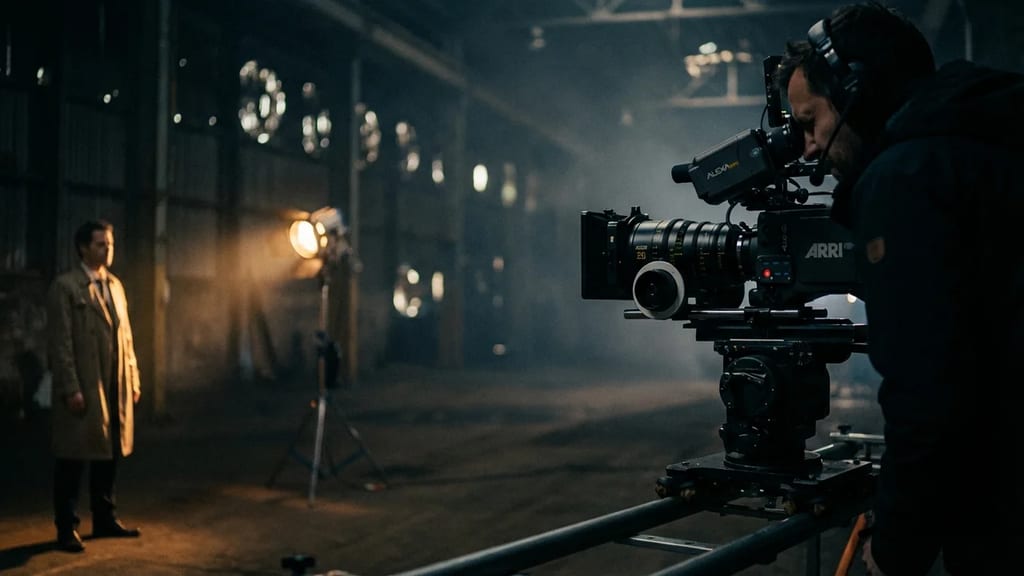
The long side refers to a framing technique where the main subject or active character is positioned at the outer edge of the frame, looking or moving towards the larger area of the image. This creates an asymmetrical aspect ratio with approximately 70-80% negative space in front of the subject and only 20-30% behind. The term became established in the 1960s alongside the systematic analysis of image composition in the Nouvelle Vague.
Technical Details
In a 2.35:1 Cinemascope format, long side specifically means: positioning the main subject in the first or last third of the frame, with at least 60% of the image width as negative space in the direction of gaze or movement. In 16:9 productions, this corresponds to approximately 1,920 x 270 pixels of available space when the subject is placed at the edge. A distinction is made between static long side (subject looks into space) and dynamic long side (subject moves in that direction). Modern camera systems like ARRI Alexa or RED offer framing guides with configurable rule-of-thirds grids for precise implementation.
History & Development
Jean-Luc Godard systematically used long side framing in "Breathless" (1960) to visualize psychological distance and urban alienation. Akira Kurosawa perfected the technique from 1961 in "Yojimbo" for building tension in duel scenes. In the 1970s, the term became established as standard terminology by film theorists such as André Bazin. Digital image creation since the 2000s allows for precise pre-visualization through software like FrameForge or ShotPro.
Practical Application in Film
Stanley Kubrick used long sides in "The Shining" (1980) for Danny's tricycle rides through the hotel corridors – the child always rides into 80% negative space. Wes Anderson employs the technique in "The Grand Budapest Hotel" (2014) for comedic timing effects: characters speak into 70% negative space. The framing enhances feelings of loneliness, uncertainty, or impending threat. Technically, it requires precise lighting, as large areas of the frame must be illuminated without overpowering the main subject.
Comparison & Alternatives
The opposite of the short side, where only 20-30% of space remains in front of the subject, creating a sense of confinement or tension. Central positioning offers a neutral, documentary effect. Extreme long side (over 80% negative space) only works with sufficient screen size – the effect is lost on smartphone playback. Modern HDR grading allows for more subtle differentiation between the subject and negative space than earlier film emulsions.