Filmlexikon.
Support
Kinefinity Terra
Camera · Equipment

Kinefinity Terra

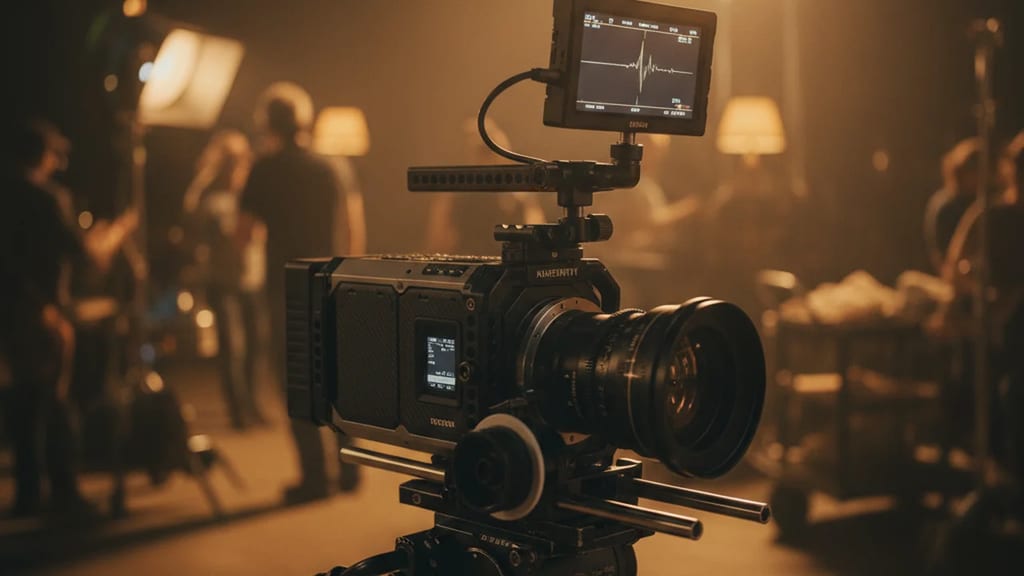
Murnau AI illustration
flow kinefinity para roll take

Chinese digital camera with 4K/6K sensor, 14 stops dynamic range, and KineRAW recording to SSD modules. Compact alternative to RED for indie productions.

Technical Details

The Terra operates with a proprietary KineMOUNT (Canon EF-compatible) and features a native ISO range of 400-5120, expandable to ISO 100-25600. The dynamic range is 14 stops at ISO 800. The camera weighs 1.2 kg without a lens and measures 140 × 98 × 75 mm. Recording is done on KineMag SSD modules with capacities from 512 GB to 2 TB. The internal color science is based on KineColorOS with native Rec.2020 color space support. Two variants exist: Terra 4K (4096 × 2160) and Terra 6K with higher sensor resolution.

History & Development

Kinefinity first introduced the Terra in 2016 and launched it in 2017 as a direct competitor to RED cameras. The Chinese company, founded in 2009, initially established itself in Asia before expanding internationally with the Terra. In 2019, the Terra 6K followed as an upgrade with an improved sensor and expanded codec options. Development focused on affordable high-performance cameras for the independent film sector.

Practical Use in Film

The Terra is primarily used in independent productions and low-budget features, for example, in Zhang Yimou's "Shadow" (2018) for specific sequences. The KineRAW workflow requires the proprietary KineStation software for conversion to common formats like ProRes or DPX. Advantages: compact design, good low-light performance from ISO 1600 upwards, affordable price. Disadvantages: limited lens support systems, smaller service support outside Asia, proprietary storage system.

Comparison & Alternatives

The Terra positions itself between prosumer-oriented cameras like the Blackmagic URSA and professional systems like the RED Scarlet-W. Unlike the ARRI Alexa Mini, it lacks proven color science and industry standards. Modern alternatives include the Blackmagic URSA Mini Pro 12K or Z CAM E2-F6. The Terra is suitable for productions with limited budgets that still require 6K quality, but not for large productions with standardized workflows.
From the crafts

Perspectives

Cinematographer

Ich schätze die Terra für ihre kompakte Bauweise bei Handheld-Shots und die solide Low-Light-Performance ab ISO 1600, die mir natürlich wirkende Hauttöne liefert. Der 14-Stop-Dynamikbereich gibt mir genügend Spielraum für kontrastreiches Available Light, allerdings muss ich den KineRAW-Workflow in der Post bereits in der Prep durchplanen.

Director

Die 6K-Auflösung ermöglicht mir flexibles Reframing in der Post ohne Qualitätsverlust, besonders wertvoll bei Dialogszenen mit wenigen Takes. Die hohen Frameraten bis 150 fps bei 4K eröffnen spontane Slow-Motion-Möglichkeiten für emotionale Beats, ohne zusätzliche Kamera-Setups.

Producer

Mit Anschaffungskosten um 8.000 Euro bietet die Terra 6K-Qualität zu einem Drittel des Preises einer vergleichbaren RED-Kamera. Die KineMag-Module sind allerdings teurer als Standard-SSDs, und ich muss zusätzliche Post-Zeit für die KineRAW-Konvertierung einkalkulieren, was den Kostenvorteil teilweise relativiert.

More in the lexikon

Related terms

Test your knowledge

Quiz

1. Was beschreibt „Kinefinity Terra" am besten?

2. Zu welchem Department gehört „Kinefinity Terra"?

3. Wie viele verschiedene Fachperspektiven bietet dieser Eintrag?

Report an error
From the Filmfarm ecosystem

Understand visual language, budget productions, connect crew.

The Lexikon is part of the Filmfarm ecosystem — alongside budgeting (FilmBalance), an industry magazine (FilmCircus) and crew networking (FilmCall, CrewMesh). One shared vocabulary for the whole production.

FilmFarm FilmRadarComing soonFilmPulseComing soonFilmNumbersComing soonFilmCapitalComing soonFilmLabComing soonFilmBalanceComing soonFilmCircusComing soon