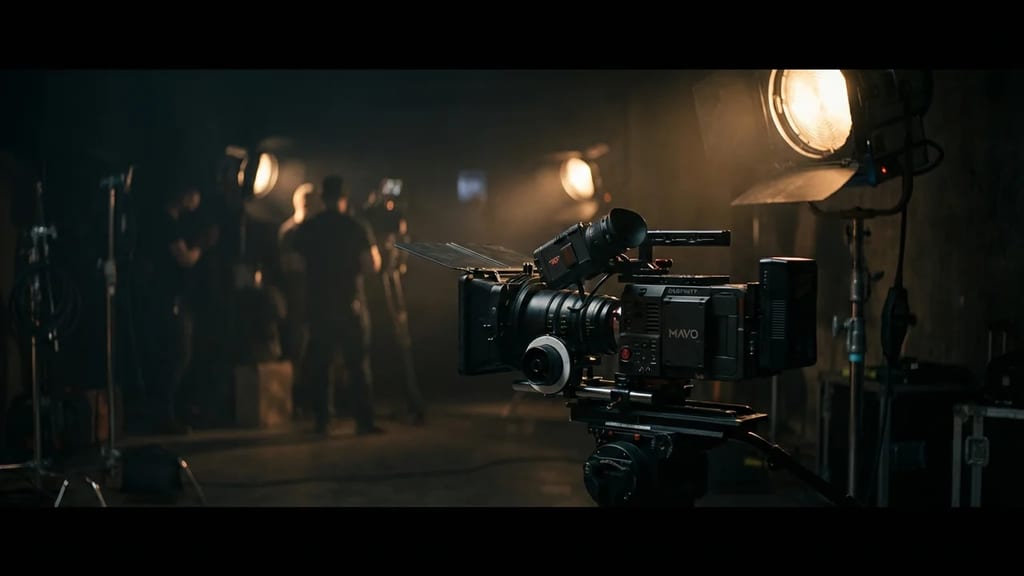
Technical Details
The MAVO's Super35 sensor offers a sensitivity of ISO 100-25,600 (native at ISO 800 and 5120) with a dynamic range of 14 stops. The camera records internally in KineRAW or Apple ProRes onto CFast 2.0 cards with data rates up to 540 MB/s. The modular design allows for various configurations: from the compact MAVO S35 (1.2 kg base weight) to the MAVO LF with a full-frame sensor (36 x 24 mm). The built-in 5-inch touchscreen offers 1920 x 1080 pixel resolution, while the electronic Global Shutter technology eliminates rolling shutter artifacts.
History & Development
Kinefinity was founded in 2011 by former RED engineers in Beijing and launched the first KineMINI in 2013. The MAVO series started in 2017 with the goal of offering Hollywood quality at a fraction of the cost of established manufacturers. In 2019, the MAVO LF followed as the first Chinese full-frame cinema camera, and in 2020, the MAVO Edge with improved color science (KineColorV5). The cameras quickly gained recognition through Netflix approval and DCI 4K certification.
Practical Use in Film
The MAVO has been used in independent productions like "The Wanting Mare" (2020) and various Chinese blockbusters. Typical workflows utilize the proprietary KineRAW format, which offers lower storage requirements than comparable formats. The KineColor science allows for direct grading without complex LUT conversion. Advantages lie in its modularity and price-performance ratio, disadvantages in the limited availability of service centers outside Asia and lower market penetration among rental studios.
Comparison & Alternatives
Compared to the RED Komodo, the MAVO offers similar image quality at a lower price, but less established post-production workflows. Against the ARRI Alexa Mini, it scores with higher resolution and modularity but doesn't reach its color science standard. Alternatives include the Sony FX9, Canon C500 Mark II, or Blackmagic URSA Mini Pro 12K, with the MAVO standing out due to its Global Shutter system and aggressive pricing.