Cinematographer
Führungslicht ist fundamental für meine Bildgestaltung. Licht formt Gesichter, definiert Räume und erzeugt Stimmung. Ich arbeite eng mit meinem Gaffer an der Umsetzung.
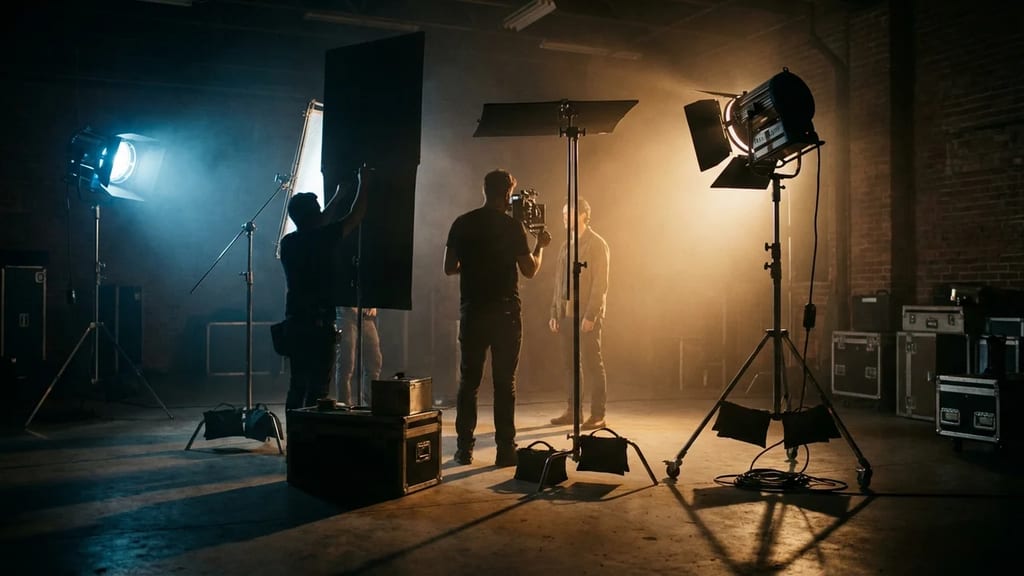
The Key Light is the main light source of a scene, defining the character, mood, and shadow structure of the image.
The Key Light (German: Führungslicht or Hauptlicht) is the dominant light source in a film scene. It defines:
| Position | Angle | Effect |
|---|---|---|
| Frontal | 0° | Flat, shadowless |
| Slightly lateral | 15-30° | Subtle modeling |
| Standard | 45° | Classic modeling |
| Strongly lateral | 60-90° | Dramatic, Noir |
| Backlight | 180° | Silhouette |
| Position | Effect |
|---|---|
| Below eye level | Uncanny ("horror light") |
| Eye level | Neutral, documentary |
| Slightly elevated | Standard, natural |
| Strongly elevated | Subjugation, humility |
| Directly from above | Divine or threatening |
Characteristics:
Effect:
Characteristics:
Effect:
Professional lighting setups motivate the key light through visible sources:
Führungslicht ist fundamental für meine Bildgestaltung. Licht formt Gesichter, definiert Räume und erzeugt Stimmung. Ich arbeite eng mit meinem Gaffer an der Umsetzung.
Führungslicht bespreche ich früh mit meinem DoP. Das Licht erzählt mit – es kann eine Szene hoffnungsvoll oder bedrohlich wirken lassen. Diese Entscheidungen treffe ich bewusst.
Führungslicht ist Teil des Lighting-Budgets. Gute Beleuchtung braucht Zeit und Equipment – ich stelle sicher, dass beides ausreichend eingeplant ist.
Führungslicht setze ich nach Vorgabe des DoP um. Ich kenne die technischen Eigenschaften und koordiniere mein Team für effiziente, sichere Arbeit am Set.
1. Was beschreibt „Führungslicht" am besten?
2. Zu welchem Department gehört „Führungslicht"?
3. Wie viele verschiedene Fachperspektiven bietet dieser Eintrag?
The Lexikon is part of the Filmfarm ecosystem — alongside budgeting (FilmBalance), an industry magazine (FilmCircus) and crew networking (FilmCall, CrewMesh). One shared vocabulary for the whole production.