Filmlexikon.
Support
Isco Widescreen 2000
Camera · Terms

Isco Widescreen 2000

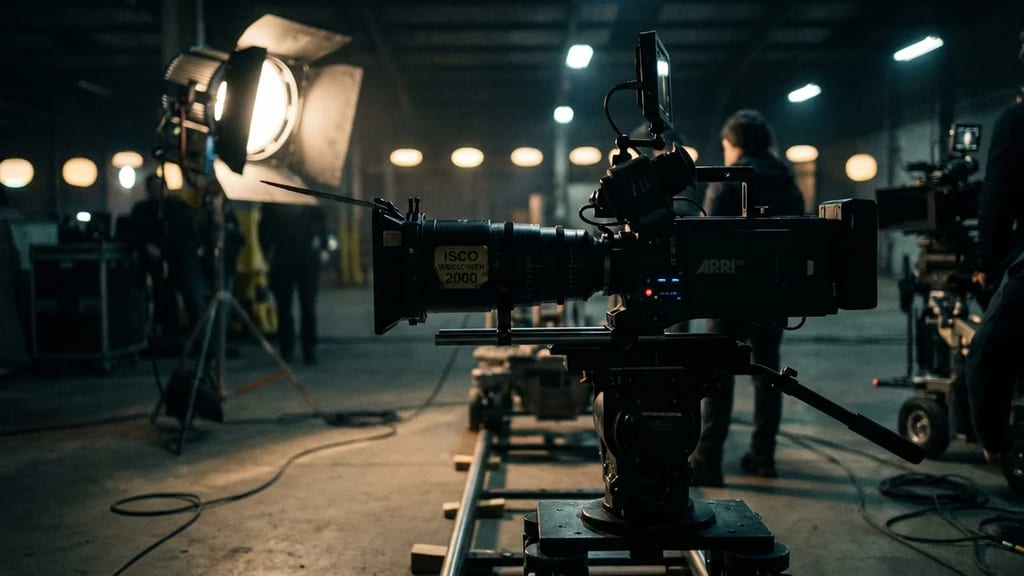
Murnau AI illustration
flow para roll take widescreen

Isco Optic anamorphic lens attachment with 2:1 squeeze factor, 82mm front element, and dual-focus system for 35–85mm prime lenses on Super35 sensors.

Technical Details

The Isco Widescreen 2000 features a front lens diameter of 82mm and weighs 1.2 kg. The squeeze factor is exactly 2:1, with a minimum focusing distance of 1.5 meters. The system uses threaded connections from 58mm to 82mm and can be adapted to various prime lenses via step-up rings. The optical design is based on four lens groups with a total of eight elements, including two aspherical surfaces to minimize characteristic anamorphic distortions. The anamorphic adapter lens works optimally with focal lengths between 35mm and 85mm on Super35 sensors.

History & Development

Isco Optic developed the Widescreen 2000 between 1999 and 2001 in response to the increased demand for anamorphic looks in the independent film sector. The first prototypes were created in 2000, and series production began in 2002. The system filled the gap between expensive Panavision rentals and the then-non-existent modern anamorphic series like Atlas Orion or Cooke Anamorphic/i. In 2018, Isco ceased production as new dedicated anamorphic lenses conquered the market.

Practical Use in Film

Numerous independent productions used the Isco Widescreen 2000, including "The Good, the Bad & the Weird" (2008) by Kim Jee-woon for specific sequences. The typical workflow requires a dual-focus technique: simultaneous focusing on the prime lens and the anamorphic adapter. This doubles the focusing time and requires experienced focus pullers. Characteristic anamorphic artifacts like oval bokeh circles and horizontal lens flares occur naturally, but with lower optical quality than dedicated anamorphic systems. Breathing effects are significantly more pronounced than in modern alternatives.

Comparison & Alternatives

Unlike single-focus anamorphics like Kowa Bell & Howell or Sankor, the Isco Widescreen 2000 requires constant dual focusing. Modern alternatives such as the SLR Magic Anamorphot series or Great Joy 1.33x Anamorphots offer better optical performance at similar budgets. For current productions, Atlas Orion (rental from €800/day) or Sirui Anamorphots (purchase price from €3,000) are usually preferred. The Isco system remains relevant for special vintage looks or extreme low-budget productions with existing equipment.

From the crafts

Perspectives

Cinematographer

Ich verwende das Isco hauptsächlich für Projekte, die einen spezifischen Retro-Anamorphot-Look benötigen, da die optischen "Schwächen" wie starkes Breathing und ungleichmäßige Schärfe charakteristische Bildsignaturen erzeugen. Der Dual-Focus-Workflow zwingt mich zu langsameren, überlegteren Kamerabewegungen, was oft der Dramaturgie zugutekommt. Die horizontalen Flares entstehen bereits bei schwächeren Lichtquellen als bei modernen Anamorphoten, was mir mehr gestalterische Kontrolle gibt.

Director

Ich setze das Isco bewusst für Genres ein, wo die "unperfekte" optische Charakteristik die Erzählung unterstützt – beispielsweise bei Thrillern oder Period-Pieces der 1970er/80er Jahre. Die notwendigen längeren Einstellzeiten durch den Dual-Focus zwingen mich zu durchdachteren Shot-Listen und weniger spontanen Coverage-Änderungen. Der Look erzeugt sofort eine nostalgische Atmosphäre, die teure Post-Production-Effekte überflüssig macht.

Producer

Das Isco war eine kostengünstige Lösung für anamorphotische Looks, als Panavision-Mieten noch 2.000€+ pro Tag kosteten, heute ist es unwirtschaftlich geworden. Die verlängerten Dreh-Zeiten durch komplexe Fokussierung kosten mehr als moderne Anamorphot-Mieten einsparen. Für Low-Budget-Produktionen unter 500.000€ Budget kalkuliere ich lieber 15% längere Drehtage ein oder greife zu neuen chinesischen Anamorphoten mit besserer Zeit-Effizienz.

More in the lexikon

Related terms

Test your knowledge

Quiz

1. Was beschreibt „Isco Widescreen 2000" am besten?

2. Zu welchem Department gehört „Isco Widescreen 2000"?

3. Wie viele verschiedene Fachperspektiven bietet dieser Eintrag?

Report an error
From the Filmfarm ecosystem

Understand visual language, budget productions, connect crew.

The Lexikon is part of the Filmfarm ecosystem — alongside budgeting (FilmBalance), an industry magazine (FilmCircus) and crew networking (FilmCall, CrewMesh). One shared vocabulary for the whole production.

FilmFarm FilmRadarComing soonFilmPulseComing soonFilmNumbersComing soonFilmCapitalComing soonFilmLabComing soonFilmBalanceComing soonFilmCircusComing soon