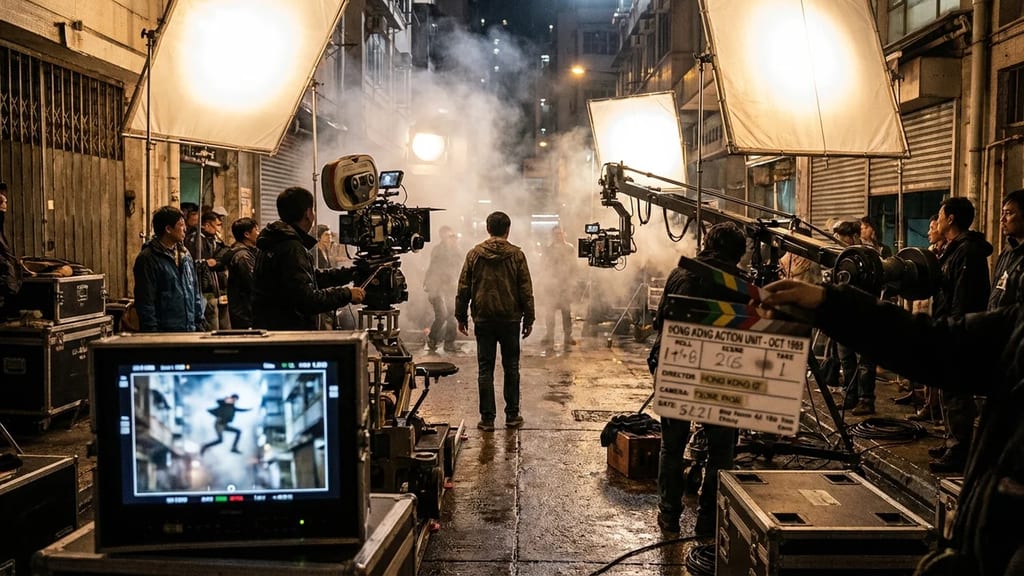
Definition & Origin
Hong Kong Cinema (1980s-1990s) was an explosive, energetic film culture that shocked and delighted Western audiences through innovative action choreography, visual virtuosity, and hybrid genres. Unlike Western film cultures that strictly separated drama, action, and comedy, Hong Kong Cinema fluidly mixed genres – a film could be an action thriller and an emotional melodrama simultaneously, with comedy sequences, philosophical moments, and spectacular stunts.
The culture emerged from several factors: Hong Kong's martial arts culture (especially Kung Fu film traditions), the visual energy of international films (Godard, Peckinpah), and Hong Kong's specific political and economic situation as a British colony under Chinese influence (especially after the 1997 handover announcements).
Visual Characteristics & Stylistic Techniques
Action Choreography: Hong Kong action was not just fast and spectacular but balletic and artful. Fights were choreographed like dances, with precise timing and geometry. Actors were trained for action skills, not just acting talent.
Dynamic Cinematography: The camera was active, not passive. It didn't just follow the action but participated in it through rapid movements, zooms, and quick cuts. The cinematography was virtuosic and risky.
Hybrid Genre: Films were not strictly categorized – a John Woo film could be an action thriller, melodrama, buddy comedy, and philosophical film all at once. This genre fluidity was characteristic.
Visual Stylization: Hong Kong Cinema was deliberately artificial and stylized. Not naturalistic but operatic and exuberant. Colors were saturated, compositions meticulous, and the aesthetic operatic.
Re-use of Motifs: Hong Kong filmmakers quoted other films (especially Western action films) and adapted elements for their own cinema. This was an appropriation and transformation of Western forms.
Sound Design: The sound was experimental – music was introduced or interrupted suddenly, sound effects were exaggerated, and dialogue was often witty or melodramatic.
Historical Context
Hong Kong Cinema emerged from several factors:
- Handover Anxiety: In 1997, Hong Kong was scheduled to be handed over to China. This created psychological uncertainty and cultural urgency. Filmmakers wanted to capture their culture before it was lost and their identity before it was assimilated.
- Economic Liberalization: Hong Kong was a free port with fewer regulatory controls. This allowed for experimental filmmaking.
- Martial Arts Tradition: Hong Kong had a strong martial arts culture and Kung Fu film traditions. Directors built upon this tradition.
- Global Influences: Hong Kong filmmakers watched international action films – American Westerns, Sam Peckinpah films, the French New Wave. They synthesized these influences with local culture.
- Low Production Costs: Hong Kong had low production costs, which enabled fast, experimental productions.
Key Figures & Filmmakers
John Woo (1946-) – The central action director. His films like "A Better Tomorrow" (1986), "The Killer" (1989), and "Hard Boiled" (1992) defined Hong Kong action aesthetics. Woo developed the "two-gun" aesthetic and the buddy action film formula.
Jackie Chan (1954-) – An actor-stuntman whose films like "Police Story" (1985) and "Rumble in the Bronx" (1995) combined personally performed extreme stunts with comedy and emotion. Chan was not just an actor but a choreographer and conceptualist of his own action.
Tsui Hark (1950-) – A director with visual genius. His films like "Zu: Warriors from the Magic Mountain" (1983) and "The Killer" (Alternate cut, 1989) showcase extreme visual innovation and genre blending.
Ringo Lam (1956-) – A director of psychological action thrillers. His films like "City on Fire" (1987) display dark psychology beneath explosive action.
Sammo Hung (1952-) – An actor-director whose films like "Eastern Condors" (1987) combined martial arts action with comedic elements.
Stanley Kwan (1957-) – An experimental filmmaker whose films like "Rouge" (1988) combined emotional melodrama with subtle aesthetics.
Key Films & Masterpieces
A Better Tomorrow (1986, John Woo) – The film that made John Woo a legend and redefined Hong Kong action. A melodramatic thriller about gangsters and loyalty. Woo combined explosive action sequences with emotional moments. The film first showcased Woo's signature "two-gun" aesthetic – heroes firing two pistols symmetrically. The final action sequences are balletic in their choreography.
Police Story (1985, Jackie Chan) – An action-comedy about a policeman who must defend his reputation. Chan performed extreme stunts himself – falls, explosions, fights. The film combines action with slapstick comedy and emotional vulnerability. Chan's performance is incredible – he is simultaneously stuntman, actor, and choreographer.
The Killer (1989, John Woo) – A melodramatic action thriller about a hitman and a detective who come to understand and befriend each other. The film is dark and philosophical beneath its extreme action. The final scenes are brutal and heartbreaking.
Hard Boiled (1992, John Woo) – An action masterpiece about a detective and an undercover cop fighting triads. The film features some of the best action sequences ever filmed – 40 minutes of continuous, choreographed action. The cinematography is dynamic and innovative.
Zu: Warriors from the Magic Mountain (1983, Tsui Hark) – A hallucinatory science-fantasy epic. The film is visually overwhelming – unconventional effects, wild colors, exorbitant action choreography. The film lacks traditional logic, instead leaping between sequences with wild energy.
Rouge (1988, Stanley Kwan) – An elegiac melodrama about a geisha and her deceased lover who returns as a ghost. The film is melodramatic and visually exquisite. Kwan uses color and composition for emotional impact.
Eastern Condors (1987, Sammo Hung) – A war action film about a special unit in Vietnam. The film combines explosive action with military drama. The fight choreography is elaborate and brutal.
Technical Aspects & Cinematic Innovation
Hong Kong Cinema was technologically experimental:
- 35mm film with fast pacing for better action shots
- Handheld and mobile cameras for dynamic action
- Crash zooms and unconventional cuts
- Wirework & stunt choreography for impossible action effects
- Color grading and visual stylization
- Innovative sound design with synthetic sounds and exaggerated effects
Influence & Legacy
Hong Kong Cinema revolutionized global action filmmaking:
- Hollywood Influence: Filmmakers like Quentin Tarantino, Joel Silver, and later Christopher Nolan adopted Hong Kong action techniques. "The Matrix" (1999) was directly inspired by Hong Kong Cinema.
- Action Standard: Hong Kong action set new standards. Hollywood action subsequently became faster, more innovative, and more choreographed.
- Genre Blending: The Hong Kong practice of mixing genres became a global standard. Action didn't have to be pure but could be hybrid.
- Visual Virtuosity: The idea that visual spectacle itself has artistic value was accepted by Hollywood and globally.
- Actors as Athletes: After Jackie Chan demonstrated extreme physical commitment, actors were expected to perform their own stunts.
Comparison & Contextualization
vs. Classic Hollywood Action: While classic Hollywood action was narratively driven and controlled pacing, Hong Kong action was virtuosic and genre-blending.
vs. Soviet Montage: Both manipulated montage for meaning, but Hong Kong used montage for spectacular effect rather than ideological messaging.
vs. Italian Neorealism: While Neorealism sought authenticity, Hong Kong Cinema was deliberately artificial and stylized.
Decline & Transformation
The Golden Age of Hong Kong Cinema ended in the early 2000s for several reasons:
- Handover Effect: After 1997, the culture changed psychologically. The urgent impulse disappeared.
- Commercialization: Early Hong Kong filmmakers (John Woo, Jackie Chan) moved to Hollywood. Their films became commercialized and lost their edge.
- Industry Changes: The Hong Kong film industry shrank with digitalization and economic shifts.
- Chinese Influence: With increased Chinese political influence, Hong Kong filmmakers had less freedom.
But the legacy remains alive – contemporary action filmmakers worldwide work in the Hong Kong tradition. The idea that action cinema can be artistic remains central.