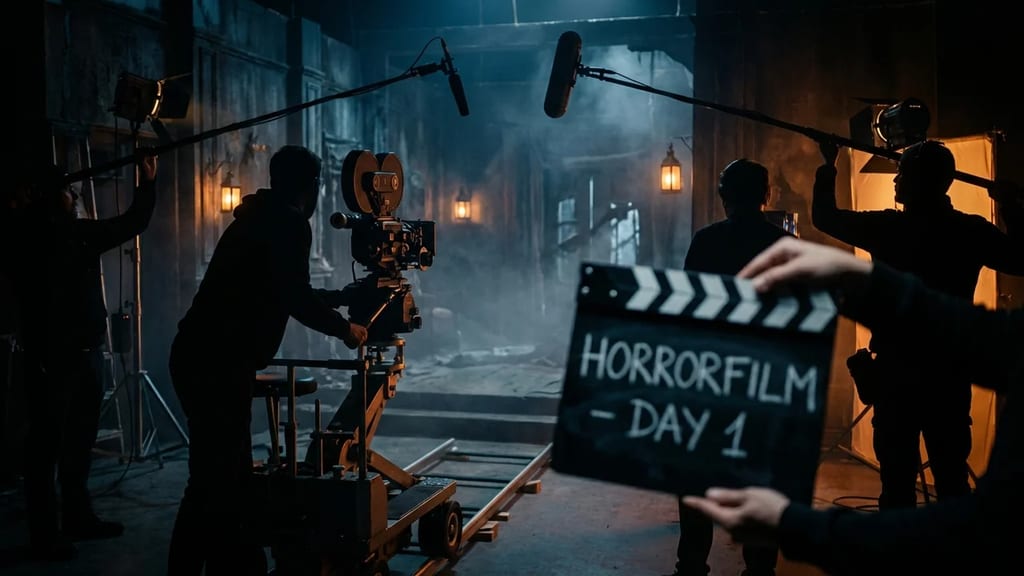
Horror Film
The horror film is a cinematic genre primarily defined by its function of evoking fear. Unlike other genres that focus on plot or setting, horror is an affect genre: it aims to elicit intense physiological and psychological reactions (fear, disgust, unease) from the audience.
Definition and Core Characteristics
Horror operates on multiple levels:
Psychological Horror:
- The Uncanny (Freud's Uncanny)
- Anticipation and Surprise
- Atmospheric Tension
- Suggestive Imagination
Graphic Horror:
- Explicit Visual Violence
- Physical Mutilation
- Disgust Effects through Biology (blood, guts)
- Supernatural/Monster Designs
Existential Horror:
- Confrontation with Human Mortality
- Loss of Control over Reality
- Violation of Ontological Security
- Philosophical Dread (e.g., Lovecraftian Horror)
Historical Development
Silent Era Horror (1920s-1930s):
The beginnings of horror cinema were rooted in European Expressionist tradition:
- "The Cabinet of Dr. Caligari" (1920) - Robert Wiene: Distorted sets and psychological disorientation
- "Nosferatu" (1922) - Friedrich Wilhelm Murnau: Gothic horror with expressionist cinematography
- "The Phantom Carriage" (1921) - Arne Bergman: Supernatural Scandinavian horror
Early horror utilized black-and-white, high-contrast cinematography to create unease. Distorted perspectives, skewed lines, and shadows created a visually destabilized world.
Golden Age Horror (1930s-1940s):
Hollywood developed standardized horror conventions:
- "Frankenstein" (1931) - James Whale: Visually striking monster horror with emotional depth
- "Dracula" (1931) - Tod Browning: Minimalist, psychological vampire horror
- "King Kong" (1933) - Merian C. Cooper: Stop-motion and gigantism horror
- "The Invisible Man" (1933) - James Whale: Conceptual horror (invisibility as metaphor)
This era established monster archetypes (vampire, werewolf, mummy, Frankenstein's monster) and visual conventions.
Postwar Paranoia Horror (1950s-1960s):
The Cold War and atomic anxieties influenced horror themes:
- "Invasion of the Body Snatchers" (1956) - Don Siegel: Science fiction horror about collective threat
- "The Fly" (1958) - Kurt Neumann: Bodily transformation as the center of horror
- "Psycho" (1960) - Alfred Hitchcock: Psychological horror with innovative cinematic techniques
Modern/Slasher Horror (1970s-1980s):
More explicit violence and new narrative conventions:
- "The Exorcist" (1973) - William Friedkin: Supernatural horror with a religious approach
- "The Texas Chain Saw Massacre" (1974) - Tobe Hooper: Raw, pseudo-documentary horror
- "Halloween" (1978) - John Carpenter: Slasher film blueprint
- "The Thing" (1982) - John Carpenter: Paranoid science fiction horror
- "A Nightmare on Elm Street" (1984) - Wes Craven: Surreal slasher horror
Contemporary Horror (1990s-Present):
Digital effects, postmodern reflection, and hybrid subgenres:
- "The Ring" (2002) - Gore Verbinski: J-horror adaptation with pervasive technological anxiety
- "The Descent" (2005) - Neil Marshall: Claustrophobic horror with physical presence
- "Paranormal Activity" (2007) - Oren Peli: Found-footage horror with minimal means
- "Hereditary" (2018) - Ari Aster: Familial trauma as supernatural horror
- "A Quiet Place" (2018) - John Krasinski: Sound design as the center of horror
Visual Conventions and Cinematography
Lighting Design:
- Underlit Scenes: Dark scenes with only spot lighting create isolation
- High-Contrast Shadows: Dramatic shadows obscure information and create unpredictability
- Chiaroscuro and Silhouettes: Unknown forms engage the imagination rather than precise depiction
- Unnatural Color Temperature: Cold blue tones (fluorescent) or warm red-orange create psychological unease
- Strobe and Flicker Effects: Rhythmic or irregular lighting causes disorientation
Camera Techniques:
- Static Camera Positions: Voyeuristic observer perspective
- Extreme Wide Angles: Distort space and create claustrophobia
- Extreme Close-ups: Of body parts (eyes, mouth) for objectification
- Dutch Angles and Tilted Horizons: Visual disorientation
- Tracking Shots and Dolly Movements: Induce anticipation and tension
- Point-of-View Shots (POV): Place the viewer in the perspective of the attacker or victim
Mise-en-Scène:
- Isolated Settings: Lonely houses, dark forests, abandoned institutions
- Architectural Labyrinths: Stairs, corridors, doors that prevent escape
- Practical Horror Props: Weapons, tools, dismembered objects
- Color and Desaturation: Blood red as a sole accent color in black-and-white compositions
- Texture: Rough, decaying surfaces create unease
Sound and Music:
- Silence as a Horror Element: The absence of music heightens anticipation
- Dissonant and Atonal Music: Disturbing, disharmonious sounds
- Ambient Horror Drones: Low-frequency hums create subconscious dread
- Sound Design and Foley: Abnormal or distorted everyday sounds
- Stingers and Jump Scares: Sudden spikes in volume elicit shock reactions
Horror Subgenres
Psychological Horror:
- Focus on internal mental states
- Minimal external monsters (or psychological ambiguity)
- Examples: "Psycho" (1960), "Black Swan" (2010), "Hereditary" (2018)
Supernatural Horror:
- Ghosts, demons, supernatural phenomena
- Religious or occult themes
- Examples: "The Exorcist" (1973), "The Shining" (1980), "Sinister" (2012)
Monster/Creature Horror:
- Physical monsters or mutations as the central threat
- Science fiction and body horror elements
- Examples: "Frankenstein" (1931), "The Thing" (1982), "The Descent" (2005)
Slasher Horror:
- Serial killer as antagonist
- Narrative structure with isolated victims
- Aestheticized violence and pursuit
- Examples: "Halloween" (1978), "Nightmare on Elm Street" (1984), "Scream" (1996)
Found-Footage Horror:
- Handheld/security camera perspective
- Documentary, pseudo-authentic aesthetic
- Examples: "The Blair Witch Project" (1999), "Paranormal Activity" (2007)
Cosmic/Lovecraftian Horror:
- Existential dread of the unknown
- Human insignificance in the face of cosmic forces
- Examples: "In the Mouth of Madness" (1994), "Annihilation" (2018)
Survival Horror:
- Survival against overwhelming odds
- Often hybridized with action elements
- Examples: "The Mist" (2007), "A Quiet Place" (2018)
Body Horror:
- Physical mutilation, deformation, mutation
- Disgust effects through biological disintegration
- Examples: "The Fly" (1986), "Videodrome" (1982)
Narrative and Thematic Structures
Classic Horror Plot Schema:
- Establishment of a safe world
- Intrusion of a horror element (invasion, awakening, transformation)
- Resistance and escape attempts (often unsuccessful)
- Confrontation with the horror's core
- Incomplete or ambiguous resolution
Thematic Areas:
- Transgression: Violation of natural/social boundaries (experimentation, hybridization)
- Sexuality and Desire: Female fear of male aggression or female sexuality as a threat
- Corporeality and Decay: Fear of aging, illness, disintegration
- Civilization Collapse: Loss of social order
- Family and Home as Insecurity: The "safe space" as a source of horror
Technical Parameters
Film Format:
- Digital: RED, ALEXA preferred for high dynamic range (darkness representation)
- Super-16mm or 35mm for a traditional look
- Handheld or stabilizers for found-footage effect
Lighting Equipment:
- Practical lights: LED panels, flashlights, neon signs
- Shape-cutting: Venetian blinds, cutters for patterned shadows
- Extreme contrast ratios: 10:1 to 50:1 for maximum tension
Lenses:
- 24-35mm wide-angle for spatial distortion
- 85mm+ for emotional close-ups
- Vintage lenses for chromatic aberration and character
Color Grading:
- Desaturated or single-tone palettes (e.g., green-cyan for supernatural sequences)
- Extreme S-curves for contrast enhancement
- Grain and noise for atmospheric disturbance
Differences Between Horror Subcultures
American Horror:
- Slasher and franchise horror
- More explicit violence, graphic body horror
- Serial narrative structures
European Horror:
- Atmospheric, literary orientation
- Philosophical/existential dread
- Formal techniques
Asian (J-Horror, K-Horror):
- Supernatural retribution for moral transgression
- Different lighting and spatial conventions
- Digital connectivity and technological anxiety
Indie Horror:
- Budget creativity and craft focus
- More intimate psychological horror
- Genre hybridization and subversion
Horror and Audience Psychology
Horror functions through several psychological mechanisms:
- Catharsis: Safe experience of intense emotions
- Transgression: Permission to explore "forbidden" thoughts and desires
- Control vs. Uncontrollability: Tension between the urge to flee and fascination
- Identification and Distance: Simultaneously identifying with victims and experiencing safety
Conclusion: The horror film is not merely a genre of "scares," but a complex artistic medium that articulates deep human anxieties, philosophical questions, and societal dread. Its visual and narrative techniques have had fundamental impacts on cinema as a whole.