Technical Details
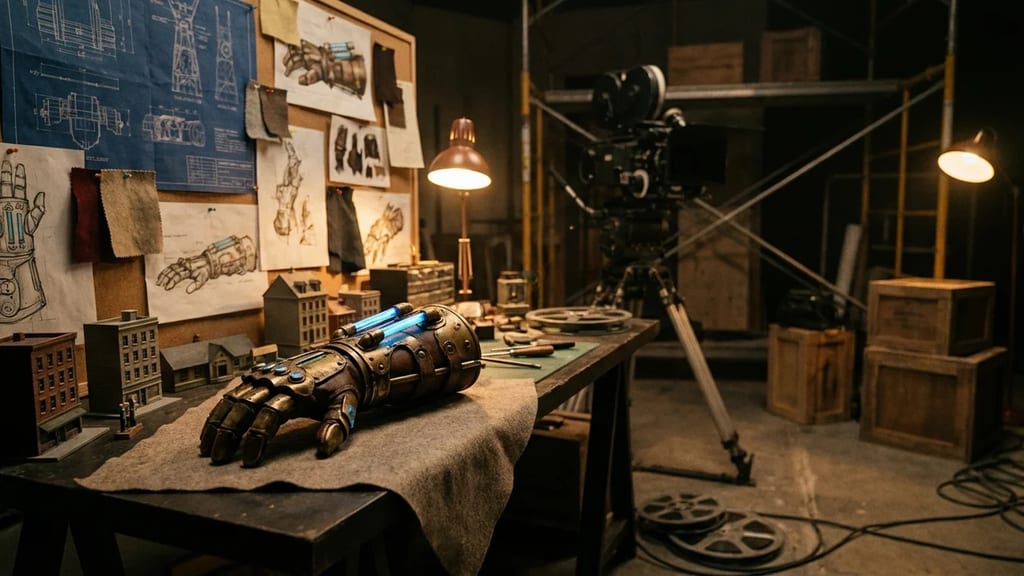
Hero props are typically produced in 1-3 copies per item, with budgets ranging from 500-50,000 Euros per piece. Surface finishing is done with a detail accuracy of up to 0.1mm to deliver convincing results even in 85mm macro shots. Materials include high-quality plastics (polyurethane, ABS), metal, or specially treated natural materials. For electronic props, functional LED displays or mechanical elements are integrated, ensuring an operating time of at least 12 hours without maintenance.
History & Development
The systematic use of hero props began in 1977 with "Star Wars," where Industrial Light & Magic first consistently differentiated between hero, stunt, and pyro versions. Luke's lightsaber existed in seven variants, with the hero version costing $8,000. In the 1990s, Stan Winston Studios introduced precise categorizations: Hero (close-up), Stunt (action), Background (distant). Since 2010, 3D printing has enabled the cost-effective replication of hero details, allowing even smaller productions to realize high-quality props.
Practical Use in Film
In "Blade Runner 2049" (2017), each of the three hero variants of K's blaster cost $15,000, crafted from aluminum with functional hologram projectors. The prop had to withstand 47 takes, including extreme close-ups with 135mm lenses. For "The Batman" (2022), four identical hero Batarangs were made from titanium, each costing $2,400, as rear projections would have made the smallest scratch visible. Standard workflow: Shoot initial shots with hero props, then switch to stunt versions for risky scenes.
Comparison & Alternatives
Stunt props cost 60-80% less but can only withstand medium shot sizes from an American medium shot. Background props suffice for wide shots from a 50mm focal length. Insert props are specifically made for extreme close-ups and cost 150-300% of a hero prop. Since 2018, digital assets have increasingly replaced hero props in VFX-heavy productions – Marvel Studios has used CG props 40% of the time since "Endgame" instead of physical hero versions to avoid continuity issues during reshoots.