Technical Details
The MōVI Pro features three 32-bit ARM processors and operates at a data rate of 1000 Hz. The brushless motors generate a maximum torque of 4.5 Nm with a power consumption of 6-8 amperes. The Mimic system allows for wireless remote control over a range of 1.6 km using a 2.4 GHz radio link. Variants include the compact MōVI Carbon (up to 6.8 kg payload), the MōVI Pro (up to 15 kg), and the ultra-lightweight MōVI Cinema Robot for automated studio applications. The latency between motion input and gimbal response is under 10 milliseconds.
History & Development
Freefly Systems developed the first MōVI in 2013 in Seattle after founders Tad Carlson and his partners realized that traditional Steadicam systems were oversized for small DSLR cameras. The system debuted at NAB shows in 2013 and immediately revolutionized handheld cinematography. In 2014, the MōVI M15 followed for larger cinema cameras, and in 2016, the MōVI Pro with an improved battery life of up to 8 hours. In 2019, Freefly integrated AI-based object tracking and expanded the system with automated camera movements.
Practical Use in Film
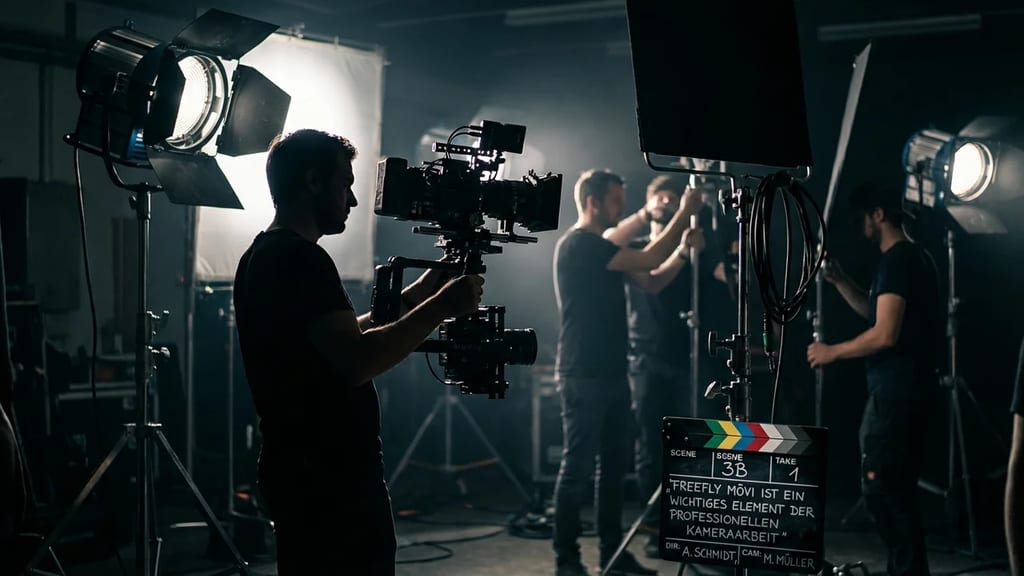
The MōVI was first used in major productions in "The Avengers: Age of Ultron" (2015), where it enabled dynamic tracking shots through buildings that would have been impossible with traditional dollies. In "1917" (2019), DoP Roger Deakins used MōVI systems for the seemingly continuous trench sequences. The workflow typically requires a gimbal operator and a separate camera operator, with the Mimic system enabling precise pans and tilts from a distance. Disadvantages include limited battery life and the need to calibrate the system before each take.
Comparison & Alternatives
Unlike mechanical Steadicam systems, the MōVI operates electronically and does not require complex weight distribution. Modern alternatives such as the DJI Ronin or RED DSMC2 Stabilizer offer similar functionality but do not achieve the precision of the MōVI with heavy cinema cameras. For smaller productions with DSLR cameras, more affordable 3-axis gimbals suffice, while for large studio productions, the MōVI Pro or specialized systems like the Shotover F1 for helicopter shots are preferred.