Filmlexikon.
Support
Floppy
Lighting · Equipment

Floppy

Murnau AI illustration
18x24 flag 24x36 flag flag french flag top flag 4x4 floppy cut cutter

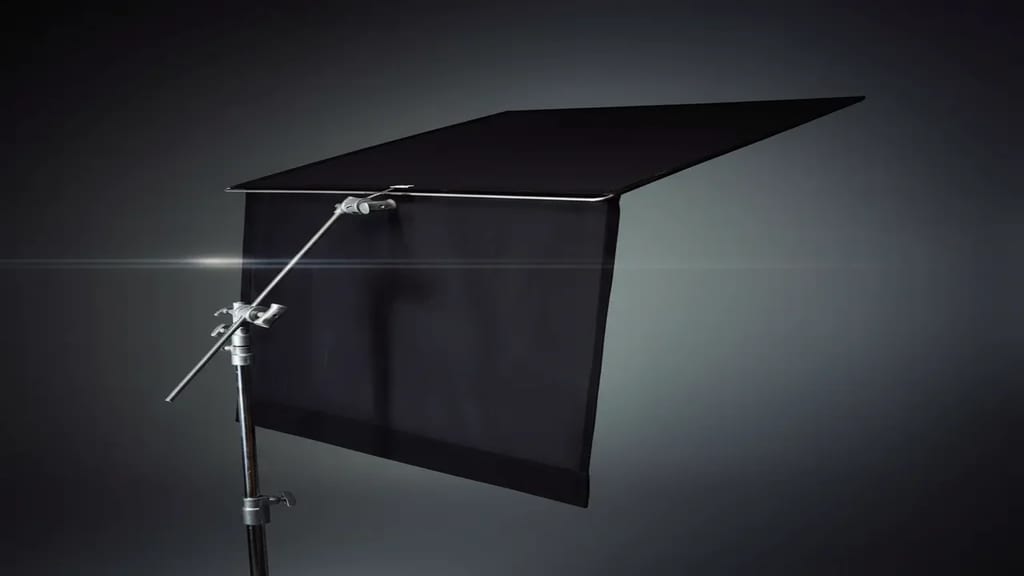
Collapsible black frame with light-absorbing fabric that precisely shapes and controls hard light. Weighs 0.8–1.5 kg, folds to 30% of size.

Technical Details

The frame is made of lightweight aluminum or carbon fiber, weighing 0.8-1.5 kg depending on size. The fabric is typically made of matte black Duvetyne or Commando Cloth, which absorbs 99.5% of incident light. The folding mechanism allows it to be collapsed to about 30% of its original size. Larger variants (48x48 inches, 122x122 cm) use reinforced corner connections with spring steel elements. Fabric tension can be adjusted via Velcro fasteners or grommets.

History & Development

Floppies evolved in the 1970s from the rigid flags of the studio era, as mobile film productions required more flexible solutions. Matthews Studio Equipment introduced the first mass-produced floppy system in 1978. In 1985, Chimera expanded the concept with faster setup mechanisms. Modern LED lighting has, since 2010, increased the importance of precise light shaping, as point-source LED lights create harder shadows.

Practical Use in Film

On "Blade Runner 2049" (2017), Roger Deakins systematically used 24x36-inch floppies to shape the harsh neon light. Typical workflow: positioning 0.5-2 meters in front of the subject, alignment via the built-in tilt arm. Advantage: quick setup and breakdown (under 60 seconds), low transport volume. Disadvantage: susceptibility to wind in exterior shots from Beaufort force 3 upwards, limited size compared to permanently stretched frames.

Comparison & Alternatives

Floppies differ from flags by their flexible fabric covering and from cutters by their complete light absorption rather than diffusion. Solid flags offer larger dimensions but are more transport-intensive. Digital Intermediate grading can achieve similar effects, but without the natural light shaping on set. For budget-limited productions, DIY solutions with PVC pipes and molton are increasingly replacing commercial systems.
From the crafts

Perspectives

Cinematographer

Ich verwende Floppys hauptsächlich zur präzisen Schattensetzung bei Gesichtern – ein 18x24er positioniert 80 cm links der Kamera eliminiert störende Spiegelungen in den Augen. Die flexible Stoffbespannung ermöglicht subtile Schattenverläufe, die mit starren Flags nicht erreichbar sind.

Director

Floppys helfen mir dabei, Charaktere visuell zu isolieren und emotionale Zustände zu unterstreichen. Wenn ich einen Protagonisten in innerer Zerrissenheit zeige, lasse ich gezielt Schatten über eine Gesichtshälfte fallen – der Floppy formt dabei weichere, organischere Übergänge als harte Kanten.

Producer

Ein Floppy-Set kostet 300-600 Euro, spart aber täglich 20-30 Minuten Aufbauzeit gegenüber starren Alternativen. Bei 25 Drehtagen rechnet sich die Anschaffung über eingesparte Crew-Stunden, außerdem reduziert das kompakte Packmaß die Transportkosten erheblich.

More in the lexikon

Related terms

Test your knowledge

Quiz

1. Was beschreibt „Floppy" am besten?

2. Zu welchem Department gehört „Floppy"?

3. Wie viele verschiedene Fachperspektiven bietet dieser Eintrag?

Report an error
From the Filmfarm ecosystem

Understand visual language, budget productions, connect crew.

The Lexikon is part of the Filmfarm ecosystem — alongside budgeting (FilmBalance), an industry magazine (FilmCircus) and crew networking (FilmCall, CrewMesh). One shared vocabulary for the whole production.

FilmFarm FilmRadarComing soonFilmPulseComing soonFilmNumbersComing soonFilmCapitalComing soonFilmLabComing soonFilmBalanceComing soonFilmCircusComing soon