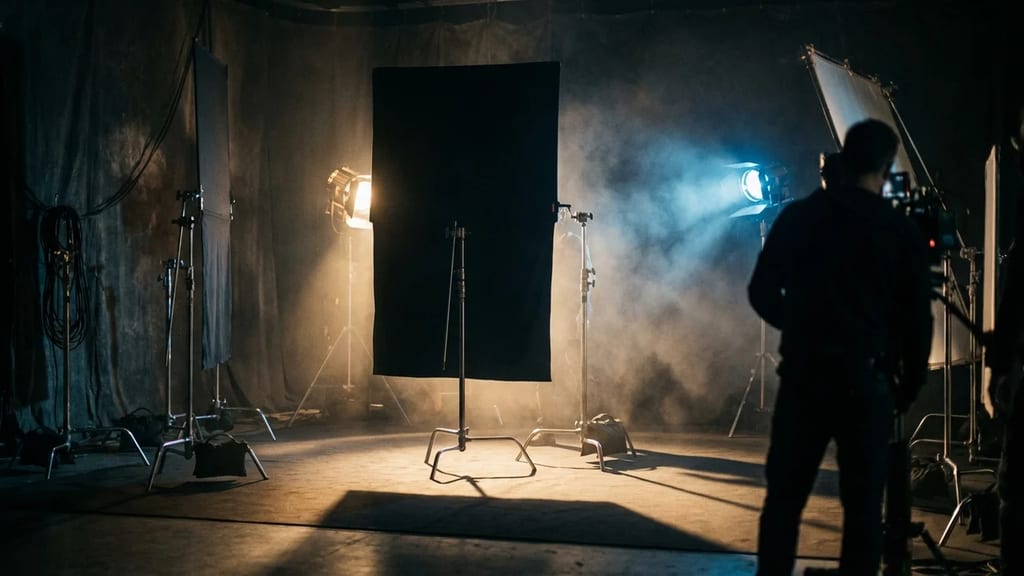
Technical Details
Flags are manufactured in standardized sizes: 12x18 inches (30x46 cm), 18x24 inches (46x61 cm), 24x36 inches (61x91 cm), and 4x4 feet (122x122 cm). The frame is made of anodized aluminum with a material thickness of 8-12 mm. Flags differ from Cutters by their completely opaque material, whereas Cutters have partially transparent or translucent areas. Solids refer to larger, rigid boards made of plywood or plastic, used for large-area shading. They are mounted using C-stands or grip heads with 5/8-inch spigots.
History & Development
Flags originated in the 1920s in Hollywood studios as an evolution of theatrical scenery. The first examples were made of heavy canvas fabric on wooden frames. In 1935, Mole-Richardson introduced the first standardized metal frames. In the 1960s, the current size standards were established by the American Society of Cinematographers. Modern flags use flame-retardant materials according to the NFPA-701 standard and, due to aluminum lightweight construction, weigh 60% less than earlier models.
Practical Application in Film
Flags control hard shadows and prevent lens flares through precise light shaping. In "Blade Runner 2049" (2017), DoP Roger Deakins used numerous 4x4 flags to shade the neon lights in the street scenes. For portraits, 18x24 flags create hard shadow edges for dramatic lighting. The typical workflow involves positioning the flag between the light source and the subject, with the distance to the light source determining the hardness of the shadow edge. Flags allow for millimeter-accurate light control without loss of intensity.
Comparison & Alternatives
Flags differ from diffusers by their complete light blocking without scattering. Barn doors on lighting fixtures offer less precise control and create softer edges. Modern LED panels with built-in flag functions are increasingly replacing separate flags in smaller productions. Digital shading in post-production cannot fully replace physical flags, as it offers no control over reflections and ambient light. For exterior shots, 12x12 foot overheads are preferred over individual flags.