Filmlexikon.
Support
Dusk
Lighting · Terms

Dusk

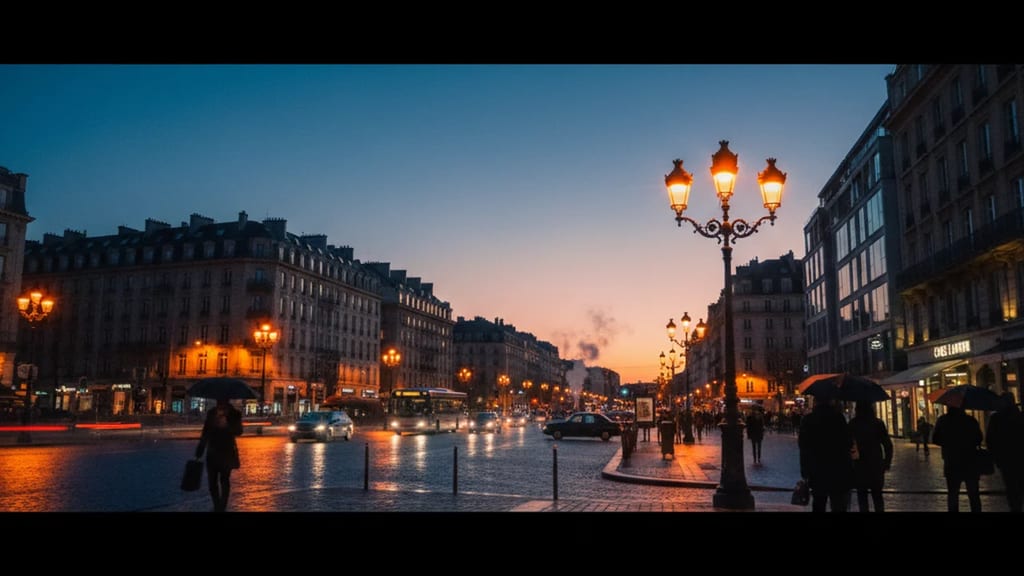
Murnau AI illustration
color temperature flow roll take

Natural light between sunset and darkness with color temperatures of 2000K–4000K. Usable shooting window: 20–45 minutes depending on season.

Technical Details

The color temperature of twilight varies between 2000K immediately after sunset and 4000K in late civil twilight. The usable shooting period in Central Europe ranges from 20 minutes (winter) to 45 minutes (summer). Modern digital cameras still achieve usable shots at ISO 3200-6400, while 35mm film remains usable at a maximum of ISO 800. The blue hour occurs 20-30 minutes after sunset when the sky and artificial light sources have approximately equal intensity.

History & Development

Filmmakers have systematically used twilight since the 1920s, with F.W. Murnau in "Sunrise" (1927) being the first to fully exploit the blue hour for a sequence. With the introduction of fast lenses in the 1970s, possibilities expanded considerably. Terrence Malick established twilight as a trademark of his visual language starting with "Badlands" (1973). Digital cinematography since 2000 has revolutionized twilight shots through increased ISO performance and live exposure monitoring.

Practical Application in Film

Emmanuel Lubezki used exclusively natural twilight for interior shots in "The Revenant" (2015), achieving organic light gradients. "Magic Hour" sequences require precise preparation: camera positioning, exposure tests, and rehearsals must be completed before twilight begins. Denis Villeneuve used artificially extended twilight atmosphere in "Blade Runner 2049" (2017) with LED arrays and fog machines. The workflow requires multiple cameras for simultaneous perspectives, as repetitions under identical lighting conditions are impossible.

Comparison & Alternatives

Dusk differs from dawn by warmer color temperatures and clearer air. Artificial twilight simulation using HMI lights with CTB filters achieves 70% of the natural effect under controllable conditions. Latest generation LED panels (ARRI SkyPanel, Litepanels Gemini) allow precise color temperature adjustment between 2700K-6500K. Moonlight simulation requires 5600K light with ND filters but does not achieve the characteristic color saturation of true twilight.

From the crafts

Perspectives

Cinematographer

Ich plane Dämmerungsaufnahmen mit drei Kameras gleichzeitig, da ich nur einen Take pro Tag bekomme - bei 6K-Auflösung und ISO 4000 hole ich noch Details aus den Schatten. Meine Zebra-Einstellungen setze ich auf 75% statt 70%, weil das Dämmerungslicht schneller fällt als das Monitoring anzeigt.

Director

Ich nutze die Abenddämmerung für emotionale Wendepunkte, weil sie visuell den Übergang zwischen Bewusstsein und Unbewusstem symbolisiert - wie in der Sterbeszene meines letzten Films, wo die abnehmende Lichtintensität parallel zum Herzschlag des Protagonisten verlief. Die blaue Stunde gibt mir 25 Minuten für intime Dialoge ohne Schnitt.

Producer

Dämmerungsaufnahmen kosten mich durchschnittlich 40% mehr Budget durch Mehrfach-Setups und Standby-Crews für Wetteränderungen - ich kalkuliere mindestens drei Drehtage für eine 5-Minuten-Sequenz. Bei internationalen Koproduktionen buche ich deshalb gezielt Drehorte in äquatornahen Regionen, wo die Dämmerung konstant 30 Minuten dauert.

More in the lexikon

Related terms

Test your knowledge

Quiz

1. Zu welchem Department gehört „Abenddämmerung"?

2. Wie viele verschiedene Fachperspektiven bietet dieser Eintrag?

Report an error
From the Filmfarm ecosystem

Understand visual language, budget productions, connect crew.

The Lexikon is part of the Filmfarm ecosystem — alongside budgeting (FilmBalance), an industry magazine (FilmCircus) and crew networking (FilmCall, CrewMesh). One shared vocabulary for the whole production.

FilmFarm FilmRadarComing soonFilmPulseComing soonFilmNumbersComing soonFilmCapitalComing soonFilmLabComing soonFilmBalanceComing soonFilmCircusComing soon