Filmlexikon.
Support
Blue Hour
Lighting · Terms

Blue Hour

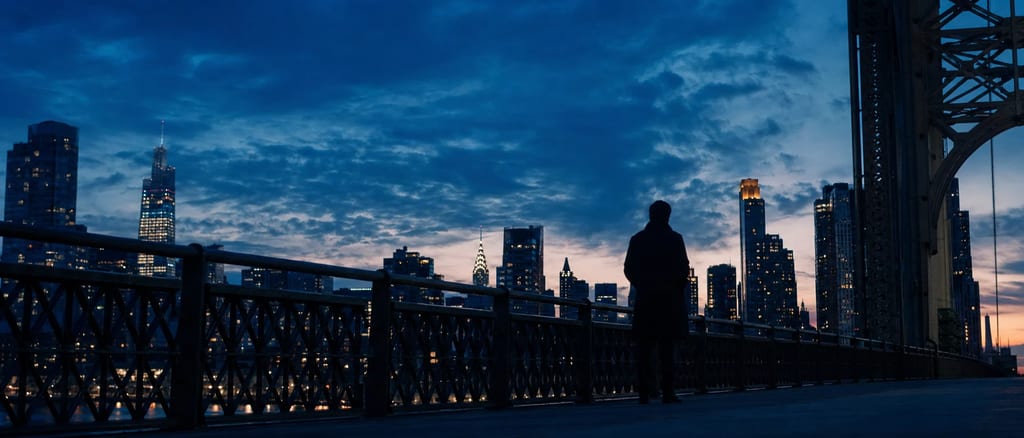
Murnau AI illustration
color temperature flow roll take

Period of twilight after sunset or before sunrise featuring distinctive cool blue-tinted natural light.

Technical Details

The Blue Hour, geographically dependent, lasts between 20-40 minutes, with the optimal shooting time limited to 15-25 minutes. Light intensity ranges from 3-50 lux, requiring apertures between f/1.4 and f/2.8 at ISO 800-3200. The high blue component in the spectrum amplifies the color saturation of warm light sources (Tungsten 3200K, practicals) by a factor of 1.5-2.0, creating natural color contrasts without additional filtering. Modern digital sensors capture this lighting mood at lower ISO values than analog film emulsions, which required at least 500 ASA.

History & Development

The Blue Hour was first cinematically documented in 1927 in F.W. Murnau's "Sunrise," where it was used for emotional turning points. Its systematic use became established in the 1940s in Film Noir, particularly by cinematographer John Alton. With the introduction of fast lenses in the 1970s and later digital sensors from 2000 onwards, the Blue Hour evolved from a rare special effect to a standard creative tool. Modern LED technology has enabled its artificial recreation in studios since 2010 with programmable color temperature gradients.

Practical Use in Film

Roger Deakins utilized the Blue Hour in "Blade Runner 2049" for 40% of the exterior shots, combining it with 12K HMI lights for contrast. Terrence Malick plans entire shooting schedules around these 20-minute windows in "The Tree of Life," using up to four parallel camera units. The workflow demands precise preparation: lighting tests the day before, fully set up scenes, and a maximum of two takes per setup. Disadvantages include weather dependency, limited time, and high costs due to crew readiness for potential failures.

Comparison & Alternatives

Magic Hour refers to the entire twilight period, while Blue Hour specifically denotes the blue light component after sunset. Golden Hour provides warm light (2000-3000K) before the Blue Hour. LED panels like the SkyPanel S360 simulate the Blue Hour controllably but achieve only 60% of natural color saturation. For budget productions: CTB filters on daylight HMIs plus blue background lighting. Studios are increasingly using Virtual Production with LED volumes for reproducible "Blue Hours" without weather risks.
From the crafts

Perspectives

Cinematographer

Ich plane meine Kameraeinstellungen bereits am Vortag und teste die Belichtung bei identischen Lichtverhältnissen 24 Stunden vorher. Die 15-20 Minuten nutzbares Licht zwingen mich zu maximal zwei Setups, wobei ich mit zwei Kameras gleichzeitig arbeite – eine für die Totale auf Stativ, eine handgehalten für Coverage. Der extreme Blauanteil macht Hauttöne problematisch, deshalb setze ich warme Prakticals als Gegenlicht und korrigiere in der Farbkorrektur um 300-500K Richtung Magenta.

Director

Ich nutze die Blaue Stunde für emotionale Höhepunkte und Wendepunkte der Geschichte, da sie beim Zuschauer unterbewusst Melancholie und Nachdenklichkeit auslöst. Die begrenzte Zeit zwingt mich zu extremer Disziplin – jeder Handgriff muss sitzen, Schauspieler müssen ihre Szenen perfekt beherrschen. Ich plane maximal eine wichtige Dialog-Szene pro Blaue Stunde, alles andere sind Establishing Shots oder stumme emotionale Momente, die ich notfalls auch solo drehen kann.

Producer

Ich kalkuliere für Blaue Stunde-Drehs 40% Mehrkosten durch längere Crew-Bereitschaft und Ausfallrisiko bei schlechtem Wetter. Pro Dreh halte ich mindestens drei alternative Termine frei, da wetterbedingte Verschiebungen in 60% der Fälle auftreten. Die Crew ist zwei Stunden vor der eigentlichen Drehzeit vollständig aufgebaut, was Überstunden bedeutet. Für internationale Co-Produktionen rechne ich LED-Volume-Alternativen als Backup, auch wenn diese 15% des Tagesbudgets kosten.

More in the lexikon

Related terms

Test your knowledge

Quiz

1. Zu welchem Department gehört „Blaue Stunde"?

2. Wie viele verschiedene Fachperspektiven bietet dieser Eintrag?

Report an error
From the Filmfarm ecosystem

Understand visual language, budget productions, connect crew.

The Lexikon is part of the Filmfarm ecosystem — alongside budgeting (FilmBalance), an industry magazine (FilmCircus) and crew networking (FilmCall, CrewMesh). One shared vocabulary for the whole production.

FilmFarm FilmRadarComing soonFilmPulseComing soonFilmNumbersComing soonFilmCapitalComing soonFilmLabComing soonFilmBalanceComing soonFilmCircusComing soon