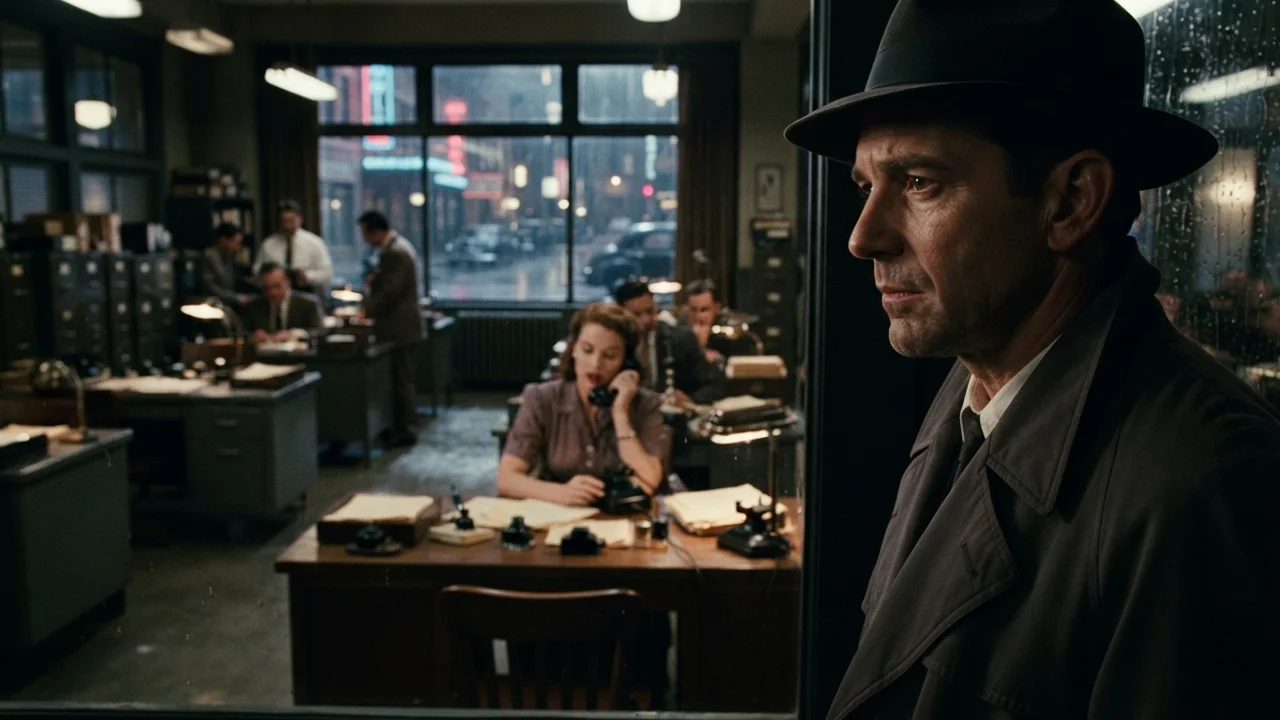
Technical Details
Depth of Field Formula (DOF):
DoF = (2 × N × c × s²) / (f² - N × c × s)

N = Aperture value (e.g., 11 at f/11)
c = Circle of Confusion (~0.03mm for full-frame cinema)
s = Subject distance in meters
f = Focal length in mm
Practical Examples:
50mm lens, f/11, focus at 3m:
- Near Focus Limit: 1.8m
- Far Focus Limit: infinity
- Total Depth of Field: ~2m range in focus
35mm lens, f/8, focus at 2m:
- Near Focus Limit: 1.2m
- Far Focus Limit: infinity
- Total Depth of Field: ~1m range in focus
28mm lens, f/5.6, focus at 1.5m:
- Near Focus Limit: 0.9m
- Far Focus Limit: infinity
- Total Depth of Field: ~0.7m range in focus
Hyperfocal Distance:
The focus point at which the depth of field extends from the acceptable near limit to infinity.
Calculation: HFD = (f² / (N × c)) + f
Example: 24mm, f/8, full frame (c=0.03mm):
HFD = (24² / (8 × 0.03)) + 24 = 240cm + 24cm ≈ 2.64m
Focusing at this distance = everything from ~1.3m to infinity sharp!
Split-Diopter (Split-Field Diopter):
Optical element that affects only HALF of the lens:
- Enables two different planes of focus in one shot
- Typical: Foreground sharp + background sharp (otherwise impossible)
- Famous through Brian De Palma ("Blow Out", 1981, "Body Double", 1984)
- Cost: $3,000-$8,000 per diopter
- Problems: Visible line in the image if not perfectly centered
Digital Focus Tools:
Preston FI+Z System:
- Motorized focus follow
- Accuracy: ±1mm over a 20-meter distance
- Real-time remote control (wireless)
- Cost: ~€8,000-€15,000 daily
Arri WCU-4 (Wireless Control Unit):
- Integration with ARRI cameras
- Precision focus motors with 0.5mm resolution
- Repeatability: Identical focus pulls across multiple takes
- Cost: ~€6,000-€12,000 daily
Cmotion easyRig Follow Focus:
- Mechanical precision focus control
- Integration with 3D camera motion
- More affordable alternative to Preston
- Cost: ~€4,000-€8,000 daily
Lighting Requirements for Deep Focus:
- f/8: Minimum 2,000-3,000 lux on set
- f/11: Minimum 4,000-6,000 lux
- f/16: Minimum 8,000-12,000 lux
- Outdoor natural light with reflectors/diffusion
History & Development
Gregg Toland & "Citizen Kane" (1941):
Revolutionized deep-focus cinematography with:
- Mitchell Standard Camera (industry standard at the time)
- Cooke Anamorphic Lenses (28mm wide-angle instead of standard 35-40mm)
- Massive Lighting: 10,000+ watt lamps (Kliegl, Mole Richardson)
- Aperture f/8-f/11 for extreme depth of field
- Technique: Focus from 60cm (desk) to infinity (window)
- Effect: Simultaneous action in 3-4 planes of the image without cuts
Toland's innovation was not the invention of deep focus, but its perfection as a dramatic tool. He combined optical depth of field with lighting architecture and blocking for storytelling.
Orson Welles (1941-1962):
Welles understood deep focus as narrative depth, not just a technical gimmick:
- "Citizen Kane" (1941): Simultaneous family dramas in different planes of the image
- "The Magnificent Ambersons" (1942): Architectural depth of field for social hierarchy
- "The Lady from Shanghai" (1947): Deep focus for psychological confusion
Stanley Kubrick (1962-1999):
Perfected extreme deep focus with special optics:
- "Lolita" (1962): Kubrick's first deep-focus phase
- "Dr. Strangelove" (1964): Satirical depth of field in the war room scene
- "2001: A Space Odyssey" (1968): Zeiss f/0.7 lenses (NASA technology) for revolutionary spaceship depth of field
- "Barry Lyndon" (1975): Candlelight deep focus with f/0.7 for 18th-century authenticity
- "The Shining" (1980): Steadicam deep focus through 45-meter corridors
Digital Era (2000-present):
Preston Systems (since 1998):
- Electronic follow-focus revolution
- Enables precise focus pulls without manual "focus turning"
- Becomes standard on all major productions
Digital Intermediate (since 2000):
- Post-production can perform software-based depth of field simulation
- Criticism: Non-optical bokeh character is noticeably different
- Rarely used, as real optics are more convincing
LED/Virtual Production (since 2015):
- In-camera deep focus in virtual environments (Unreal Engine)
- Real-time rendering allows flexible depth of field changes
- Example: "The Mandalorian" (2019) uses LED walls with deep focus
Practical Use in Film
Orson Welles' "Citizen Kane" (1941) – The Iconic Deep Focus Scene:
The desk scene: Kane sits sharply in the foreground at his desk, while his mother and the banker negotiate sharply in the mid-ground through a window:
- Focal length: 28mm (wide-angle)
- Aperture: f/8-f/11
- Focus point: Kane's face (approx. 1.5m)
- Focus range: 60cm (desk) to infinity (window)
- Psychological effect: Three actions in the same picture space = psychological complexity
Stanley Kubrick's "Barry Lyndon" (1975) – Candlelight Deep Focus:
Uses Zeiss f/0.7 lenses with candlelight for painterly deep focus:
- Aperture: f/0.7-f/1.4 (despite low aperture!) with special lighting
- Focal length: 28-35mm
- Psychological effect: Intimate closeness with simultaneous context
Stanley Kubrick's "The Shining" (1980) – Steadicam Deep Focus:
The legendary hotel corridor sequences with Steadicam and deep focus:
- Steadicam speed: ~1cm per second (deliberately slow)
- Focal length: 18-24mm
- Aperture: f/5.6-f/8 for continuous sharpness
- Focus trickery: Split-screen focus with manual follow
- Psychological effect: Infinite architectural depth symbolizes a psychological labyrinth
Roger Deakins' "Sicario" (2015) – Selective Deep Focus:
Border scenes with partial deep focus:
- Foreground (agents): f/5.6 sharp
- Mid-ground (border): f/5.6 sharp (due to wide-angle)
- Background (armed groups): f/5.6 sharp
- Psychological effect: No escape possibility – everything is present
Andrzej Wajda's "Ashes and Diamonds" (1958) – Black & White Deep Focus:
Polish classic with classic deep focus:
- Black and white enhances depth (no color distraction)
- Deep focus as a means to visualize political conflicts
- Psychological effect: Classic melancholy
Paul Thomas Anderson's "There Will Be Blood" (2007) – Minimal Deep Focus:
DP Robert Elswit selectively uses shallow focus instead of deep focus:
- Statement: Rejection of Welles' deep focus ideal
- Focus: Only on Daniel Day-Lewis (extreme isolation)
- Psychological effect: Modern psychological fragmentation instead of narrative depth
Comparison & Alternatives
Deep Focus vs. Shallow Focus:
- Deep Focus: Everything sharp, documentary, democratic image
- Shallow Focus: Selectively sharp, cinematic, psychological isolation
- Combined: Modern "hybrid" approach with targeted shallow focus in a deep-focus setup
Rack Focus vs. Deep Focus:
- Deep Focus: Remains sharp over long takes
- Rack Focus: Focus shifts during the shot
- Technical: Deep Focus = static, Rack Focus = dynamic
Pull Focus vs. Deep Focus:
- Pull Focus: Manual focus shift between points
- Deep Focus: No focus shift needed (everything sharp)
- Practice: Pull focus is often elegant but can be distracting
Split-Diopter vs. Deep Focus:
- Deep Focus: Everything sharp in one optical plane
- Split-Diopter: Two separate planes of focus in one image
- Use: Split-diopter for impossible combinations (e.g., close-up sharp + background sharp)
Digital Depth of Field Simulation (Post-Production) vs. Optical Deep Focus:
- Optical: Real bokeh character, appears more natural
- Digital: Can be adjusted later, but costs time/money
- Criticism: Digital DoF simulation is often too perfect, looks artificial
- Trend: Digital solution is increasingly accepted for low-budget productions