Filmlexikon.
Support
Data Wrangler
Production · Terms

Data Wrangler

Murnau AI illustration
livestock man animal wrangler runover runover day

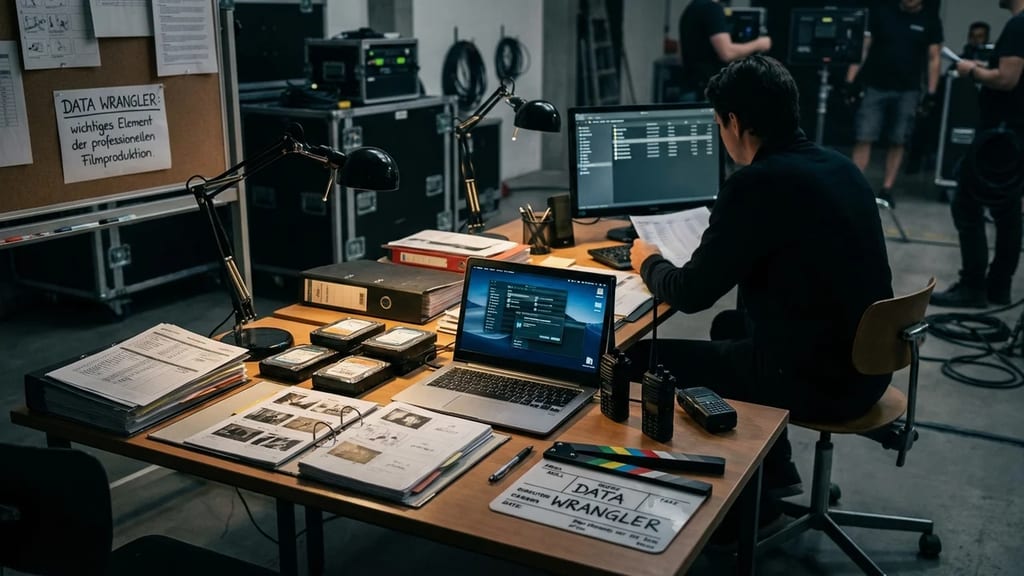
Crew member who captures, manages, and backs up camera data on set, processing 500 GB to 4 TB of raw digital footage daily.

Technical Details

Per shooting day, a Data Wrangler processes between 500 GB and 4 TB of raw footage, depending on the camera and resolution. RED Weapon 8K produces approximately 300 MB per second at 24fps, while ARRI Alexa Mini LF generates around 1.2 GB per minute. The workflow includes ingesting media cards (CFast 2.0, SxS Pro+, CFexpress), creating proxies in ProRes 422 LT or H.264, and synchronizing with timecode and audio. Standard software includes Silverstack, Shotput Pro, or OFFLOAD by Hedge.

History & Development

The profession emerged in 2004 with the first generation of digital cinema cameras. George Lucas' "Star Wars Episode III" (2005) was the first to employ dedicated Data Wranglers for the Sony HDW-F900 cameras. By 2009, the workflow became standardized through ARRIRAW and RED's R3D format. From 2015 onwards, 4K-6K productions required specialized teams: Netflix has mandated a continuous Chain of Custody documentation for all original data since 2018.

Practical Application in Film

On "Mad Max: Fury Road" (2015), three Data Wranglers secured 8 TB daily from 14 synchronized cameras. The workflow involved on-site data checks, backup to LTO-7 tapes (6 TB capacity), and proxy creation for the editor within four hours. Marvel productions utilize a three-tier system: on-set backup, a mobile workstation at basecamp, and cloud upload via Aspera transfer at 1 Gbit/s. Faulty media cards result in an average of 50,000 USD in reshoots per shooting day.

Comparison & Alternatives

Distinction from the DIT (Digital Imaging Technician): The DIT optimizes the image, while the Data Wrangler secures it. Automated systems like Pomfort LiveGrade Pro are increasingly taking over routine tasks but require human oversight for errors. Cloud-based solutions (Frame.io Camera to Cloud) eliminate physical media but necessitate internet connections with at least 100 Mbit/s upload. Small productions combine both roles, while blockbusters employ separate specialists.
From the crafts

Perspectives

Cinematographer

Ich brauche meinen Data Wrangler als verlässlichen Partner, der meine Speicherkarten schnell zurückbringt, damit ich weiterdrehen kann. Seine LUTs und Proxies müssen exakt meine Bildintention widerspiegeln, sonst entstehen Missverständnisse in der Postproduktion. Bei kritischen Takes verlange ich eine sofortige Bestätigung der Datenintegrität.

Director

Der Data Wrangler ermöglicht mir, abends bereits geschnittene Sequenzen zu sichten und dramaturgische Entscheidungen für den nächsten Drehtag zu treffen. Seine schnellen Proxies sind entscheidend für mein Verständnis, ob eine Szene funktioniert oder Nachdreh benötigt. Eine verlorene Einstellung kann meine gesamte Erzählstruktur zerstören.

Producer

Ein erfahrener Data Wrangler kostet 400-600 EUR täglich, aber verhindert Datenverluste die 50.000+ EUR kosten können. Seine Effizienz bestimmt, wann der Editor arbeiten kann und damit den gesamten Postproduktions-Zeitplan. Ich kalkuliere 15% des Kamerabudgets für Data Management inklusive Hardware und Personal.

More in the lexikon

Related terms

Test your knowledge

Quiz

1. Zu welchem Department gehört „Datensicherung"?

2. Wie viele verschiedene Fachperspektiven bietet dieser Eintrag?

Report an error
From the Filmfarm ecosystem

Understand visual language, budget productions, connect crew.

The Lexikon is part of the Filmfarm ecosystem — alongside budgeting (FilmBalance), an industry magazine (FilmCircus) and crew networking (FilmCall, CrewMesh). One shared vocabulary for the whole production.

FilmFarm FilmRadarComing soonFilmPulseComing soonFilmNumbersComing soonFilmCapitalComing soonFilmLabComing soonFilmBalanceComing soonFilmCircusComing soon