Technical Details
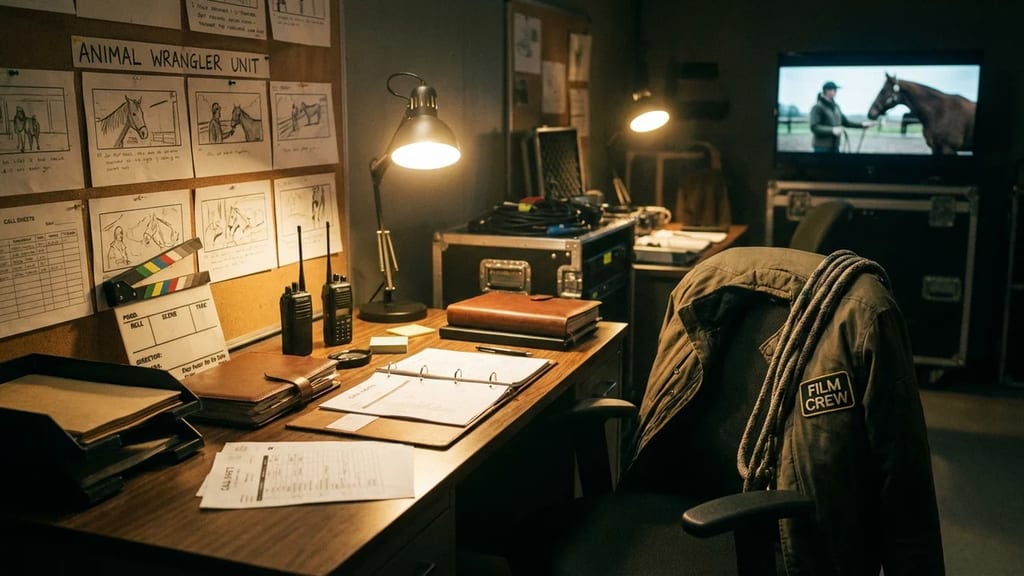
Professional animal wranglers work with a repertoire of 30-50 standardized commands per animal species, trained over 2-8 weeks of preparation. For large productions, specialized teams are deployed: Head Animal Coordinator, Species-Specialists (e.g., for big cats or reptiles), and Safety Handlers in a 1:3 ratio for dangerous species. Working hours are subject to strict regulations – mammals a maximum of 4 hours daily, birds 2 hours, with 30-minute breaks every 90 minutes. Transport cages must measure at least 1.5 times the animal's body length in all directions.
History & Development
Organized animal training for films began in 1903 with the silent film "The Great Train Robbery," where real horses were used for chase scenes. Carl Spitz established the first professional standards in 1920 with his dog "Toto" in "The Wizard of Oz" (1939). The profession became formalized after a horse's death during "Heaven's Gate" (1980) – since 1981, the American Humane Association has overseen all animal performances in Hollywood productions. Modern animal wranglers today complete 2-3 years of training with certifications in animal psychology, first aid, and safety protocols.
Practical Application in Film
For "Life of Pi" (2012), animal wrangler Thierry Le Portier combined live tigers with CGI elements – 23 different tigers appeared in 17 water scenes, each limited to a maximum of 6 minutes. For "John Wick" (2014), Kim Krafsky trained the Beagle puppies for 12 weeks on precise markings and gaze directions. Complex sequences are broken down into 15-30 second units, as animal concentration wanes after this period. Backup animals (usually 3-5 identical specimens) ensure continuity in case of behavioral errors or fatigue.
Comparison & Alternatives
The Animal Coordinator plans and organizes, while the Wrangler acts directly on set. Animal stunt coordinators specialize in action sequences. CGI technology is increasingly replacing live animals – "The Jungle Book" (2016) used exclusively digital creatures. Animatronics remain relevant for close-ups, as tactile interaction between actor and "animal" appears more authentic than green-screen performance. Live animals are primarily used for pet scenes and documentary footage.