Filmlexikon.
Support
Dark Night of the Soul
Theory · Terms

Dark Night of the Soul

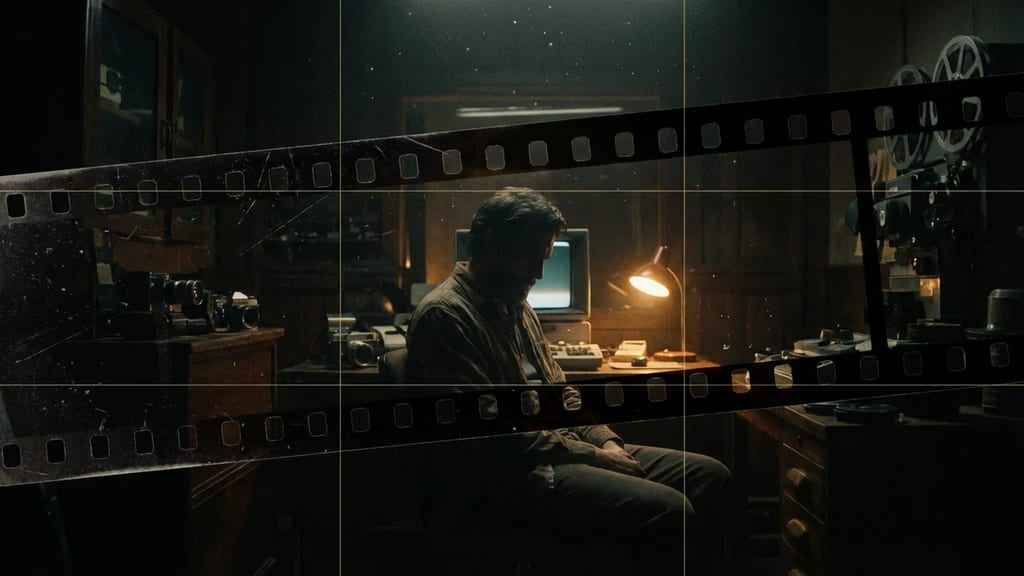
Murnau AI illustration
flow roll conflict

Dark Night of the Soul: The dramatic low point in three-act structure (min. 75–82) where the protagonist reaches emotional and physical bottom before the final turning point.

Technical Details

The Dark Night of the Soul typically lasts 3-7 minutes and marks the end of the second act in the three-act structure. It immediately follows the second plot point (around minute 75) and leads into the turning point for the third act. Structurally, a distinction is made between the "inner Dark Night of the Soul" (psychological breakdown) and the "outer Dark Night of the Soul" (physical defeat). In Joseph Campbell's Hero's Journey, it corresponds to the "Ordeal" phase, while in Freytag's dramatic structure, it is assigned to the falling action.

History & Development

Christopher Vogler first systematically introduced the term into film analysis in 1992 in "The Writer's Journey," based on Campbell's mythological studies from 1949. Syd Field established its structural placement at the end of the second act in 1979 with "Screenplay." Its modern form as a distinct sequence developed through Pixar's dramaturgy in the 1990s, where each animated film received a clearly defined 5-8 minute "lowest point" sequence.

Practical Application in Film

In "The Dark Knight" (2008), the Joker's hospital scene with Harvey Dent (minutes 82-89) forms the Dark Night of the Soul – Batman has failed, Rachel is dead, and Gotham has turned against him. "Rocky" (1976) places it in the 14th round of the fight, when Rocky is down and could give up. Pixar's "Toy Story 3" (2010) uses the incinerator scene (minutes 92-97), where all the toys face certain death. The sequence often requires 15-25% more shooting time than planned, as actors must deliver their most emotional performance here.

Comparison & Alternatives

It should be distinguished from the first plot point (minutes 25-30), which introduces the problem, and the midpoint (minute 60), which provides false hope. The "Point of No Return" (minute 25) initiates the action, while the Dark Night of the Soul emotionally concludes it. In serial narratives, it corresponds to the cliffhanger before the finale. Modern streaming formats shift it to minutes 45-50 in 90-minute productions. Alternative structural models, such as the four-act structure, position it at the end of the third act.
From the crafts

Perspectives

Cinematographer

In der Dunkelsten Stunde arbeite ich mit extremen Close-ups und niedrigen Kamerapositionen, um die emotionale Verzweiflung visuell zu verstärken. Das Licht wird auf 30-40% der normalen Ausleuchtung reduziert, oft nutze ich praktische Lichtquellen wie Straßenlaternen oder Kerzen für harte Schatten. Die Handkamera wird bewusst unruhiger geführt, um die innere Zerrissenheit des Protagonisten zu spiegeln.

Director

Ich plane die Dunkelste Stunde als emotionales Epizentrum des Films und drehe sie meist gegen Ende der Hauptdrehzeit, wenn die Schauspieler bereits in ihre Rollen eingewachsen sind. Diese Sequenz bestimmt rückwirkend die Intensität aller vorangegangenen Szenen - sie müssen glaubhaft zu diesem Tiefpunkt hinführen. Hier teste ich bewusst die Schmerzgrenze des Publikums aus, bevor die Katharsis des dritten Akts einsetzen kann.

Producer

Die Dunkelste Stunde kostet durchschnittlich 20-30% mehr Budget pro Minute als Standard-Dialogszenen, da sie meist aufwendige Setups und mehrere Drehtage für die emotionale Intensität benötigt. Ich plane hier zusätzliche Takes und längere Pausenzeiten für die Schauspieler ein. Diese Sequenz entscheidet oft über Testscreening-Ergebnisse und damit über die finale Schnittfassung - eine schwache Dunkelste Stunde gefährdet das gesamte Projekt.

More in the lexikon

Related terms

Test your knowledge

Quiz

1. Zu welchem Department gehört „Dunkelste Stunde"?

2. Wie viele verschiedene Fachperspektiven bietet dieser Eintrag?

Report an error
From the Filmfarm ecosystem

Understand visual language, budget productions, connect crew.

The Lexikon is part of the Filmfarm ecosystem — alongside budgeting (FilmBalance), an industry magazine (FilmCircus) and crew networking (FilmCall, CrewMesh). One shared vocabulary for the whole production.

FilmFarm FilmRadarComing soonFilmPulseComing soonFilmNumbersComing soonFilmCapitalComing soonFilmLabComing soonFilmBalanceComing soonFilmCircusComing soon