Filmlexikon.
Support
Cooke Varotal
Camera · Equipment

Cooke Varotal

Cooke Optics
cooke flow para roll take

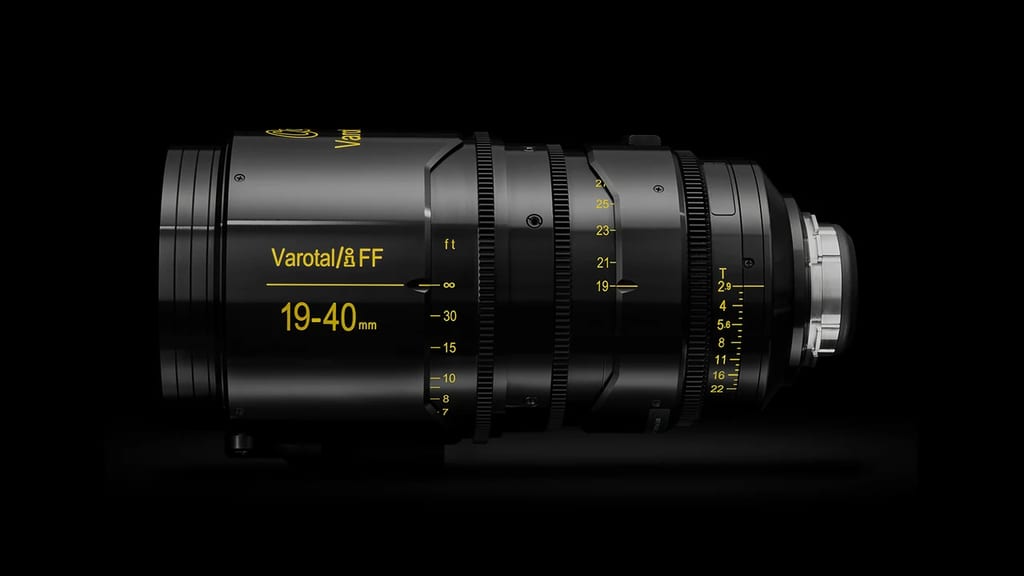
Cooke Varotal: First professional cinema zoom lens (1958–1976). Three variants: 25–250mm, 20–100mm, 18–100mm. Signature warm Cooke rendering; 4.8kg, manual operation.

Variants & Technical Details

Cooke produced three main variants: the original 25-250mm f/3.1 (Mk I), the more compact 20-100mm f/2.8 (Mk II) from 1963, and the later developed 18-100mm f/3.1 (Mk III). The Mk I weighed 4.8 kg with a length of 285mm and required special camera supports due to its size. The optical construction comprised 22 lens elements in 16 groups, with a focusing range from 1.5 meters. A mechanical compensation system maintained focus constancy during zooming but required precisely calibrated manual movements.

History & Development

Development began in 1956 under the direction of Harold Cooke in response to the growing demand from television for flexible shooting solutions. The first functional Varotal was completed in 1958 and initially tested in BBC productions. Commercial breakthrough came in 1961 when the series found its way into Hollywood. Production ended in 1976 after approximately 800 units were manufactured, as more compact Japanese competitors took over the market.

Practical Use in Film

The Varotal enabled fluid zoom shots in feature films for the first time without lens changes. Sergio Leone used it in the "Dollar Trilogy" Westerns (1964-1966) for his characteristic zoom-ins on Clint Eastwood's face. In Stanley Kubrick's "2001: A Space Odyssey" (1968), the lens facilitated continuous tracking shots through the space station corridors. The main disadvantage lay in the significant increase in camera weight and the need for constant refocusing with manual operation.

Comparison & Alternatives

Unlike modern servo zoom lenses, the Varotal required purely manual operation via gear mechanisms. Contemporary alternatives like the Angenieux 25-250mm offered similar focal length ranges but did not achieve the optical quality of Cooke lenses. Today's cine zoom lenses from Angenieux, Canon, or Fujinon offer servo control, constant T-stops, and significantly lower weight, but cannot reproduce the characteristic "Cooke Look" with its warm bokeh and subtle aberrations.
From the crafts

Perspectives

Cinematographer

Als DoP schätze ich das Varotal für seinen unverwechselbaren organischen Look, der digitalen Bildern eine natürliche Wärme verleiht. Die manuelle Zoomsteuerung erfordert absolut präzise Koordination mit dem Focus Puller, aber ermöglicht dadurch besonders nuancierte, menschliche Kamerabewegungen. Ich setze es gezielt für Periodenfilme ein, wenn der technische Aufwand gerechtfertigt ist.

Director

Das Varotal gibt mir die Möglichkeit, Emotionen durch kontinuierliche Brennweitenveränderungen zu verstärken, ohne die Montage zu unterbrechen. Die langsamere, bedächtigere Bedienung zwingt mich zu bewussteren Entscheidungen beim Zoomen und schafft einen meditativen Rhythmus, der perfekt zu introspektiven Szenen passt. Jede Zoomfahrt wird zum choreographierten Moment statt zum technischen Hilfsmittel.

Producer

Ein Varotal kostet mich zusätzliche Drehtage durch längere Setup-Zeiten und erfahrene Techniker, die mit der manuellen Bedienung umgehen können. Der Verleih eines funktionsfähigen Exemplars liegt bei 800-1200 Euro pro Drehtag, dazu kommen spezielle Kamerastützen und ein erfahrener Focus Puller. Wirtschaftlich rechtfertige ich den Aufwand nur bei Prestige-Projekten oder wenn der Look unverzichtbarer Bestandteil der visuellen Identität ist.

More in the lexikon

Related terms

Test your knowledge

Quiz

1. Was beschreibt „Cooke Varotal" am besten?

2. Zu welchem Department gehört „Cooke Varotal"?

3. Wie viele verschiedene Fachperspektiven bietet dieser Eintrag?

Report an error
From the Filmfarm ecosystem

Understand visual language, budget productions, connect crew.

The Lexikon is part of the Filmfarm ecosystem — alongside budgeting (FilmBalance), an industry magazine (FilmCircus) and crew networking (FilmCall, CrewMesh). One shared vocabulary for the whole production.

FilmFarm FilmRadarComing soonFilmPulseComing soonFilmNumbersComing soonFilmCapitalComing soonFilmLabComing soonFilmBalanceComing soonFilmCircusComing soon