Filmlexikon.
Support
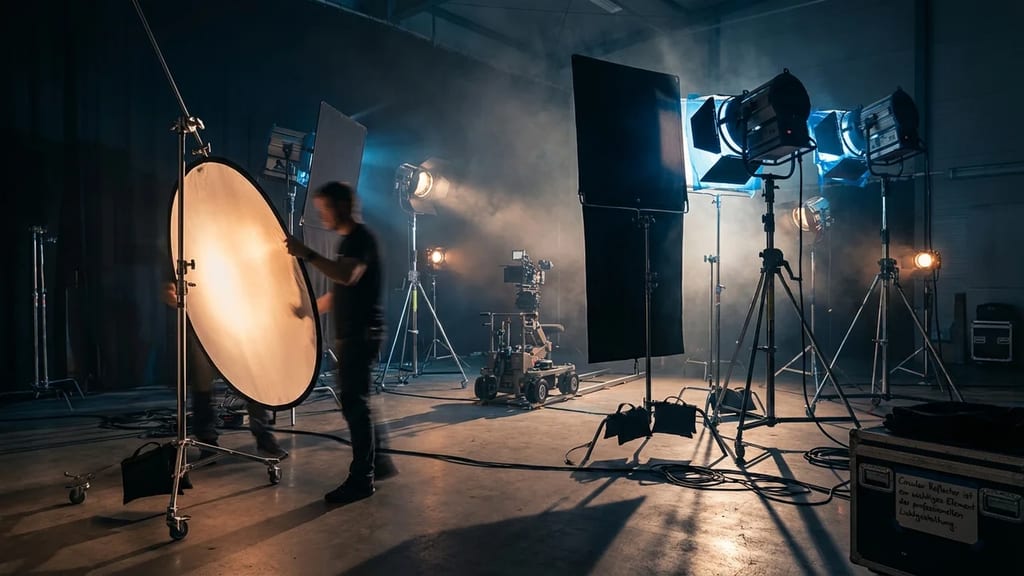
Circular Reflector
Lighting · Equipment

Circular Reflector

Murnau AI illustration
daylight 5600k tungsten 3200k 1 2 ctb 1 4 ctb ctb full ctb 1 2 cto

Round, collapsible reflector, 32–48″ diameter, with five surfaces: silver, gold, white, black, and translucent for varied light effects.

Technical Details

Standard diameters range from 32", 42" to 48" (81-122 cm), with 42" (107 cm) considered the industry standard. The reflective surfaces are divided into five main types: Silver (maximum light output, hard character), Gold (3200K color temperature, warm tone), White (soft diffusion, natural look), Black (negative fill, contrast enhancement), and Translucent (diffuser, 1-2 stop light loss). The collapsible mechanism reduces transport size to about one-third of the diameter. High-quality models use double-coated fabrics with UV protection and achieve reflectivity up to 95%.

History & Development

Photoflex developed the first mass-produced collapsible reflector for photography in 1986, which was quickly adopted by the film industry. Kaliflex and Lastolite perfected the spring steel frame construction from 1990 onwards, which is still used today. The breakthrough came in 1994 with 5-in-1 reflectors, where four surfaces are created by flipping and a removable diffuser cover. Modern developments include LED-integrated variants (since 2018) and motorized versions for remote control.

Practical Use in Film

For exterior shoots, the gold reflector acts as the main light source for warm skin tones, while silver reflectors direct harsh sunlight at eye level. "Her" (2013) systematically used 48" gold reflectors for Joaquin Phoenix's close-ups in available light. The translucent type serves as a mobile diffuser between a hard light source and the subject, reducing hard shadows by 70-80%. Indoors, white reflectors create subtle fill light without color shift. Black reflectors selectively absorb light and enhance shadows for dramatic contrast.

Comparison & Alternatives

Compared to softboxes, circular reflectors offer no control over light direction but are significantly more mobile and quicker to set up. Rectangular reflectors are better suited for full-body shots, while circular models create more natural catchlights in portraits. LED panels are increasingly replacing reflector setups in controllable lighting situations but cannot amplify light quantity. For windy outdoor shoots, collapsible reflectors with handles are more practical than tripod-mounted alternatives.
From the crafts

Perspectives

Cinematographer

Ich verwende 42"-Goldreflektoren standardmäßig für Available-Light-Porträts, da sie Hauttöne um 200K wärmer rendern und hartes Tageslicht in weiches Führungslicht umwandeln. Bei Gegenlicht-Situationen positioniere ich den Silberreflektor knapp außerhalb des Bildkaders in 45-Grad-Winkel zum Gesicht, was die Schattenzeichnung um zwei Blendenstufen aufhellt ohne die Plastizität zu zerstören.

Director

Der Goldreflektor wird für mich zum emotionalen Werkzeug in Liebesszenen oder nostalgischen Momenten, da er automatisch diese warme, verklärte Stimmung erzeugt die kein Filter replizieren kann. Schwarzreflektoren setze ich gezielt ein um Gesichtshälften in den Schatten zu legen und psychologische Zwiespältigkeit visuell zu unterstreichen - besonders effektiv bei Verhörszenen oder inneren Konflikten.

Producer

Ein 5-in-1 Reflektor-Set kostet 150 Euro, wiegt 2kg und ersetzt Equipment im Wert von 3000 Euro bei 80% der Aufnahmen - diese Kosteneffizienz macht ihn unverzichtbar bei Low-Budget-Produktionen. Der Zeitfaktor ist entscheidend: Setup dauert 30 Sekunden statt 15 Minuten für vergleichbare Softbox-Setups, was bei 40 Setups pro Tag vier Stunden Arbeitszeit spart.

More in the lexikon

Related terms

Test your knowledge

Quiz

1. Was beschreibt „Runder Reflektor" am besten?

2. Zu welchem Department gehört „Runder Reflektor"?

3. Wie viele verschiedene Fachperspektiven bietet dieser Eintrag?

Report an error
From the Filmfarm ecosystem

Understand visual language, budget productions, connect crew.

The Lexikon is part of the Filmfarm ecosystem — alongside budgeting (FilmBalance), an industry magazine (FilmCircus) and crew networking (FilmCall, CrewMesh). One shared vocabulary for the whole production.

FilmFarm FilmRadarComing soonFilmPulseComing soonFilmNumbersComing soonFilmCapitalComing soonFilmLabComing soonFilmBalanceComing soonFilmCircusComing soon