Technical Details
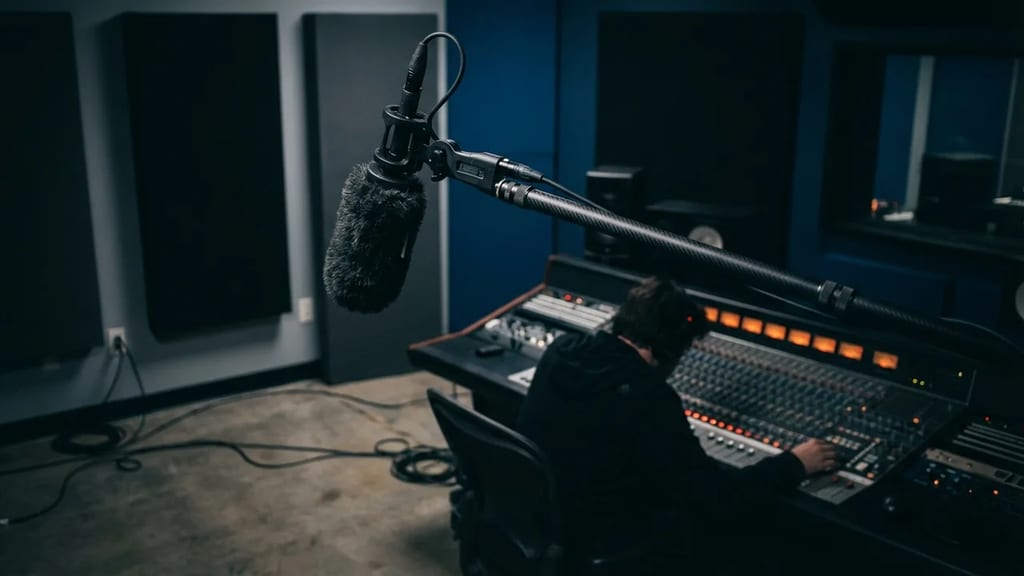
Professional boom poles consist of 3-5 telescopic segments with quick-release clamps or twist locks. Carbon models like the K-Tek KE-110CC weigh only 680 grams at a length of 3.1 meters, while aluminum variants are about 40% heavier. The microphone thread is a standard 3/8"-16 UNC, and internal cable management prevents interference noise from external cables. The grip is coated with non-slip foam or cork, and the wall thickness for carbon tubes is typically 1-2mm.
History & Development
The first boom poles originated in the 1930s at RKO Pictures as simple wooden poles with screwed-on microphones. In 1952, Electro-Voice developed the first telescopic aluminum variant. The breakthrough came in 1987 with K-Tek's introduction of carbon fiber poles, which reduced weight by 60%. Modern developments include internal shock absorption systems and quick-release mechanisms, which have become standard since 2010.
Practical Use in Film
In "No Country for Old Men" (2007), the Coen brothers deliberately used longer 5-meter poles to acoustically capture the vastness of the landscape. Steadicam shots require special short poles under 2 meters, as longer variants can swing into the frame. In car scenes, curved poles are used to mic through side windows. The typical working time for a sound assistant with a 3-meter pole is 6-8 hours daily before fatigue affects recording quality.
Comparison & Alternatives
Compared to wireless microphones (lavalieres), the boom pole offers more natural room tone and no radio dropouts, but requires additional personnel. Overhead rigging systems replace hand-held poles in static scenes but are less flexible. Hybrid solutions have combined boom poles with wireless transmitters since 2015, allowing the sound assistant to bridge greater distances to the camera. For budget productions, camera-mounted microphone arms are increasingly used, but they restrict freedom of movement.