Filmlexikon.
Support
Biotar 75
Camera · Terms

Biotar 75

Murnau AI illustration
flow para roll take

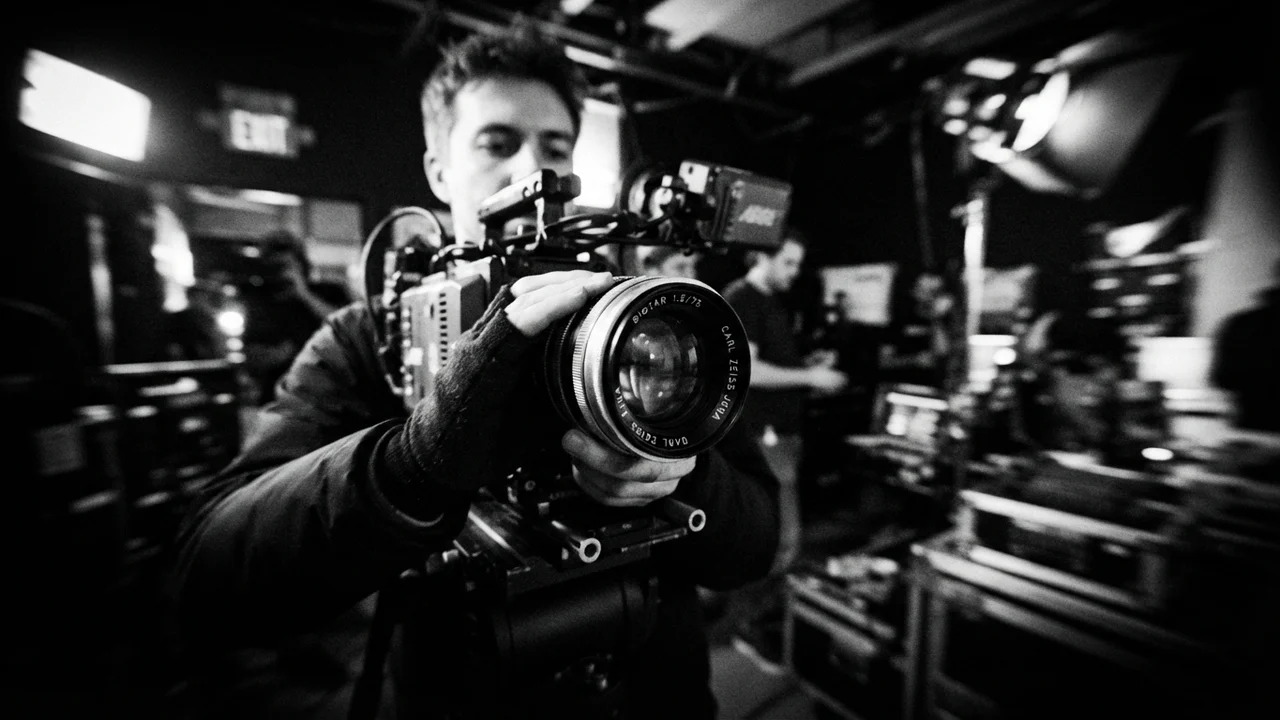
Carl Zeiss Jena 75mm portrait lens from 1927 with six elements in four groups. Delivers signature soft bokeh and warm skin tones at f/1.5 aperture.

Technical Details

The optical construction consists of six elements in four groups with an asymmetrical arrangement, which gives the lens its characteristic imaging properties. The minimum focusing distance is 1.0 meter, and the image circle fully covers the 35mm film format (24x36mm). The lens weighs 285 grams with a length of 52mm and a filter diameter of 52mm. It was produced in various mounts for Contax rangefinders (Contax RF), Praktica (M42 mount), and Pentacon Six (medium format). The diaphragm blade construction with eight blades produces nearly circular highlights in the out-of-focus areas.

History & Development

Ludwig Bertele developed the Biotar in 1927 at Carl Zeiss Jena as a further development of the Sonnar design. The first series production began in 1936 for the Contax system, followed by the M42 version for East German SLRs from 1949. After the division of Germany, production continued in Jena, while the West German Zeiss division pursued its own developments. Regular production ended in 1956, after approximately 50,000 units were manufactured. The design later influenced Soviet lenses such as the Jupiter-3 and modern reissues by various manufacturers.

Practical Use in Film

Cinematographers appreciate the Biotar 75 for portrait sequences and close-ups, as it renders skin tones warmly and softly. Stanley Kubrick used modified Biotar lenses for candlelight scenes in "Barry Lyndon" (1975) to shoot in extremely low light conditions without artificial lighting. The pronounced bokeh is suitable for emotional scenes with strong emphasis on the protagonist. At maximum aperture, the lens exhibits characteristic spherical aberrations, which lend the image a dreamy, nostalgic look. Stopped down to f/2.8, it achieves modern sharpness standards while retaining its characteristic rendering.

Comparison & Alternatives

The Biotar 75 differs from the sharper but more sterile-looking Sonnar 85mm through softer transitions and more pronounced bokeh. Modern alternatives such as the Zeiss Planar 85mm f/1.4 or the Canon 85mm f/1.2L offer higher resolution but cannot replicate the vintage look. For authentic film productions with a vintage aesthetic, the original remains irreplaceable. Meyer-Optik-Görlitz has been producing a reissue since 2017 with improved coatings, offering the classic rendering with modern mechanical precision.
From the crafts

Perspectives

Cinematographer

Ich setze das Biotar 75 gezielt für Portraitaufnahmen ein, wenn ich diesen unverwechselbaren weichen Look brauche, den moderne Objektive nicht liefern können. Die f/1.5 Blende gibt mir auch bei schwierigen Lichtverhältnissen genug Spielraum, allerdings muss ich mit der geringeren Schärfentiefe sehr präzise fokussieren. Der charakteristische Bokeh-Swirl in den Bildecken kann bei falscher Komposition störend wirken, richtig eingesetzt verstärkt er aber die emotionale Wirkung einer Szene erheblich.

Director

Das Biotar verleiht meinen Filmen eine nostalgische, traumhafte Atmosphäre, die perfekt für Rückblenden oder emotionale Höhepunkte funktioniert. Ich nutze die weiche Abbildung bewusst, um Charaktere verletzlicher oder romantischer wirken zu lassen - der Vintage-Look transportiert eine Intimität, die moderne scharfe Objektive zerstören würden. Bei Dialogszenen zwischen zwei Personen kann ich durch die geringe Schärfentiefe den Fokus elegant zwischen den Gesprächspartnern verschieben und so die narrative Führung steuern.

Producer

Das originale Biotar kostet heute zwischen 800-1500 Euro je nach Zustand, die Neuauflage liegt bei 2000 Euro - beides vertretbare Investitionen für den spezifischen Look. Problematisch ist die Verfügbarkeit: Originale sind Mangelware und können bei intensivem Dreh ausfallen, Ersatz ist schwer zu beschaffen. Ich kalkuliere daher immer ein Backup-Objektiv mit ein oder miete gleich zwei Exemplare, was die Kosten verdoppelt aber Produktionsausfälle verhindert.

More in the lexikon

Related terms

Test your knowledge

Quiz

1. Zu welchem Department gehört „Biotar 75"?

2. Wie viele verschiedene Fachperspektiven bietet dieser Eintrag?

Report an error
From the Filmfarm ecosystem

Understand visual language, budget productions, connect crew.

The Lexikon is part of the Filmfarm ecosystem — alongside budgeting (FilmBalance), an industry magazine (FilmCircus) and crew networking (FilmCall, CrewMesh). One shared vocabulary for the whole production.

FilmFarm FilmRadarComing soonFilmPulseComing soonFilmNumbersComing soonFilmCapitalComing soonFilmLabComing soonFilmBalanceComing soonFilmCircusComing soon