Technical Details
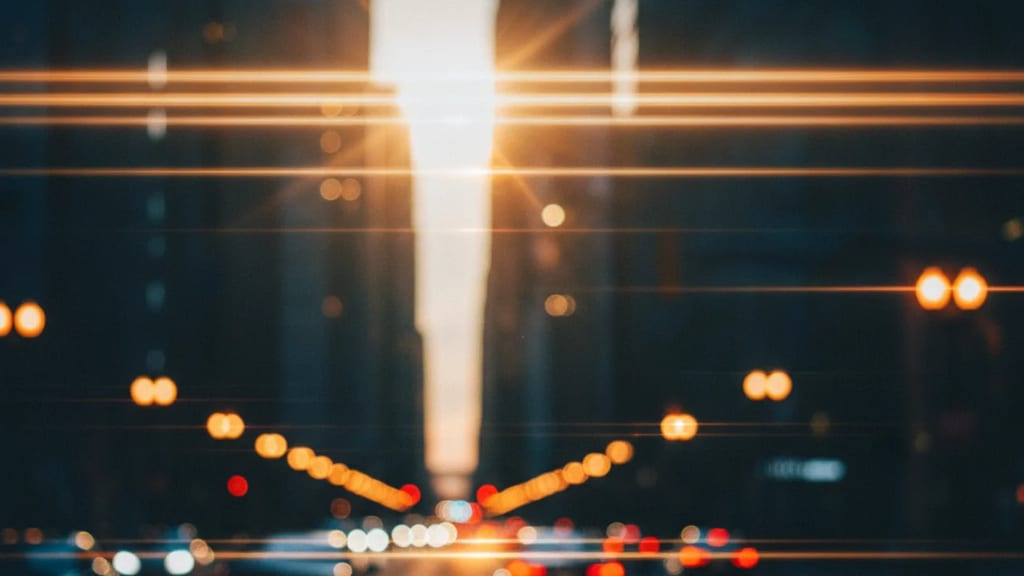
The streaks are created by the asymmetrical pupil shape of anamorphic lenses, which compress light in the horizontal direction by a factor of 2:1. Modern anamorphic series such as the Cooke Anamorphic/i or ARRI Master Anamorphics produce streaks with a typical length of 15-30 pixels at 4K resolution per stop. The intensity and color of the streaks vary depending on the coating of the front element: Hawk V-Lite lenses produce warm, golden streaks, while Zeiss Ultra Primes produce cool, bluish lines. Vintage lenses like the Kowa Prominar or Bausch & Lomb Super Baltars exhibit more pronounced, often colored streaks due to less developed anti-reflective coatings.
History & Development
The first anamorphic lenses were developed in 1927 by Henri Chrétien's Hypergonar system for the Cinémascope format. The characteristic streaks were initially considered an optical flaw and were intended to be minimized. It wasn't until the 1970s that cinematographers like Gordon Willis (The Godfather, 1972) and Vilmos Zsigmond (Close Encounters, 1977) recognized the creative potential of streaks. Manufacturers like Panavision subsequently developed lenses with controlled streak characteristics, such as the C-series from 1976.
Practical Use in Film
Anamorphic streaks define the visual appearance of numerous blockbusters: Blade Runner 2049 (2017, Roger Deakins) uses blue streaks to enhance the neo-noir aesthetic, while 1917 (2019, Roger Deakins) employs warm streaks for emotional moments. In digital post-production, streaks can be added retrospectively using plugins like Red Giant's Universe or FxFactory. Streaks intensify in backlight situations and with long focal lengths, which is why they frequently appear in portraits with backlight or in nocturnal cityscapes.
Comparison & Alternatives
Spherical lenses produce circular lens flares without directional streaks. Digital streak emulation achieves optically similar results but appears less organic than optical streaks. Modern anamorphic lenses like the ARRI Signature Primes offer adjustable streak intensity through interchangeable front groups. Specialized filters such as the Schneider Hollywood Black Magic can impart similar effects to spherical lenses without creating the characteristic anamorphic image geometry.