Filmlexikon.
Support
Anamorphic Flare
Camera · Technique

Anamorphic Flare

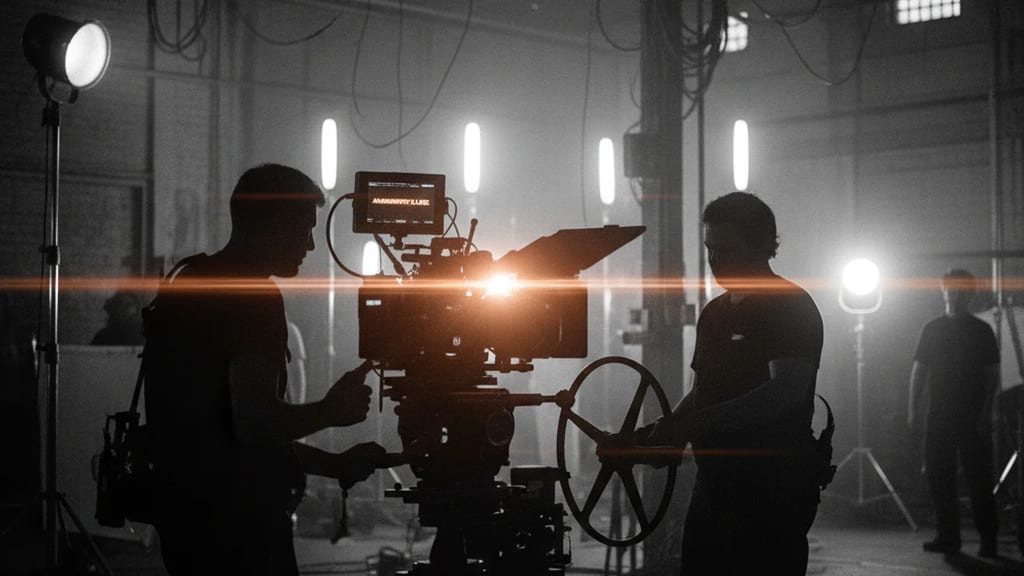
Murnau AI illustration
anamorphic lens anamorphic format lens flare

Characteristic horizontal blue light streaks produced by cylindrical front elements of anamorphic lenses when light strikes the optical axis at 15–45° angles.

Technical Details

Anamorphic flares are created by cylindrical front lenses with compression factors of 1.33x to 2x, which refract light horizontally differently than vertically. Standard anamorphic lenses like the Panavision C-Series or ARRI Master Anamorphics produce flares at angles of incidence of 15-45° to the optical axis. The characteristic blue streaks typically measure 200-800 pixels in height in a 2.39:1 Cinemascope format. Modern lenses like the ARRI Signature Primes offer controlled flare characteristics through multi-coating processes with up to 12 layers of coating.

History & Development

Henri Chrétien developed the first anamorphic system, "Hypergonar," for the French military in 1926. 20th Century Fox adapted the technology in 1952 as CinemaScope with "The Robe" as the first anamorphic feature film. The distinctive flare effects only gained conscious aesthetic significance in the 1970s through films like "American Graffiti" (1973) and "Star Wars" (1977). Cinematographer Haskell Wexler used them specifically for nostalgic moods, while Douglas Trumbull employed them for science fiction atmosphere. Today, manufacturers like Cooke offer various flare intensities with their Anamorphic/i series.

Practical Application in Film

Denis Villeneuve and Roger Deakins systematically used anamorphic flares in "Blade Runner 2049" (2017) to enhance the futuristic atmosphere, combined with practical light sources. J.J. Abrams popularized intense lens flares in "Star Trek" (2009) through targeted LED illumination of the lenses during shooting. The typical workflow requires precise light positioning with HMI or LED panels at a 30-60° angle to the lens. Disadvantages: Flares can obscure details and require additional takes without flare effects for post-production.

Comparison & Alternatives

Spherical lenses produce round, concentric flares without horizontal streaks. Digital flare simulation using software like Optical Flares achieves 80% of visual authenticity at significantly lower costs. Modern full-frame lenses like the Panavision DXL system enable anamorphic looks without traditional drawbacks. Vintage lenses like the Kowa Anamorphics from the 1960s offer more intense, unpredictable flares, while modern designs like Atlas Orion provide controllable effects.

From the crafts

Perspectives

Cinematographer

Ich setze anamorphe Flares gezielt bei 45°-Winkeln zu Schlüssellichtern ein, um emotionale Höhepunkte zu verstärken, muss aber immer Coverage ohne Flares drehen für den Schnitt. Die Panavision C-Series gibt mir bei T2.8 die perfekte Balance zwischen Flare-Intensität und Schärfentiefe, während ich bei den ARRI Master Anamorphics mehr Kontrolle über die Farbtemperatur der Flares habe.

Director

Ich nutze anamorphe Flares als visuelles Leitmotiv - in "Nostalgia" verstärkten sie Erinnerungssequenzen, in meinem Sci-Fi-Projekt markieren sie Technologie-Momente. Die horizontalen Streifen erzeugen unbewusst Widescreen-Gefühl und lenken den Blick, aber ich muss aufpassen, dass sie nicht von wichtigen Gesichtsausdrücken ablenken.

Producer

Anamorphe Flares bedeuten 15-20% längere Drehtage durch zusätzliche Takes und Setup-Zeit für Lichtpositionierung, plus 30.000€ Mehrkosten für Objektivmiete gegenüber sphärischen Linsen. Dafür spare ich Post-Produktion für digitale Flare-Effekte und erreiche Premium-Look für internationale Vermarktung - besonders wichtig für Genre-Filme mit 10M+ Budget.

More in the lexikon

Related terms

Test your knowledge

Quiz

1. Zu welchem Department gehört „Anamorphotischer Flare"?

2. Wie viele verschiedene Fachperspektiven bietet dieser Eintrag?

Report an error
From the Filmfarm ecosystem

Understand visual language, budget productions, connect crew.

The Lexikon is part of the Filmfarm ecosystem — alongside budgeting (FilmBalance), an industry magazine (FilmCircus) and crew networking (FilmCall, CrewMesh). One shared vocabulary for the whole production.

FilmFarm FilmRadarComing soonFilmPulseComing soonFilmNumbersComing soonFilmCapitalComing soonFilmLabComing soonFilmBalanceComing soonFilmCircusComing soon