Cinematographer
From a DoP's perspective, this element is essential for the visual design. It allows me to consistently implement the desired color mood and aesthetic image.
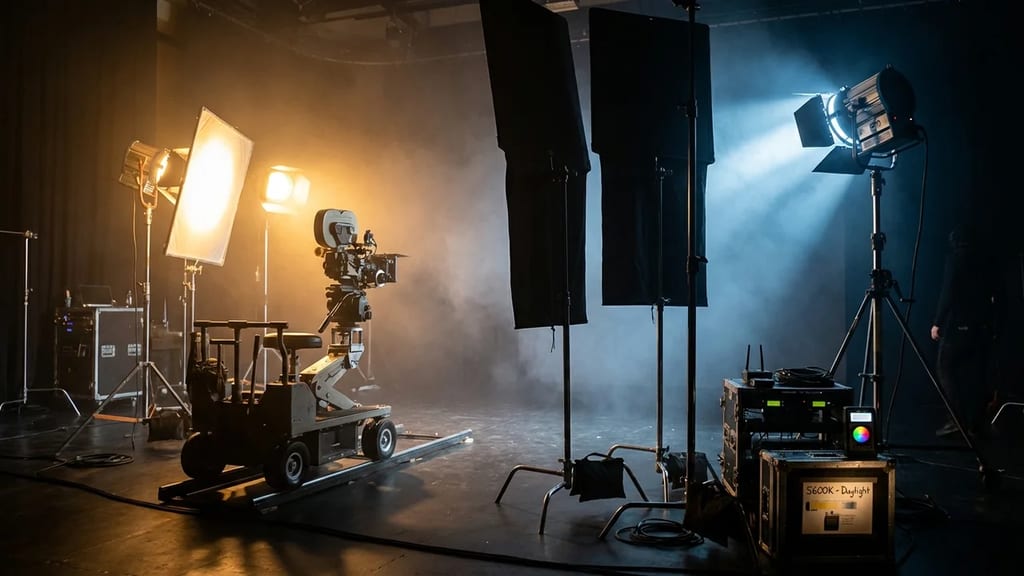
5600K is the standard color temperature for daylight in film and television — the reference point for daylight, HMI, and daylight LED sources.
5600K (5600 Kelvin) is the standardized reference value for daylight-white light in film and television production. The film industry knows two classic color temperature standards: Tungsten at around 3200K (warm, yellowish) and Daylight at 5600K (cool, daylight-white). 5600K approximates direct midday sun under a clear sky and serves as a common reference point so that artificial light sources, natural daylight, and daylight-balanced film material or the camera's white balance match each other.
5600K does not denote a manufacturer or a single device, but a technical characteristic of the emitted light. If a source is close to 5600K, white light will appear neutral to the camera with a daylight white balance.
Color temperature is specified in Kelvin (K). Low values appear warm/orange, high values appear cool/blue. 5600K falls within the daylight-white range, above Tungsten.
| Source / Standard | Approximate Color Temperature | Character |
|---|---|---|
| Tungsten / Incandescent | approx. 3200K | warm, yellowish |
| Daylight (5600K) | approx. 5600K | daylight-white |
| HMI / Daylight LED | typically around 5600K (conditioned/set to Daylight) | daylight-white |
HMI lamps are designed as daylight sources; fresh lamps may start above the target value and are regulated to the daylight range around 5600K. Daylight LEDs and daylight-balanced fluorescent sources are also assigned to the 5600K standard.
5600K is the working mode when shooting in or with daylight. If artificial light is to match daylight, daylight sources (HMI, Daylight LED) are used, or Tungsten light is shifted towards daylight using CTB (Color Temperature Blue). Conversely, a 5600K source is lowered towards Tungsten (approx. 3200K) with CTO (Color Temperature Orange) to match incandescent light or an interior mood.
From a DoP's perspective, this element is essential for the visual design. It allows me to consistently implement the desired color mood and aesthetic image.
This professional solution increases production efficiency and reduces post-production requirements. It allows for flexible, quick adjustments during the shoot.
As a gaffer, this is an indispensable tool in my daily toolkit. It allows me professional light control and quick adjustments on set, which saves time and ensures quality.
1. Was beschreibt „5600K (Tageslicht)" am besten?
2. Zu welchem Department gehört „5600K (Tageslicht)"?
3. Wie viele verschiedene Fachperspektiven bietet dieser Eintrag?
The Lexikon is part of the Filmfarm ecosystem — alongside budgeting (FilmBalance), an industry magazine (FilmCircus) and crew networking (FilmCall, CrewMesh). One shared vocabulary for the whole production.