Cinematographer
From a DoP's perspective, this element is essential for the visual design. It allows me to consistently implement the desired color mood and aesthetic image.
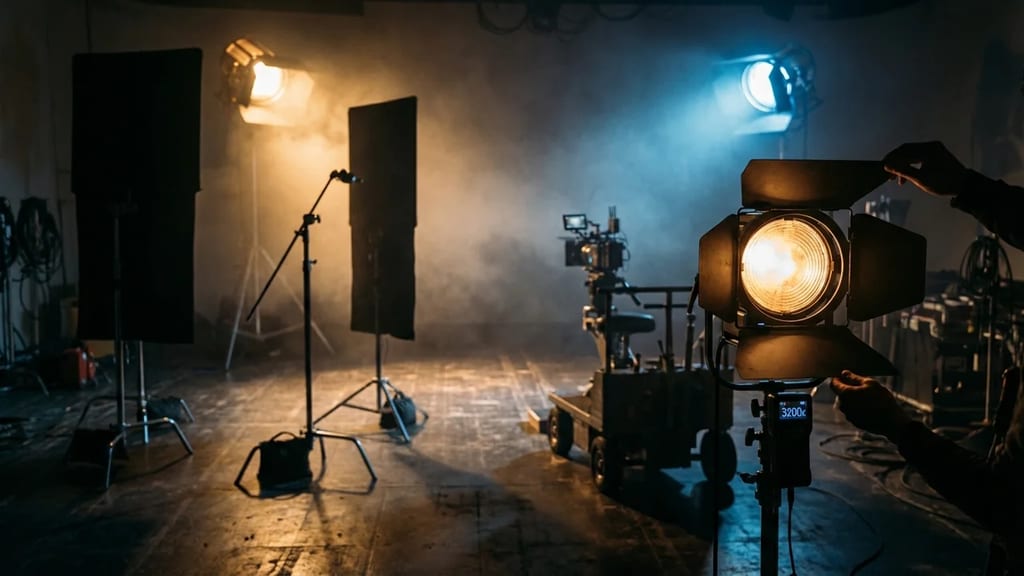
3200K is the standard color temperature for tungsten (incandescent) lighting on set, complementary to daylight's 5600K norm.
3200K (3200 Kelvin) is one of the two fundamental color temperature standards in film and television lighting. It denotes the warm, slightly orange-leaning light from incandescent or tungsten sources and is the counterpart to the daylight standard of around 5600K. In practice, when referring to "tungsten-balanced" or simply "artificial light," 3200K is generally meant.
The designation follows the Kelvin scale: the lower the value, the warmer (yellowish-orange) the light appears; the higher, the cooler (bluish). 3200K is thus clearly in the warm range. Classic tungsten-halogen fixtures like Fresnel or open-face lights are designed for this value ex-factory; modern LED panels and bicolor-capable lights can be precisely set to 3200K to emulate tungsten character.
Color temperature describes the color emitted by an ideal black-body radiator at a specific temperature (in Kelvin). 3200K is established as the target value for studio and film-suitable incandescent sources; standard household incandescent bulbs are often slightly below this (warmer).
| Standard | Color Temperature | Character |
|---|---|---|
| Tungsten / Artificial Light | approx. 3200K | warm, yellowish-orange |
| Daylight | approx. 5600K | cool, bluish |
There is a significant difference between these two standards, which is why tungsten and daylight sources cannot be neutrally mixed without correction.
The camera or white balance is set to the dominant light source. If the set is lit with artificial light, the balance is set to 3200K – then the tungsten sources appear neutral. If incorrectly balanced to 5600K under tungsten light, the image will shift towards orange; conversely, daylight will appear bluish under a 3200K white balance.
If sources of different color temperatures need to be combined in a shot, conversion gels from the grip and lighting department are used:
These gels are available in graduated densities (e.g., 1/8, 1/4, 1/2, 3/4, and Full) to precisely match sources to each other.
From a DoP's perspective, this element is essential for the visual design. It allows me to consistently implement the desired color mood and aesthetic image.
This professional solution increases production efficiency and reduces post-production requirements. It allows for flexible, quick adjustments during the shoot.
As a gaffer, this is an indispensable tool in my daily kit. It allows me professional light control and quick adjustments on set, which saves time and ensures quality.
1. Zu welchem Department gehört „3200K (Kunstlicht)"?
2. Wie viele verschiedene Fachperspektiven bietet dieser Eintrag?
The Lexikon is part of the Filmfarm ecosystem — alongside budgeting (FilmBalance), an industry magazine (FilmCircus) and crew networking (FilmCall, CrewMesh). One shared vocabulary for the whole production.