


Filmlexikon.
Support
180 Degree Shutter
Camera · Terms

180 Degree Shutter

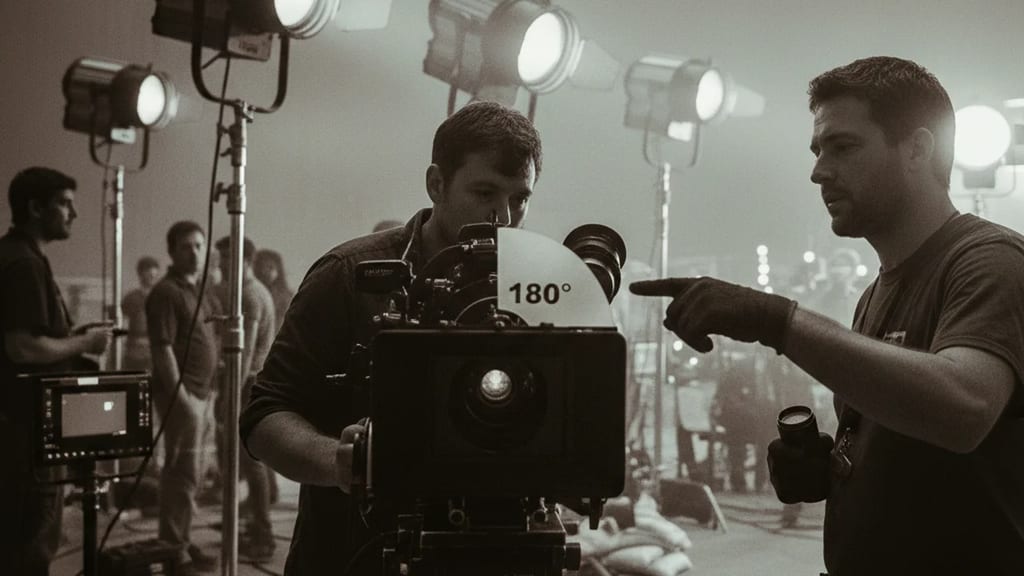
Murnau AI illustration
busy bokeh bridge plate 6 point star

Camera shutter angle setting that exposes each frame for half the frame interval (24fps = 1/48s), creating natural motion blur without strobing.

In film history

Famous examples · 180 Degree Shutter

Curated examples across cinema history that illustrate the term — from compositional principle to deliberate refusal.
01 / PRISTINE SHARPNESS AS STYLE

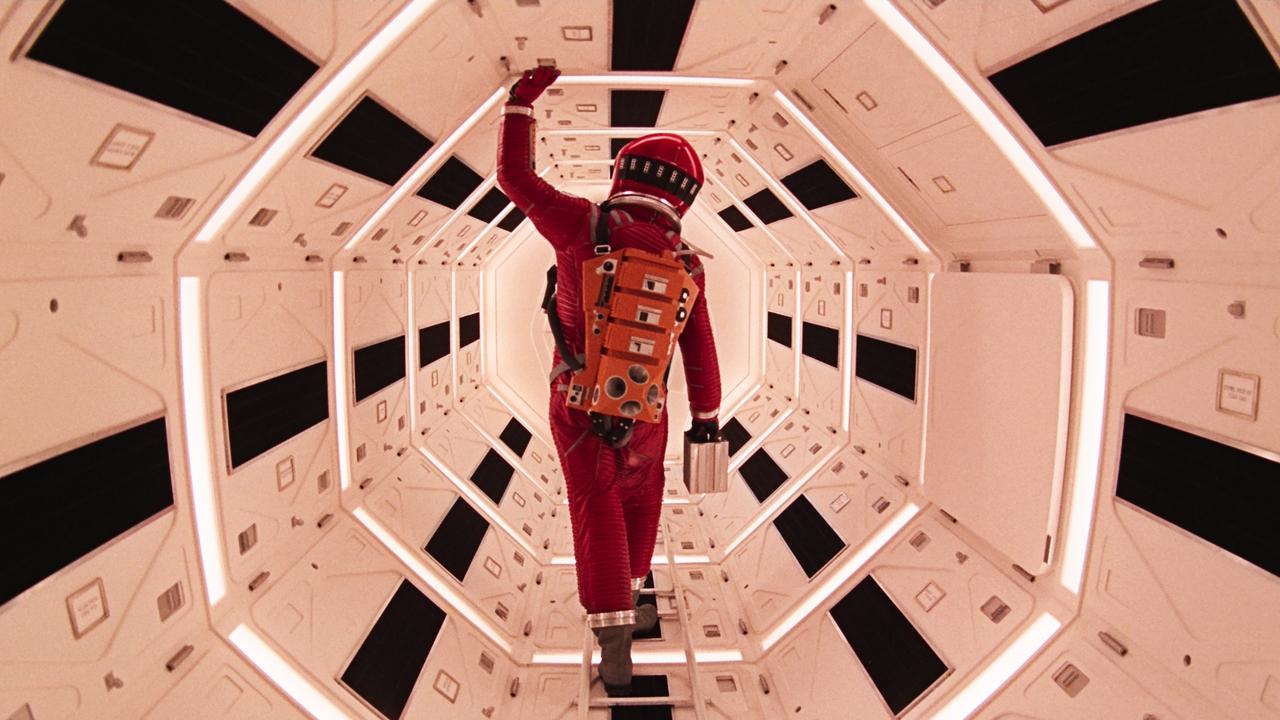
2001: A Space Odyssey

Stanley Kubrick · 1968 · Geoffrey Unsworth

Kubrick used precise shutter angles to give the sterile, mechanical motion of the space station its controlled blur—the 180-degree standard lends the choreographed movements their hypnotic fluidity.

2001: A Space Odyssey · sample frame
02 / BROKEN RULE: WAR AS STROBE

Saving Private Ryan

Steven Spielberg · 1998 · Janusz Kamiński

Kamiński reduced the shutter angle to 45–90 degrees for the Omaha Beach sequence, creating stroboscopic, disorienting motion crispness—a deliberate break from the 180-degree standard that amplifies the horror of combat.

Saving Private Ryan · sample frame
03 / DIGITAL NIGHT, NATURAL BLUR

Collateral

Michael Mann · 2004 · Dion Beebe

Mann and Beebe shot on digital cameras while consistently adhering to the 180-degree standard, giving nocturnal movement through Los Angeles an organic blur—proof that the rule holds equally in the digital age.

Collateral · sample frame
04 / MEMORY IN MOTION BLUR

Aftersun

Charlotte Wells · 2022 · Gregory Oke

Gregory Oke deliberately employed the 180-degree standard to reinforce the dreamlike, blurred quality of holiday memories—the soft motion blur becomes a visual metaphor for the fading of the past.

Aftersun · sample frame

Film stills sourced via the TMDB API. This product uses the TMDB API but is not endorsed or certified by TMDB. themoviedb.org ›

Technical Characteristics

The 180-degree shutter creates an exposure time that corresponds to half the frame rate. At 24fps, the shutter speed is 1/48s, at 25fps it's 1/50s. This setting produces natural motion blur without jerky or overly sharp movements. Deviations require adjustments to aperture and ND filters for exposure control.

Applications

Standard for narrative films and normal scenes. Shorter shutter speeds (90-degree) create hard, precise movements for action scenes. Longer shutter speeds (270-degree or more) create soft, dreamlike motion blur. The 180-degree rule saves testing time on set and prevents editing problems in post-production. Creative deviations require additional ND filters and shooting time.

From the crafts

Perspectives

Cinematographer

As a cinematographer, the 180-degree shutter is my starting point for every scene – it guarantees the natural motion representation that audiences expect. For special creative requirements, I consciously deviate from it, but then I have to adjust the aperture and ND filters accordingly to control the exposure.

Director

For me, shutter speed is an important storytelling tool – the standard 180-degree look for normal scenes, but for action sequences or dream sequences, I specifically discuss other settings with my cinematographer. This technical decision significantly influences the emotional impact of my scenes.

Producer

Adhering to the 180-degree rule saves me time and money on set, as no elaborate tests are necessary and the footage can be seamlessly cut together in post-production. I plan for creative deviations in advance, as they can require additional equipment like ND filters and more shooting time.

More in the lexikon

Related terms

Test your knowledge

Quiz

1. Zu welchem Department gehört „180-Grad-Verschluss"?

2. Wie viele verschiedene Fachperspektiven bietet dieser Eintrag?

Report an error
From the Filmfarm ecosystem

Understand visual language, budget productions, connect crew.

The Lexikon is part of the Filmfarm ecosystem — alongside budgeting (FilmBalance), an industry magazine (FilmCircus) and crew networking (FilmCall, CrewMesh). One shared vocabulary for the whole production.

FilmFarm FilmRadarComing soonFilmPulseComing soonFilmNumbersComing soonFilmCapitalComing soonFilmLabComing soonFilmBalanceComing soonFilmCircusComing soon