
Vertical camera rotation around the horizontal axis, pivoting the lens up or down while the tripod head remains stationary.
Famous examples · Tilt
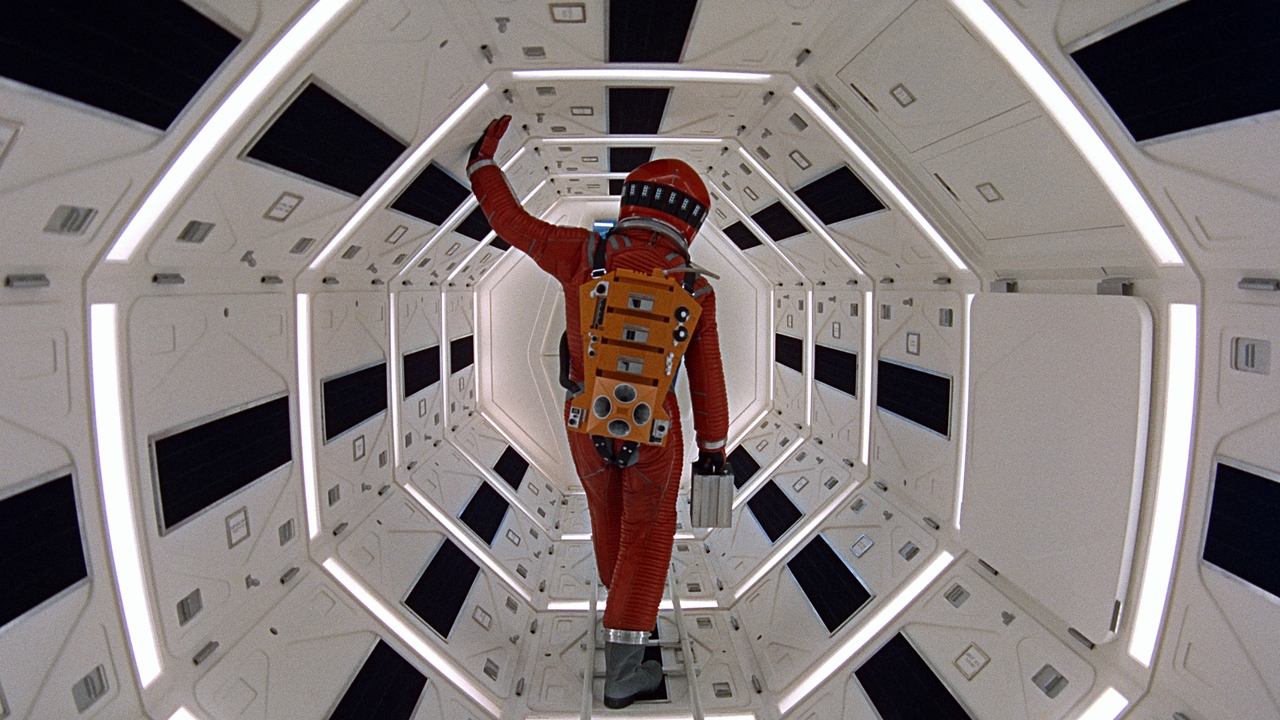
2001: A Space Odyssey
Kubrick's slow upward tilts along the space station and the monolith convey sublimity and infinity – the camera movement itself becomes a philosophical statement about human insignificance.
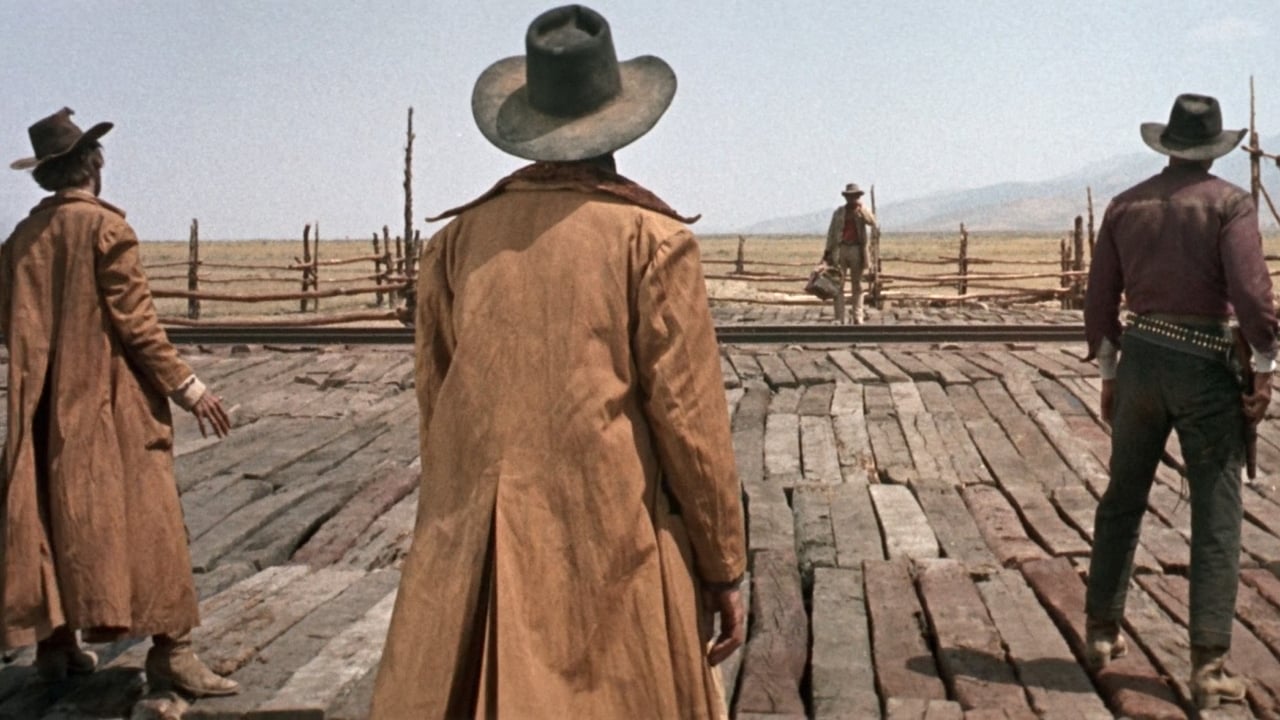
Once Upon a Time in the West
Leone deploys the tilt in the opening sequence and duel scenes to travel from characters' eyes down to their gun belts, building tension through deliberate control of visual information.
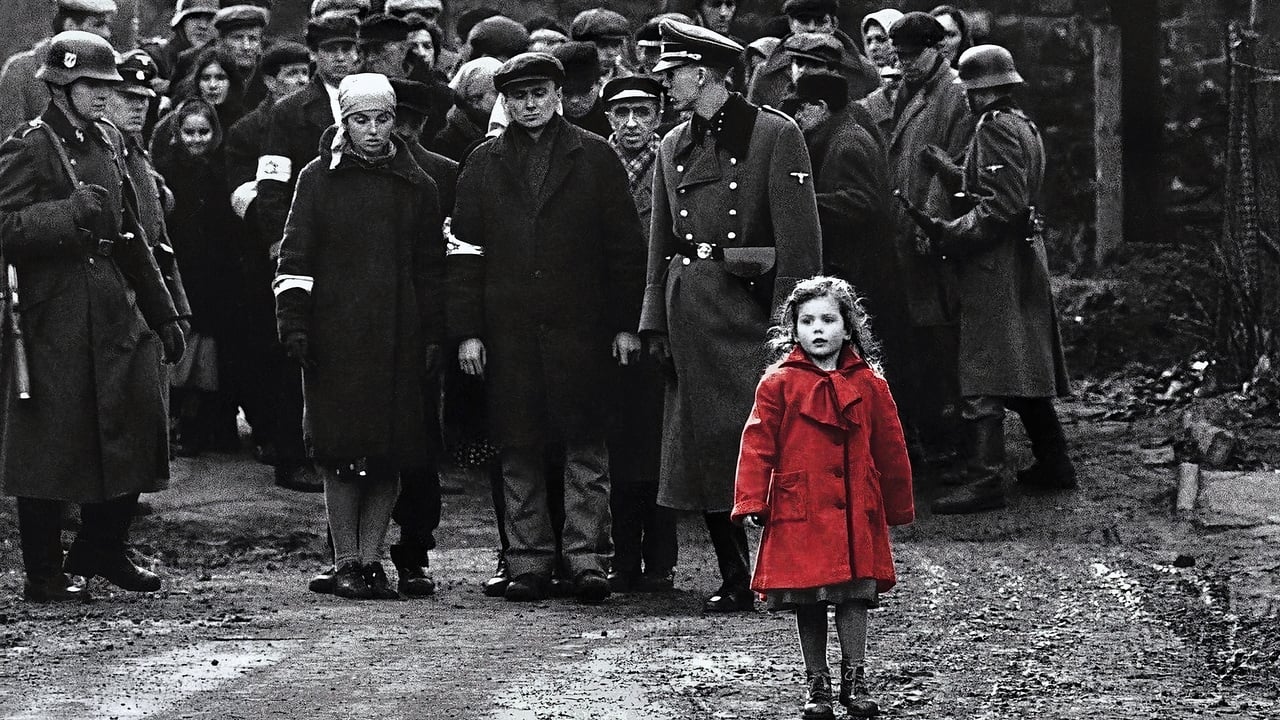
Schindler's List
Kamiński uses slow downward tilts onto masses of victims to convey the sheer scale of loss – the camera descends like a gaze unable to fully comprehend the truth before it.
Parasite
Bong Joon-ho and Hong Kyung-pyo deploy downward tilts along staircases and basement doors to visually encode vertical class structure – tilting downward equals social descent.

Film stills sourced via the TMDB API. This product uses the TMDB API but is not endorsed or certified by TMDB. themoviedb.org ›
Technical Details
Modern fluid heads enable tilt movements with a precision of 0.1° and offer variable damping levels between 0 (free-running) and 7 (heavily damped). Professional systems like the Sachtler Video 60 Plus operate with a tilt range of ±90° and a counter-balance system for loads up to 38 kg. Electronic gimbal systems like the DJI Ronin 4D achieve a response time of 20 milliseconds for tilt corrections and automatically compensate for movements up to ±30°. Remote heads for crane and dolly operation often offer extended tilt angles up to ±180°.
History & Development
The first documented tilt movement was filmed by D.W. Griffith in 1912 in "The Musketeers of Pig Alley" using an improvised wooden tripod. In 1925, the German company Askania developed the first fluid head with controlled tilt damping. In 1958, Hitchcock established the combination of dolly zoom and tilt movement as the "Vertigo effect" in "Vertigo". The 1970s brought gyro-stabilized systems, while digital stabilization from 2010 onwards enabled post-production corrections of tilt errors up to ±5° without visible loss of quality.
Practical Application in Film
Spielberg uses slow upward tilts in "Jaws" (1975) to visualize the threat from the deep. Kubrick's "The Shining" (1980) features extreme tilt angles of 45° for psychological disorientation. In "Goodfellas" (1990), Scorsese combines rapid tilt movements with Steadicam shots for dynamic chase sequences. Action films often use tilt speeds of 90°/second for shock effects, while dramas work with 5-15°/second.
Comparison & Alternatives
Tilt differs from pan by its vertical axis of movement and from roll by its axis of rotation parallel to the lens axis. Digital tilt-shift lenses optically simulate tilt effects without camera movement. Motion control systems replace manual tilt with programmed movement sequences with a repeatability of ±0.01°. Drone cinematography utilizes 3-axis gimbals for stabilized tilts even at flight speeds of 60 km/h.