
US manufacturer of professional cameras and lenses — rents exclusively to film productions, does not sell to end users.
Famous examples · Panavision
Lawrence of Arabia
Freddie Young used Panavision anamorphic lenses to capture the endless desert landscapes in a 2.20:1 format, elevating the film's epic scope into a visual philosophy. The characteristic horizontal lens flares of Panavision optics became an iconic stylistic device here for the first time.

Chinatown
John A. Alonzo shot this neo-noir classic with Panavision anamorphic lenses, whose soft, characteristic bokeh and subtle distortion amplify the film's claustrophobic atmosphere. The oval out-of-focus rendering of Panavision lenses gives the close-ups of Jack Nicholson an unmistakable depth.

There Will Be Blood
Robert Elswit shot the film with older-generation Panavision anamorphic lenses to create a raw, organic look that authentically captures the oil fields of the early 20th century. The characteristic lens flares and wide aspect ratio underscore the monumental isolation of the protagonist.

The Hateful Eight
Tarantino and Richardson were the first in decades to shoot with Ultra Panavision 70 and its 1.25:1 anamorphic lenses, producing an extreme 2.76:1 aspect ratio. The film impressively demonstrates how Panavision optics create a distinctive visual language even in tight interiors through their characteristic bokeh and wide-angle distortion.
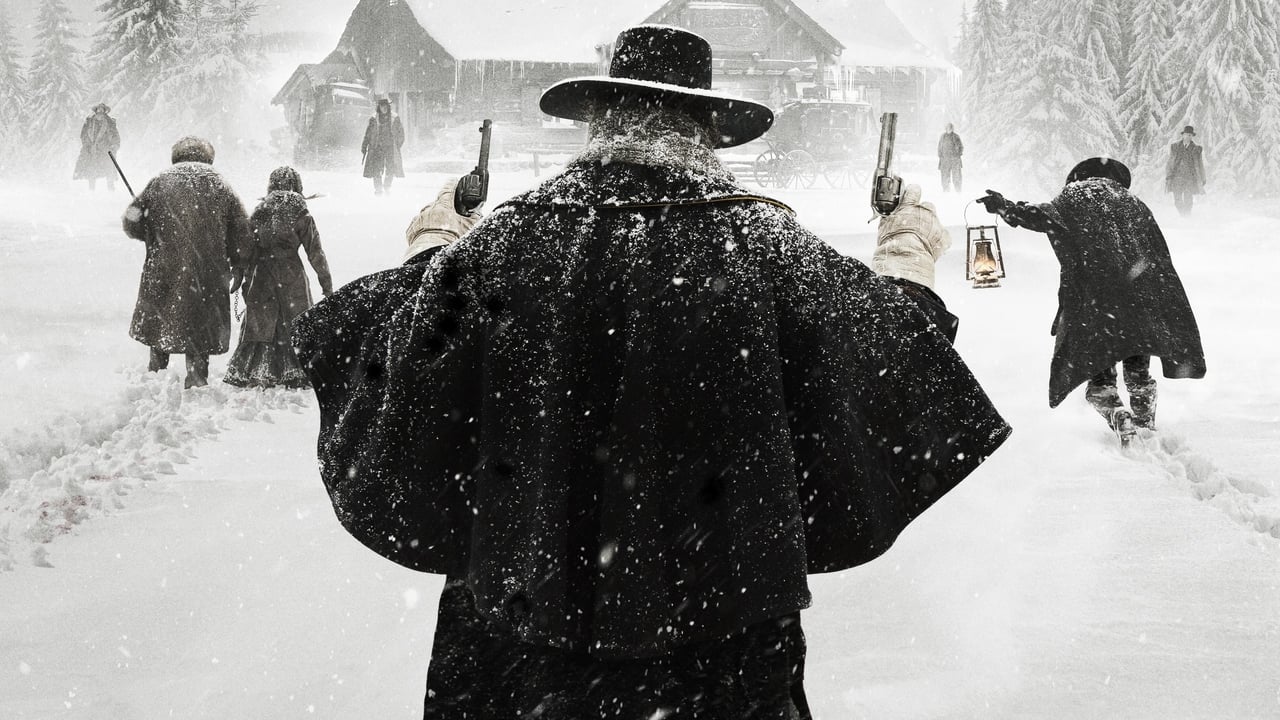
Film stills sourced via the TMDB API. This product uses the TMDB API but is not endorsed or certified by TMDB. themoviedb.org ›
Technical Details
Panavision anamorphic lenses use cylindrical lens elements that refract light only in the horizontal direction. Standard Panavision compresses horizontally by 2:1, while Ultra Panavision 70 (1.25:1 compression) creates an extreme 2.76:1 aspect ratio. The lenses feature characteristic oval bokeh (out-of-focus highlights) and horizontal lens flares. Modern Panavision G and H series offer focal lengths from 17mm to 150mm with T-stops between T1.4 and T22. The system works with 35mm film or digital sensors with the corresponding crop factor.
History & Development
Robert Gottschalk founded Panavision in 1953 as a response to Fox's competing CinemaScope system. The first film with Panavision optics was "The Big Fisherman" (1959). In 1957, Panavision developed the Auto Panatar system, followed by Super Panavision 70 for 65mm film in 1965. Ultra Panavision 70 debuted in 1962 with "Mutiny on the Bounty." After being acquired by Panavision Inc. in 1965, the company established itself as a market leader for rental optics in Hollywood. In 2019, the parent company of Light Iron acquired the company.
Practical Use in Film
Panavision shaped modern widescreen cinema: "Lawrence of Arabia" (1962, Super Panavision), "Ben-Hur" (1959, MGM Camera 65), and "2001: A Space Odyssey" (1968) utilized the system for epic portrayals. Quentin Tarantino deliberately shot "The Hateful Eight" (2015) in Ultra Panavision 70. The anamorphic distortion enhances wide-angle effects and creates characteristic depth-of-field gradients. During pans, typical warp effects occur at the image edges. The system is particularly suitable for landscape shots and action-packed sequences.
Comparison & Alternatives
Competitor products include Cooke Anamorphic, ARRI Master Anamorphic, and Hawk V-Lite. Panavision exclusively rents its equipment, while other manufacturers also sell. Digital cinema cameras like ARRI Alexa or RED can also simulate anamorphic looks through sensor cropping. Spherical lenses with a 2.39:1 crop offer less characteristic optics but simpler handling. Vintage Panavision lenses from the 1970s are sought after for their warm, soft look; modern G and H series offer higher sharpness and less distortion.