Filmlexikon.
Support
Window Shot
Camera · Terms

Window Shot

Murnau AI illustration
15lb sandbag 20 c stand 216 diffusion 250 diffusion 251 diffusion 25lb sandbag 35lb sandbag 40 c stand

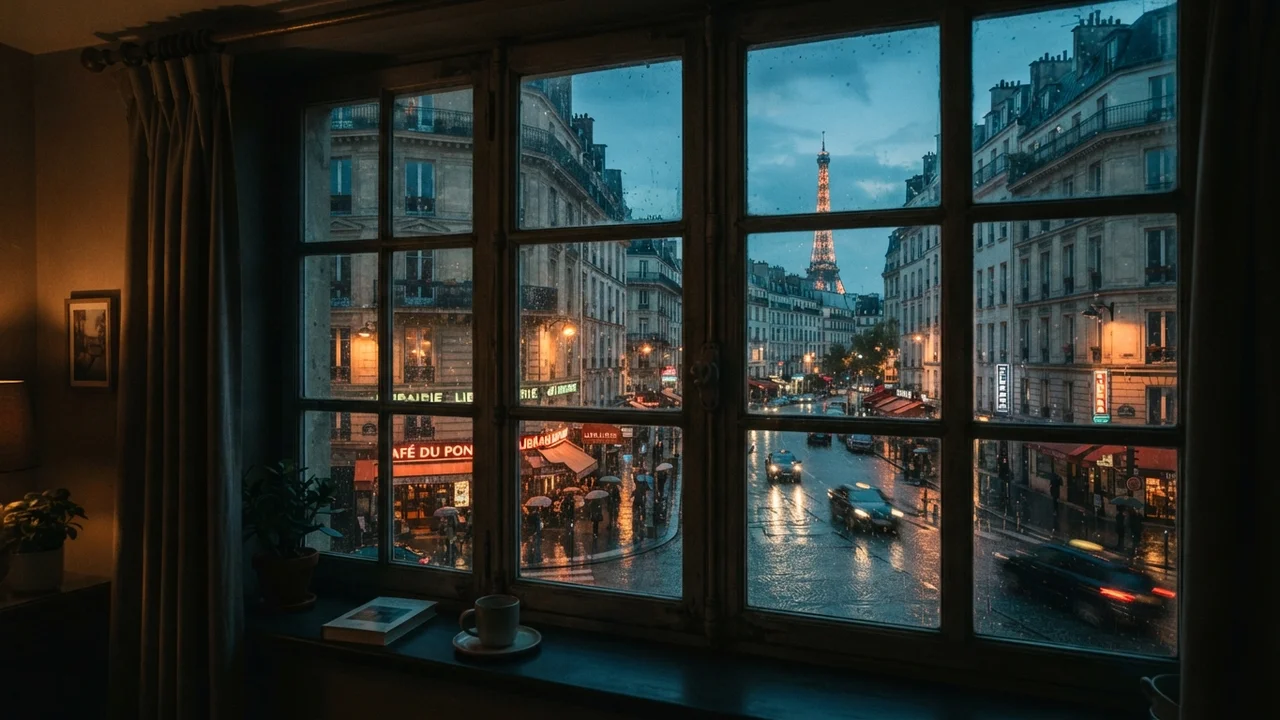
Shot through a window or glass surface, requiring polarizing filters to control reflections and graduated ND filters to manage brightness ratios up to 8 stops.

Technical Details

Window shots require special lighting adjustments, as glass typically reflects 8-12% of incident light. For standard window glass, the transmission value is approximately 88-92%. Polarizing filters with rotation angles between 45-90 degrees reduce unwanted reflections by up to 2 stops. With double glazing, ghost images are created by the double refraction, which have a separation of 16-24mm in standard insulating glass. Graduated ND filters compensate for extreme brightness differences between interior and exterior areas, which often amount to 6-8 stops.

History & Development

Orson Welles established the window shot as a dramatic stylistic device in 1941 in "Citizen Kane," particularly in the famous scene with Susan Alexander at the window. Alfred Hitchcock perfected the technique in 1954 in "Rear Window," where 80% of the shots were filmed through windows. The Nouvelle Vague of the 1960s increasingly used window shots for naturalistic storytelling. With the introduction of low-light cameras in the 1980s, the technique also became practical in difficult lighting conditions.

Practical Application in Film

In "Taxi Driver" (1976), window shots enhance Travis Bickle's isolation through the windshield of his taxi. "Her" (2013) uses office windows to visualize Theodore Twombly's emotional distance. During filming, special window films are often used that reduce reflections by up to 75%. Steadicam operators typically position themselves 2-3 meters away from the window to sharply depict the interior and exterior. Color temperature correction between artificial light (3200K) and daylight (5600K) is usually done using CTB/CTO filters.

Comparison & Alternatives

Window shots differ from framing shots due to the transparent barrier and the associated optical challenges. POV shots also show perspectives through glass but focus on the subjective view of a character. Green screen with digital compositing is increasingly replacing practical window shots for complex VFX scenes, but costs 15-25% more in post-production. For static shots, practical window shots remain more cost-effective, while for moving cameras, hybrid solutions with LED volumes are often used.
From the crafts

Perspectives

Cinematographer

Window Shots zwingen mich zur präzisen Lichtmessung beider Seiten - ich arbeite meist mit Spotmeter und messe Innen/Außen separat, dann gleiche ich mit ND-Filtern oder zusätzlichem Fill Light aus. Die Schärfentiefe wird kritisch, da ich sowohl das Fenster als auch das Motiv dahinter kontrollieren muss - meist arbeite ich mit Blende 5.6 bis 8 für ausreichende Schärfe. Reflexionen bekämpfe ich mit Polarizer und schwarzen Fahnen seitlich der Kamera.

Director

Ich nutze Window Shots gezielt für emotionale Distanzierung oder Voyeurismus - die Glasbarriere schafft eine psychologische Trennung zwischen Zuschauer und Figur. In Dialogszenen positioniere ich oft eine Figur hinter Glas, um Machtverhältnisse oder emotionale Unnahbarkeit zu visualisieren. Die Reflexionen im Glas können subtil andere Räume oder Personen einblenden und schaffen narrative Doppeldeutigkeiten ohne aufwendige Montage.

Producer

Window Shots bedeuten 20-30% längere Einrichtungszeit pro Setup wegen der Lichtanpassung und Reflexionskontrolle - das kalkuliere ich bei straffen Drehplänen ein. Location-Verträge müssen Außenbereiche mit einschließen, da wir oft Kontrolle über Parkplätze oder Straßen brauchen. Die Technik spart jedoch Geld bei Establishing Shots, da wir Interior und Exterior in einer Einstellung kombinieren können - das reduziert Setup-Wechsel um durchschnittlich 2-3 pro Drehtag.

More in the lexikon

Related terms

Test your knowledge

Quiz

1. Was beschreibt „Window Shot" am besten?

2. Zu welchem Department gehört „Window Shot"?

3. Wie viele verschiedene Fachperspektiven bietet dieser Eintrag?

Report an error
From the Filmfarm ecosystem

Understand visual language, budget productions, connect crew.

The Lexikon is part of the Filmfarm ecosystem — alongside budgeting (FilmBalance), an industry magazine (FilmCircus) and crew networking (FilmCall, CrewMesh). One shared vocabulary for the whole production.

FilmFarm FilmRadarComing soonFilmPulseComing soonFilmNumbersComing soonFilmCapitalComing soonFilmLabComing soonFilmBalanceComing soonFilmCircusComing soon