Filmlexikon.
Support
Wild
Production · Terms

Wild

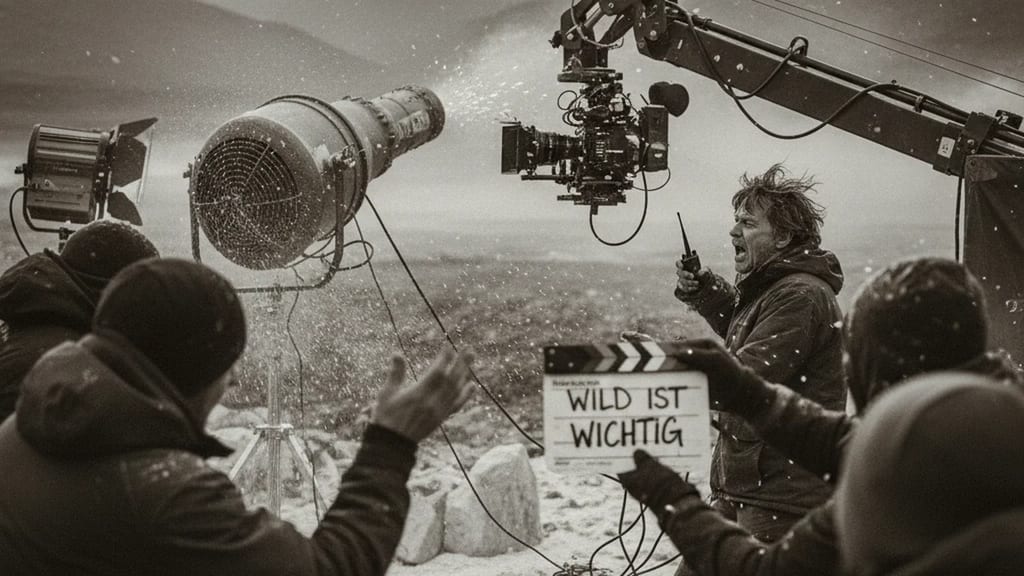
Murnau AI illustration
wild picture wild shooting production poacher film crew principal photography shooting production film production

Wild sound: post-production dialogue recording at the original location using identical microphone placement when original audio tracks are compromised by unwanted noise.

Technical Details

Standard wild sessions are recorded at 48 kHz/24 bit, matching the original production sound quality. Typical recording lengths vary between 30 seconds and 3 minutes per take. The sound mixer positions the microphones at an identical distance and angle to the original recording, usually 60-90 cm from the speaker. Wild tracks are saved as separate WAV files with timecode reference and are assigned to the corresponding scenes via slate information.

History & Development

The wild technique developed in 1929 parallel to the transition from silent film to sound film, when directors realized that not all dialogue passages could be perfectly captured during image recording. RKO Studios established systematic wild recording as a standard workflow in 1932. In the 1950s, the method was revolutionized by Nagra recorders, which enabled precise synchronization. Modern Digital Audio Workstations (DAWs) since the 1990s have significantly simplified the integration of wild material into editing.

Practical Application in Film

Wild recordings are used when original dialogue is unusable due to wind noise, traffic noise, or technical problems. In "Saving Private Ryan" (1998), Spielberg used wild sessions to replace the dialogue in the landing scene that was disrupted by explosion effects. Typical workflow: After shooting concludes, actors and the sound team remain on location, re-recording problematic dialogue passages, with the actors imitating their original lip-sync speed. Wild recordings reduce ADR (Automated Dialogue Replacement) sessions by an average of 60-70%.

Comparison & Alternatives

Wild differs from ADR in that it is recorded on location with identical acoustics, whereas ADR takes place in a sound studio. Room tone (ambient sound without dialogue) complements wild material but is a distinct element. Modern alternatives include multi-track recording with up to 8 simultaneous microphone tracks, often making post-shoot wild sessions redundant. Location sound libraries are increasingly replacing spontaneous wild recordings with pre-recorded collections of typical dialogue variations for common disturbance scenarios.
From the crafts

Perspectives

Cinematographer

Ich plane bei schwierigen akustischen Bedingungen bereits während der Bildaufnahme die spätere Wild-Session mit, indem ich alternative Kamerapositionen für identische Lichtverhältnisse dokumentiere. Die Kenntnis über geplante Wild-Aufnahmen beeinflusst meine Entscheidung bei der Mikrofonplatzierung im Bild – sichtbare Mikros stören weniger, wenn der Ton ohnehin ersetzt wird.

Director

Wild-Sessions geben mir die Freiheit, spontane Dialoge am Set zu improvisieren, ohne Sorge um perfekte Tonqualität zu haben. Ich nutze diese Technik bewusst bei emotional intensiven Szenen, wo die Authentizität der ersten Reaktion wichtiger ist als technische Perfektion – das emotionale "Rohmaterial" lässt sich in ruhiger Wild-Atmosphäre präzise nachempfinden.

Producer

Wild-Aufnahmen kosten durchschnittlich 300-800 Euro pro Drehtag (Crew-Verlängerung, Equipment), sparen aber 2.000-5.000 Euro pro ADR-Session im Studio. Ich kalkuliere Wild-Sessions grundsätzlich bei Außenaufnahmen in städtischen Gebieten oder bei Wetterrisiko ein, da die Planungssicherheit höhere Initialkosten rechtfertigt.

More in the lexikon

Related terms

Test your knowledge

Quiz

1. Was beschreibt „Wild" am besten?

2. Zu welchem Department gehört „Wild"?

3. Wie viele verschiedene Fachperspektiven bietet dieser Eintrag?

Report an error
From the Filmfarm ecosystem

Understand visual language, budget productions, connect crew.

The Lexikon is part of the Filmfarm ecosystem — alongside budgeting (FilmBalance), an industry magazine (FilmCircus) and crew networking (FilmCall, CrewMesh). One shared vocabulary for the whole production.

FilmFarm FilmRadarComing soonFilmPulseComing soonFilmNumbersComing soonFilmCapitalComing soonFilmLabComing soonFilmBalanceComing soonFilmCircusComing soon