Filmlexikon.
Support
Walla
Sound · Terms

Walla

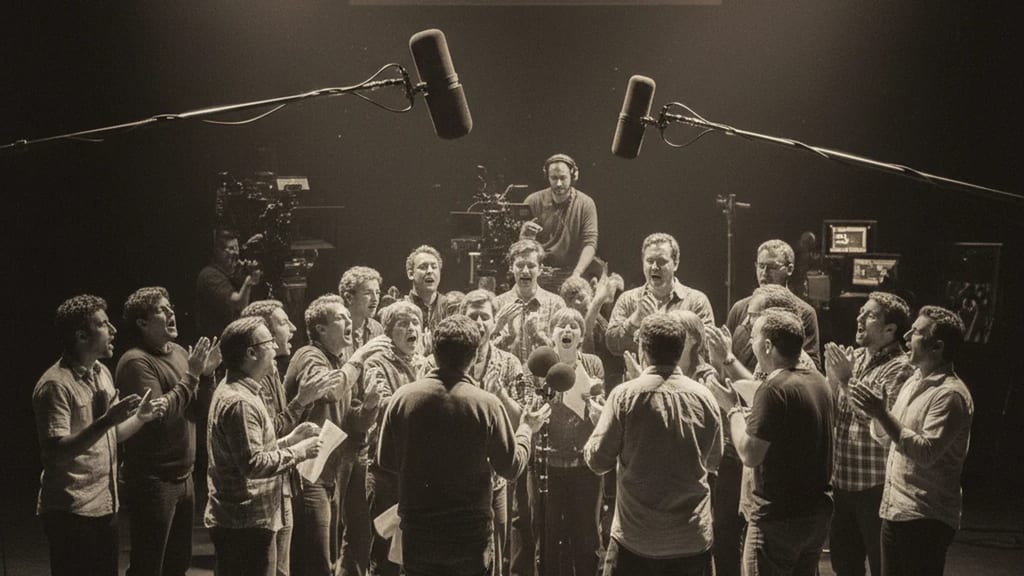
Murnau AI illustration
originalton tonangel audio original sound sync sound direct sound on set sound it sound intelligent theme

Unintelligible background dialogue recorded from 6–12 speakers at 48 kHz/24-bit in studio to create crowd atmosphere.

Technical Details

Professional Walla recordings are typically made with 6-12 speakers in soundproof studios at 48 kHz/24 bit. The volume ranges between -40 dB and -25 dB below the main dialogue. Walla groups usually work in three layers: foreground (3-4 speakers), midground (2-3 speakers), and background (1-2 speakers). Modern DAWs like Pro Tools use special plugins such as Krotos Reformer Pro or AudioEase Speakerphone for spatial Walla processing with up to 7.1 surround positioning.

History & Development

In 1931, RKO Studios first introduced systematic Walla recordings for "Cimarron." Warner Bros. established the first professional Walla groups with fixed voice actors in 1935. From the 1950s onwards, specialized loop groups developed – teams of 8-15 actors who synchronized Walla and other background noises live to picture. Since the 1990s, digital systems like Fairlight have enabled real-time manipulation of Walla tracks with variable pitch and speed.

Practical Application in Film

In "Gladiator" (2000), sound designer Scott Milan combined 40 separate Walla tracks for the Colosseum scenes with up to 50,000 virtual spectators. "The Dark Knight" (2008) used specifically recorded Gotham Walla with New York dialect inflections. Modern productions like "1917" (2019) rely on procedural Walla – algorithmically generated crowd noises that are automatically adapted to the image content and scene mood. The standard workflow includes raw recording, EQ processing (-200 Hz high-pass), compression (3:1 ratio), and final surround positioning.

Comparison & Alternatives

Walla differs from crowd noise by focusing on vocal sounds rather than shouts or applause. ADR Walla is recorded later in the studio, while production Walla originates directly on set but is usually unusable due to microphone limitations (-6 dB to -12 dB). Ambience tracks contain broader environmental sounds; Walla focuses exclusively on human voices. Modern AI systems like Respeecher Voice Marketplace have offered synthetic Walla generation since 2021 but have not yet achieved the organic quality of professional loop groups.

From the crafts

Perspectives

Cinematographer

Ich plane Walla-Szenen mit weitwinkligen Einstellungen, die genug Raum für glaubwürdige Menschenmengen bieten - bei 35mm und darunter wirken 12 Komparsen wie 100. Meine Kamerabewegungen synchronisiere ich mit den Walla-Schwerpunkten, damit Ton und Bild eine kohärente Raumtiefe erzeugen.

Director

Ich nutze Walla als emotionales Instrument - nervöse, schnelle Patterns für Spannung, langsame, tiefe Frequenzen für Melancholie. In Dialogszenen reduziere ich Walla gezielt um 8-10 dB, um Intimität zu schaffen, während Konfrontationen durch laute, aggressive Walla-Texturen verstärkt werden.

Producer

Eine professionelle Loop Group kostet 2.500-4.000 Euro pro Studiotag und schafft 15-20 Minuten finales Walla-Material. Ich kalkuliere 3-4 Studiotage für einen 90-Minuten-Film, wobei internationale Co-Produktionen zusätzliche landesspezifische Walla-Sessions benötigen - das bedeutet 30% Mehrkosten für den Tonbereich.

More in the lexikon

Related terms

Test your knowledge

Quiz

1. Was beschreibt „Walla" am besten?

2. Zu welchem Department gehört „Walla"?

3. Wie viele verschiedene Fachperspektiven bietet dieser Eintrag?

Report an error
From the Filmfarm ecosystem

Understand visual language, budget productions, connect crew.

The Lexikon is part of the Filmfarm ecosystem — alongside budgeting (FilmBalance), an industry magazine (FilmCircus) and crew networking (FilmCall, CrewMesh). One shared vocabulary for the whole production.

FilmFarm FilmRadarComing soonFilmPulseComing soonFilmNumbersComing soonFilmCapitalComing soonFilmLabComing soonFilmBalanceComing soonFilmCircusComing soon