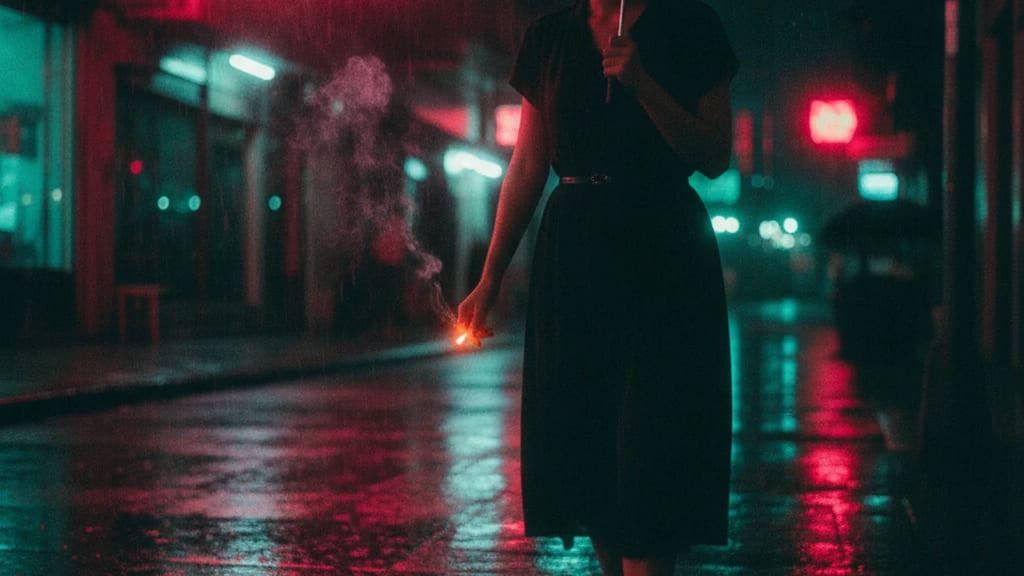
Recurring visual pattern or object that reinforces theme and character arc — Odessa Steps, the cigar in Godfather, red in Chungking Express. Visual leitmotif, subtler than symbol.
You are working with a motif when a visual pattern or object runs through the film — not by chance, but as a deliberate visual repetition that builds meaning. Unlike a symbol, which is explicit and needs to be explained, a motif works subliminally. It reinforces theme and character arc through pure presence. The viewer registers it without naming it.
In practice: You shoot a staircase in the first act, and later in the edit, you realize that this staircase has unconsciously become a leitmotif for ascent and descent. *The Godfather* shows it more consciously — the cigar returns, becoming a signature of power and decision. With Wong Kar-wai, red is not a symbol of passion; it is a visual element that infiltrates the film's color palette, modulating the mood without explanation. This is motif work at the highest level.
For your work as a cinematographer or editor, you need an eye for formal repetition: a window, a movement, a lighting setup, even the composition of a shot can become a motif. You often only recognize it in post-production — in the edit, a specific framing suddenly runs through several scenes, lending the film coherence. The best motif work doesn't feel constructed. It feels like visual subconsciousness.
This is what distinguishes a motif from a symbol: A symbol wants to be understood. A motif wants to be felt. Use motifs consciously in planning, but also let them emerge during shooting and editing. Repeat a camera movement, an editing rhythm, a color palette — not too often, not too rarely. The rhythm of repetition is crucial here. Too frequent becomes intrusive, too rare loses its power. Look at your rough cuts and ask yourself: Which images keep reappearing? Which patterns emerge on their own? That's where you'll find your motifs.
Related terms
Quiz
1. Was beschreibt „Motiv (Komposition)" am besten?
2. Zu welchem Department gehört „Motiv (Komposition)"?