Filmlexikon.
Support
Undercrank
Camera · Terms

Undercrank

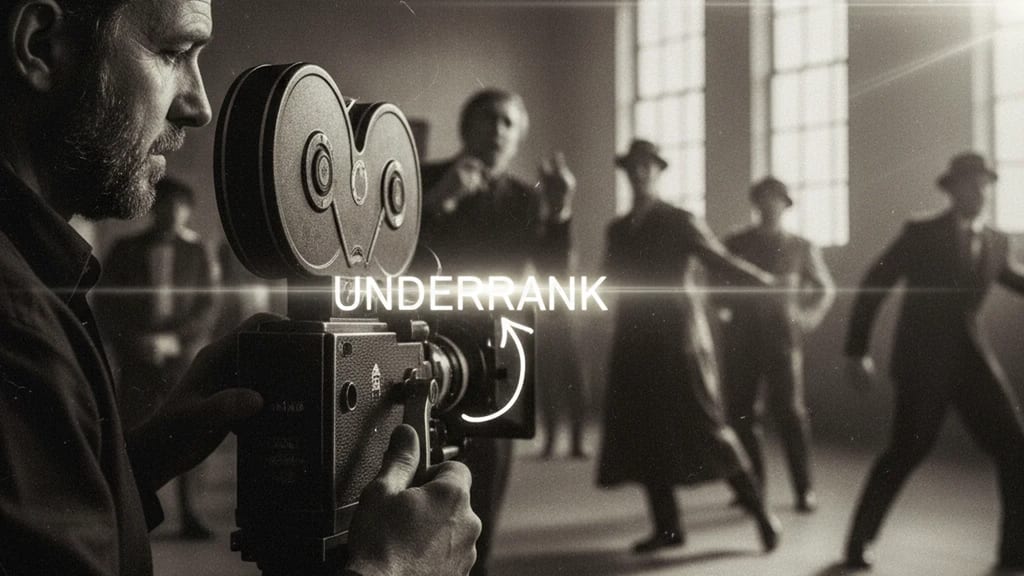
Murnau AI illustration
15lb sandbag 20 c stand 216 diffusion 250 diffusion 251 diffusion 25lb sandbag 35lb sandbag 40 c stand

Filming at a reduced frame rate (6–20 fps instead of 24 fps) to create accelerated motion during normal playback; opposite of overcranking.

Technical Details

Typical undercranked frame rates range from 6 to 20 frames per second. Shooting at 12 fps and playing back at 24 fps results in double speed. Modern digital cameras offer precisely adjustable frame rates from 1 fps up to normal speed. The exposure time per individual frame is extended proportionally to the reduced frame rate, requiring corresponding adjustments to the aperture or ISO values. Variable speed motors on professional film cameras like the Arriflex 435 allow for stepless adjustment of the shooting frame rate between 1 and 150 fps.

History & Development

Undercranking originated in the 1890s with the first film cameras from Edison and the Lumière brothers. Georges Méliès systematically used this technique for magical effects in his films starting in 1896. Standardization to 24 fps only occurred with the advent of sound film around 1930 – before that, projection speeds varied between 16 and 26 fps. Modern high-end digital cameras like the RED Ranger or ARRI Alexa today offer frame rates from 0.75 fps for extreme time-lapse to several thousand fps for super slow motion.

Practical Application in Film

Classic applications can be found in silent film comedies – Buster Keaton used undercranking for acrobatic sequences, Charlie Chaplin for frantic chase scenes. In "Koyaanisqatsi" (1982), Godfrey Reggio visualizes societal acceleration through extreme time-lapse. Documentaries use 1-6 fps for cloud movements or plant growth. The workflow requires precise calculation: 30 minutes of real time shot at 2 fps results in only 2.5 minutes of footage when played back at 24 fps.

Comparison & Alternatives

In contrast to overcranking for slow motion, undercranking creates acceleration. Time-lapse photography is the modern term for extreme undercranking with intervals of seconds to hours between individual frames. Post-production speed ramping achieves similar effects digitally, but does not allow for subsequent correction of motion blur. Intervalometers control automatic long-term time-lapse recordings over days or weeks. Motion control systems synchronize camera movements with the altered time base for complex time-lapse sequences.

From the crafts

Perspectives

Cinematographer

Beim Unterkurbeln muss ich die Belichtung neu kalkulieren – weniger Bilder bedeuten längere Einzelbelichtungen und entsprechend weniger Licht pro Frame. Motion Blur wird bei schnellen Bewegungen zum gestalterischen Element, da sich die Verschlusszeit verdoppelt oder verdreifacht. Moderne digitale Workflows erleichtern mir die Arbeit durch Live-Preview der Zeitraffung am Monitor.

Director

Unterkurbeln komprimiert Zeit visuell und kann Normalität in Komik oder Hektik verwandeln – perfekt für gesellschaftskritische Sequenzen oder absurde Momente. Die Technik verstärkt physische Aktionen ins Groteske und macht alltägliche Bewegungen zu choreographischen Elementen. Wichtig ist die Schauspielführung: Darsteller müssen deutlich langsamer und übertriebener agieren als normal.

Producer

Zeitrafferaufnahmen reduzieren drastisch die benötigte Filmmenge – aus stundenlangen Dreharbeiten werden Minuten verwertbares Material. Die Personalkosten steigen jedoch durch längere Standzeiten für wenig Content, besonders bei extremen Time-Lapse-Produktionen über mehrere Tage. Equipment-Verschleiß minimiert sich durch geringere mechanische Beanspruchung der Kameratechnik bei niedrigen Frameraten.

More in the lexikon

Related terms

Test your knowledge

Quiz

1. Was beschreibt „Unterkurbeln" am besten?

2. Zu welchem Department gehört „Unterkurbeln"?

3. Wie viele verschiedene Fachperspektiven bietet dieser Eintrag?

Report an error
From the Filmfarm ecosystem

Understand visual language, budget productions, connect crew.

The Lexikon is part of the Filmfarm ecosystem — alongside budgeting (FilmBalance), an industry magazine (FilmCircus) and crew networking (FilmCall, CrewMesh). One shared vocabulary for the whole production.

FilmFarm FilmRadarComing soonFilmPulseComing soonFilmNumbersComing soonFilmCapitalComing soonFilmLabComing soonFilmBalanceComing soonFilmCircusComing soon