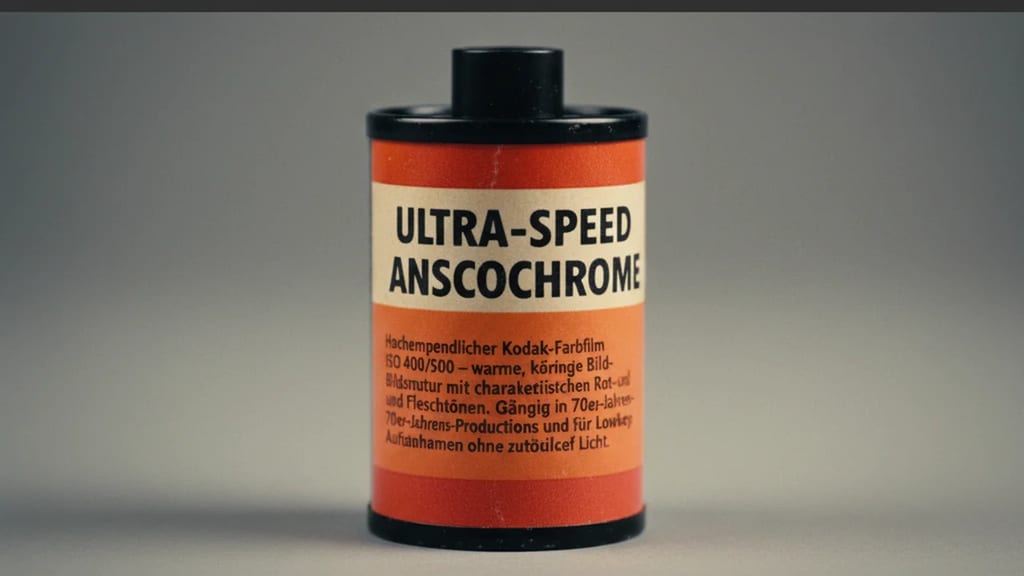
High-speed Kodak color stock rated ISO 400/500—warm, grainy texture with distinctive reds and flesh tones. Standard for 70s productions and low-light work without extra lighting.
Kodak's Ultra-Speed Anscochrome was the standard film in the 1970s for productions that needed to shoot fast or work with low light. An ISO of 400 to 500 — depending on push processing — made it the first choice when the sun wasn't cooperating or the location was too dark. Unlike modern high-sensitivity emulsions, this film delivered not just grain, but a characteristic visual profile: warm, slightly saturated colors with a preference for orange and red tones in flesh tones. This wasn't simply a technical deficiency — it was the material's signature.
On set, you noticed it immediately. Under tungsten light, Anscochrome didn't just look warm, it looked right — natural, almost crisp in the mid-tones. In daylight, an 85 filter was needed, but then the grain was clearly visible, especially in the shadow areas. This wasn't a flaw; most DPs described it as "cinematic." Low-key shots without additional lighting were possible with it — a 75-watt bulb in a reflector was enough for a close-up, if you were willing to accept the grain. And many directors were.
Push processing was routine. Pushing one stop — to ISO 800 — and the film became even grainier, the contrasts sharper. The red intensified, especially in skin tones. A second stop was possible, but then you noticeably lost color accuracy and gradation. Most DPs stopped after one stop and lived with it. The beauty was: the film forgave underexposure better than overexposure. Overexposed, and the highlights were gone.
Later, with the availability of better high-speed emulsions like Fuji or Eastmancolor at higher sensitivities, Ultra-Speed Anscochrome lost its place. But for archival material from that era — or if you consciously seek this look today — it's still there if you find it in the film library. Some young filmmakers deliberately work with it to achieve that warm, grainy aesthetic that digital filters can only mimic.
Related terms
Quiz
1. Zu welchem Department gehört „Ultra-Speed Anscochrome"?