Technical Details
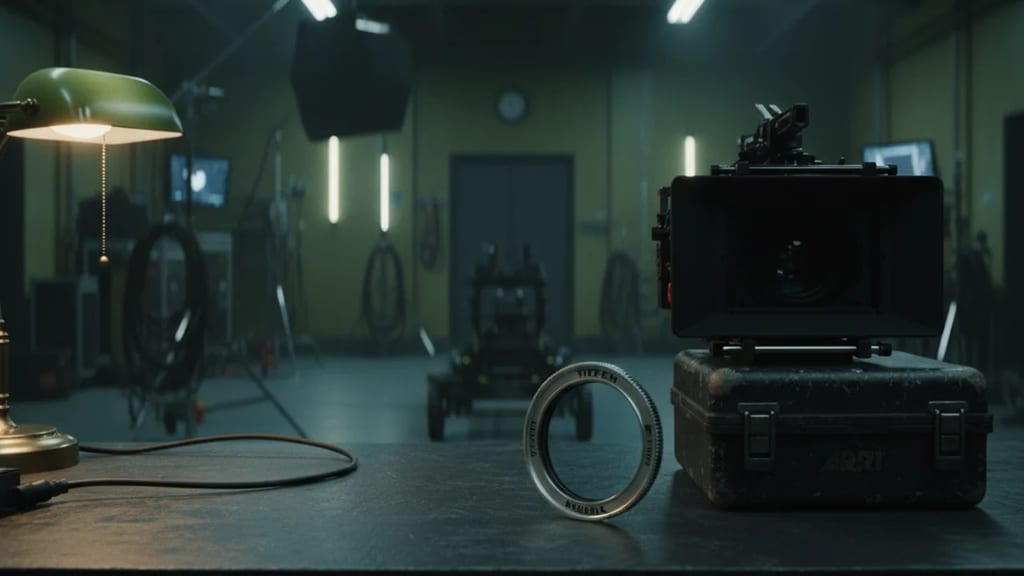
Ultra-contrast filters use a thin layer of frosted glass or special plastic particles between two optical lenses. The particle size typically ranges from 0.1 to 0.5 micrometers. Tiffen produces the UC series in strengths from 1/8 to 3, with UC 1/4 causing a contrast reduction of approximately 0.5 stops. Schneider-Kreuznach offers comparable filters under the name "Hollywood Black Magic". The filters are available in thread sizes from 52mm to 138mm, as well as 4x4" and 4x5.65" matte box filters. Unlike Pro-Mist filters, ultra-contrast filters do not create visible halos around light sources.
History & Development
In 1978, Tiffen developed the first ultra-contrast filter in response to the demand for more subtle contrast control than traditional diffusion filters offered. Cinematographer Conrad Hall prominently used the filter for the first time in "American Beauty" (1999), popularizing the characteristic "lifted blacks" look. In the 2000s, manufacturers like Schneider and B+W developed their own variants. The digital revolution led to adaptive versions: in 2015, Tiffen released the "Digital Diffusion" series, specifically tuned for the higher sharpness of digital sensors.
Practical Use in Film
Roger Deakins used UC 1/4 filters throughout "Blade Runner 2049" (2017) to soften the harsh contrast edges of LED lighting. In "Her" (2013), DoP Hoyte van Hoytema combined UC filters with warm color temperatures to soften Joaquin Phoenix's features. The filter is typically placed in front of the lens or in the matte box system. For daylight exterior shots, a UC 1/2 filter reduces the risk of blown-out skin tones while maintaining more detailed shadows. Disadvantages include minimal loss of sharpness and a slight increase in base exposure by about 1/3 stop.
Comparison & Alternatives
Ultra-contrast filters differ from Pro-Mist filters by the absence of characteristic halo effects around light sources. Black Pro-Mist filters additionally absorb red light, creating cooler skin tones. Modern alternatives include Schneider's "Hollywood Black Magic" with stronger shadow lifting, or Formatt-Hitti's "ProStop IRND," which combine neutral density with contrast control. In digital post-production, tools like DaVinci Resolve's "Film Glow" or FilmConvert's "Film Grain" replicate similar effects, but without the organic light interaction of the physical filter.