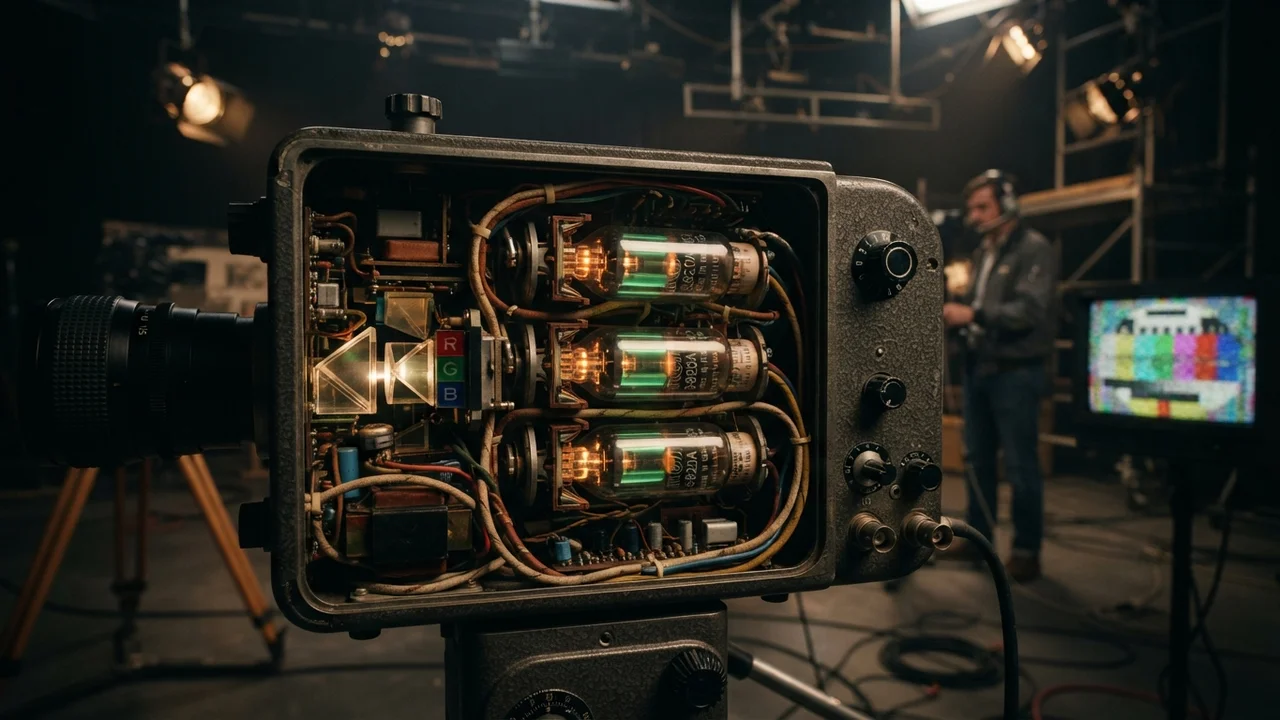
Analog video camera using vacuum tubes instead of CCD/CMOS sensors — produces a unique look with highlight persistence, RGB color fringing, and static image noise.
Tube cameras (English: Tube Cameras) use vacuum tubes — typically Vidicon, Plumbicon, or Saticon — as image sensors. Unlike modern CCD or CMOS sensors, they scan the image line by line, which leads to a characteristic look that cannot be replicated digitally.
The Look
Three optical properties make tube cameras unique. First: Highlight Persistence — bright image points remain in the image after the actual moment of exposure, a lingering glow that becomes noticeable as streaks during camera pans. Second: Chromatic Misalignment — the three RGB tubes can be slightly offset from each other, creating subtle color fringing on contrast edges. Third: a characteristic image noise that resembles neither film grain nor digital noise — static, uniform, with its own texture.
Revival
After tube cameras were supplanted by CCD cameras in the 1990s, they have been experiencing a revival since the mid-2020s in music videos and commercials. DPs like Gio Macedonio use restored models like the JVC KY-210D or Ikegami cameras for the authentic 70s/80s TV look. Rental houses like DVision Movie People and Old Fast Glass have begun to include restored tube cameras in their inventory.
Restoration
Making a tube camera operational is complex. The electronic components (electrolytic capacitors, voltage regulators) must be replaced, the tubes themselves maintained, and a modern power supply system (V-Mount) installed. The optics — typically fixed zoom lenses or C-mount interchangeable lenses — must be maintained and adjusted separately. The investment is worthwhile for the right application.
Distinction
The tube camera look is fundamentally different from digital retro grading or VHS filters. Highlight Persistence is a physical effect of the tube itself — no plugin can imitate the way light lingers in a vacuum tube. Likewise, RGB Misalignment is analog and varies from camera to camera — it is a fingerprint, not a setting.
Related terms
Quiz
1. Zu welchem Department gehört „Röhrenkamera"?